

Above: The ECB announced a programme of sovereign bond buying in January prompting sterling to break through important technical barriers against the single currency. Image © Pound Sterling Live 2014.
The British pound to euro exchange rate (GBP/EUR) has finally breached the key resistance barrier at 1.28 which has opened a rapid advance towards and above 1.35 in February 2015.
But as we move through February we see buying interest in GBP prone to fading above the 1.35 barrier.
This point now serves as technical resistance to further gains in the currency pair.
"Interim resistance at 1.3500 looks to be capping further pound sterling gains initially but given an underlying positive technical environment re-emergent weakness here should remain corrective only. Whilst additional preparation might prove necessary before continued (sustainable) advances are witnessed enough compression is already evident from this multi-year basing pattern beneath 1.3000 to enable an extension to and beyond the 1.4000 level going forward as well," says Lucy Lillicrap, FX risk management strategist at brokerage AFEX.
The analyst reckons recent Euro-based selling at 1.35 left the market over-extended from a shorter term perspective but fresh dips will uncover good/regular demand starting in the 1.3275 area (additional support existing at 1.3200 and then 1.3125) with downside potential otherwise seen as limited.
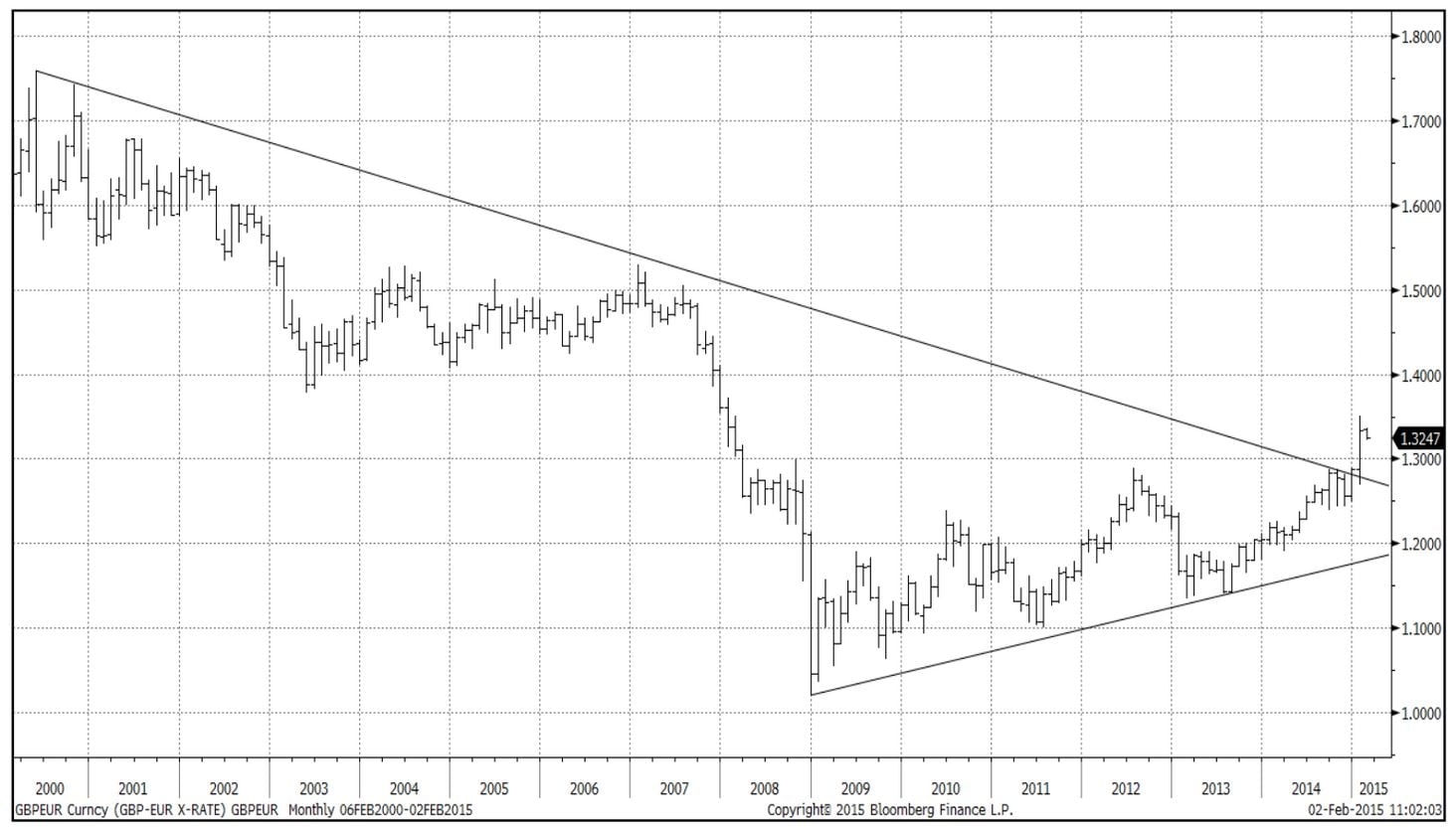
Breaking of 1.28 Resistance Opened the Path Higher
The euro remains under pressure from a long-term perspective and one trigger for a potential continuation of the move higher will be action in the EUR/USD rate.
Ultimately if the euro falls significantly against the dollar, as many are forecasting, then the pound sterling will ultimately have to follow suit.
Commenting on the outlook is Bill McNamara at Charles Stanley who sees more gains ahead:
"The long-anticipated break above the 2012 peak, at 1.285, has finally taken place with the result that the UK currency has pushed up to levels last seen in early 2008. It’s worth noting that it does not look especially overbought at this stage, the implication being that there should still be scope for further near-term upside – and the next target is now 1.34."
From a fundamental perspective it was the big announcement at the European Central Bank concerning quantitative easing that allowed the rally to re-exert itself.
The central bank announced that 1.1 TRN euros would be printed and use to purchase sovereign debt from Eurozone financial institutions.
The aim of the programme is stimulate the flow of credit to Eurozone business. However, the increase in supply will of course pressure the euro exchange rate lower in the absence of matched demand.
Pound Sterling: Issues to Watch
- Interest rates: The UK saw encouraging growth indicators in the early part of 2014, but faltered in the latter part of the year. Given the Bank of England (BoE)’s cautious stance on interest rates, we expect them to be raised slowly – if at all. Further falls in unemployment may increase the chances of a potential interest rate hike, but will not be the direct cause of such an action. Any indication that rates will rise before the end of the year will be GBP-positive.
- General Election: May 2015 sees the UK vote. According to Charles Purdy at Smart Currency Business, "should it result in a hung Parliament, the major parties will probably attempt to form coalitions. Whether this is between the Conservatives and UKIP, Labour and the SNP or even the Conservatives and Labour remains a question. We can expect major movements in exchange rates should the result surprise investors."
Euro: Issues to Watch
- Sovereign Quantitative Easing: As the Eurozone slipped into deflation at the beginning of January, the onus is on the European Central Bank (ECB) to implement a vigorous quantitative easing programme. This is expected to finally take place in 2015, but it still remains to be seen if it will be enough to revive the Eurozone economy.
- Grexit: Could Greece leave the Eurozone over an inability to cut its defict? Anti-austerity party Syriza leads the polls in Greece. "Success for the party in the Greek General Election on 25th January would put the country at odds with the Eurozone’s austerity aims (particularly as spearheaded by Eurozone powerhouse Germany). The party may also attempt to renegotiate Greece’s bailout plans," says Purdy.
- Export policy: "It is possible that the ECB may continue to push policies to weaken the euro, in order to boost Eurozone export competitiveness," says Purdy.