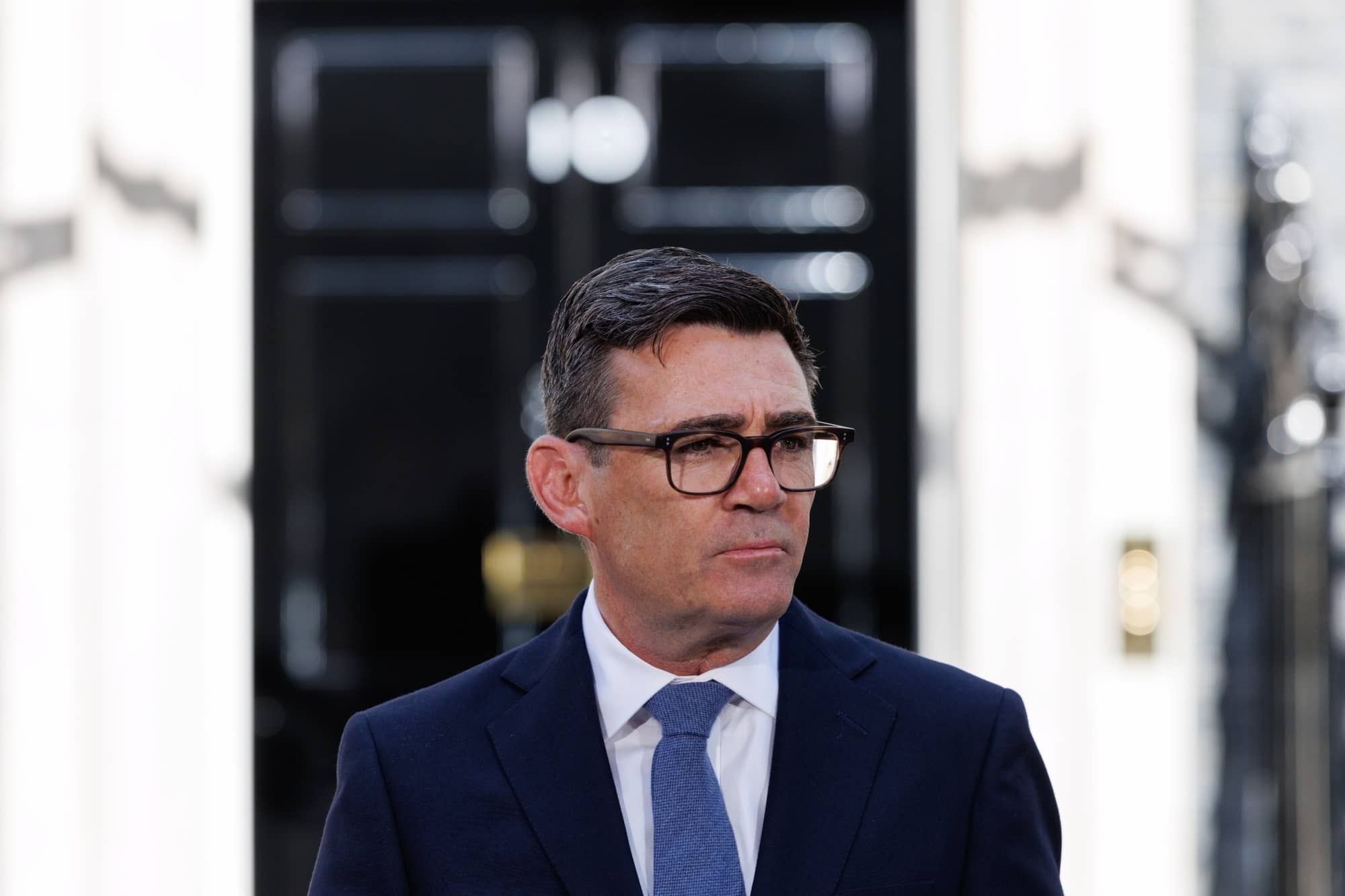
Picture by Lauren Hurley / No 10 Downing Street
Berenberg sees the UK's bond premium narrowing under Burnham while France's widens, a contrast the pound reflects.
The pound's climb against the euro this week has coincided with a shift in how bond investors rank Europe's fiscal risks, with France moving up the list and the UK moving down it.
The pound-to-euro exchange rate trades at 1.1755 on Friday, its highest level in two and a half months.
Economists at Berenberg, the German investment and wholesale bank, see a clear improvement in how the market prices the UK's fiscal position relative to other major nations: "The spread of UK government bond yields over the rest is declining, suggesting that new Prime Minister Andy Burnham has so far succeeded in convincing investors he will continue the fiscal consolidation that his predecessor began," says Holger Schmieding, Chief Economist at Berenberg, in a note co-authored with Felix Schmidt and Andrew Wishart.
The convergence between UK and French borrowing is particularly noticeable, with the UK's ten-year yield premium over France having collapsed to 41 basis points, from 137 basis points in May and around 95 basis points at the start of September.
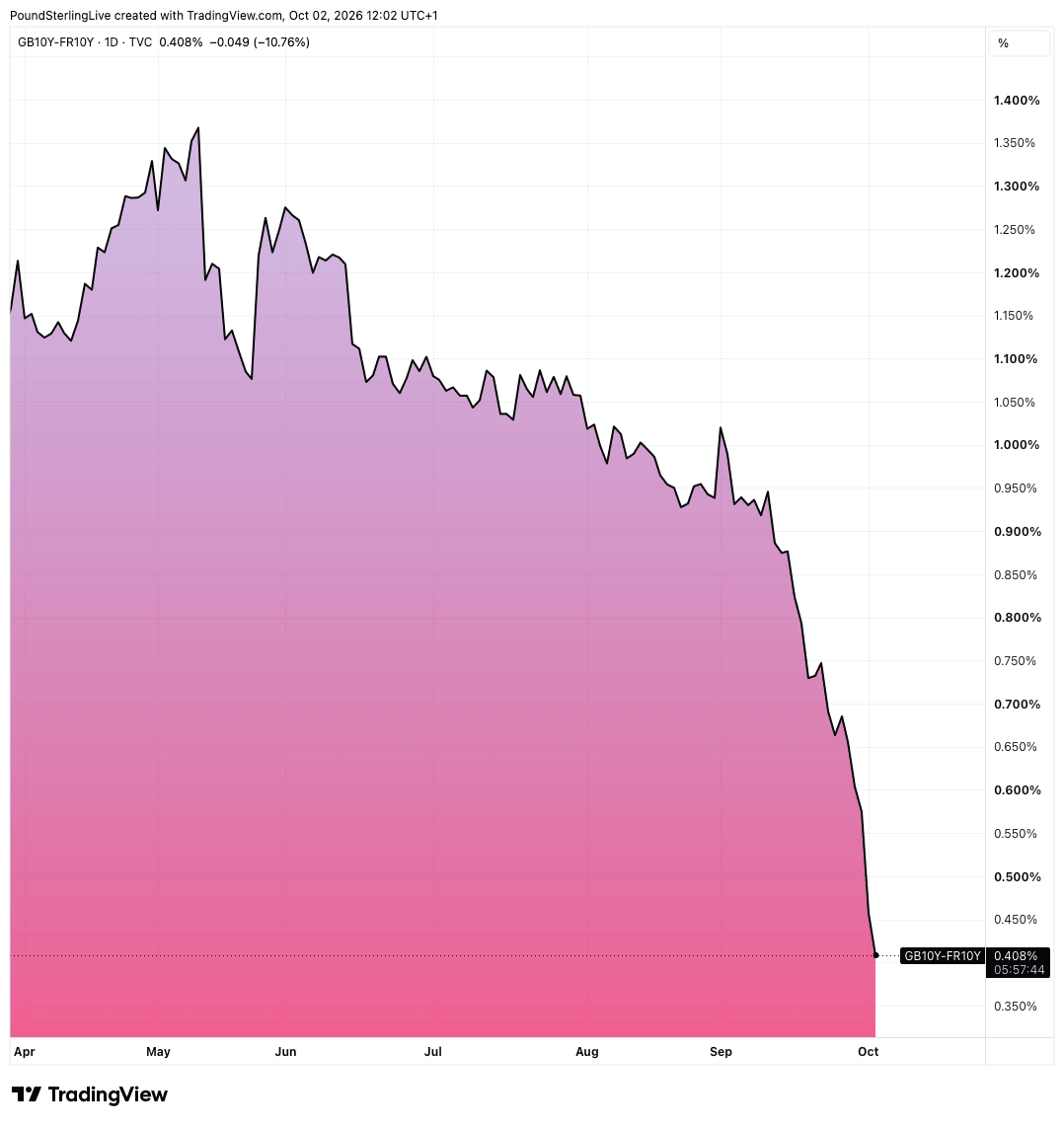
Above: The UK ten-year gilt yield minus the French ten-year yield, which has narrowed sharply since May.
Most of that narrowing has come in the past four weeks, as French yields rose and the UK's risk premium eased.
The gap between French and German ten-year borrowing costs has widened to the highest since 2012.
"Higher financing costs could push governments with the most egregiously unsustainable fiscal policies into a doom loop," says Schmieding.
Sinners and Spreads
Global bond yields have surged this year, and Berenberg considers much of that a return to normal after the abnormally low yields of the 2010s.
The forces that held yields down after the financial crisis, from deleveraging and a global savings glut to central bank bond buying, have mostly reversed.
The rise has been uneven, however, and the difference lies in country-specific risk premia.
France and the US have suffered the largest increase in ten-year yields this year, consolidating their positions at the top of Berenberg's list of fiscal concerns.
"Higher financing costs make their fiscal trajectories even less sustainable, which in turn adds to the risk premia in yields," says Schmieding.
The UK, long counted among the bond market's problem children, is moving the other way.

Daniella Arcadipane, Senior Currency Specialist at Indigo
Moving a life-changing sum abroad? You won’t be doing it alone.
One specialist explains every step in plain English and stays with it until the money lands. FCA authorised, FRN 594433.
Talk to a specialistThe Trouble in Paris
Berenberg describes French politics as paralysed, with a risk it could get worse.
Prime Minister Sébastien Lecornu's minority government is struggling to pass a budget to stop the deficit rising from 5.4% in 2026 to 6% in 2027.
Marine Le Pen, frontrunner for next spring's presidential election, is promising an even lower retirement age, while Jean-Luc Mélenchon, a possible run-off opponent, wants to cancel public debt held by the central bank.
"Unless the key players in France heed the message of the spread soon, markets may force France to correct its fiscal course by refusing to fund the deficit," says Schmieding.
The ECB could step in, but Berenberg says it would not bail out France without a return to more sustainable policies.
Berenberg still expects France to muddle through at least until the presidential election, but warns the surge in yields raises the risk that the moment of truth arrives sooner.
"With or without a crisis, France will be forced to change tack as printing its own money by leaving the euro is not an option," says Schmieding.
That is a euro problem: French stress has already helped push the euro to the bottom of the G10 performance table this week.
Less Beta for Burnham
The UK's improving standing rests on the Prime Minister's fiscal restraint so far.
Burnham's conference speech set out sizeable spending ambitions but placed their delivery on a ten-year timeline, which kept near-term borrowing plans intact.
"So long as the new administration does not surprise the market with higher borrowing in the 28 October budget, UK government bond yields should fall back into the international pack next year," says Schmieding.
A narrowing UK risk premium takes away the scenario that has historically hurt the pound most, where gilt yields rise on fiscal fears and sterling falls alongside them.
Rate Hike Expectations Overdone
Berenberg also expects yields to ease once central banks signal a pause.
Investors price three or four rate hikes from the key central banks on both sides of the Atlantic, which Berenberg considers a bit overdone.
The bank expects further hikes in the coming months, followed by a hold through 2027 as a likely correction in oil prices eases inflation.
For the pound-to-euro rate, that leaves fiscal credibility as the differentiator: a steady UK budget on 28 October set against a French budget fight in the run-up to April's election keeps the risk premium moving in the pound's favour, with 1.1756 the level to clear for a fresh high.
Daniella Arcadipane, Senior Currency Specialist at Indigo
Moving a life-changing sum abroad? You won’t be doing it alone.
One specialist explains every step in plain English and stays with it until the money lands. FCA authorised, FRN 594433.
Talk to a specialist