Image © Adobe Images
"We need not worry about the energy price shock triggering a fresh price wage spiral" - Berenberg.
An important survey of British businesses shows limited signs that the inflationary episode caused by the Iran war will morph into something more sinister, and that should be enough to convince the Bank of England there's no need to raise interest rates.
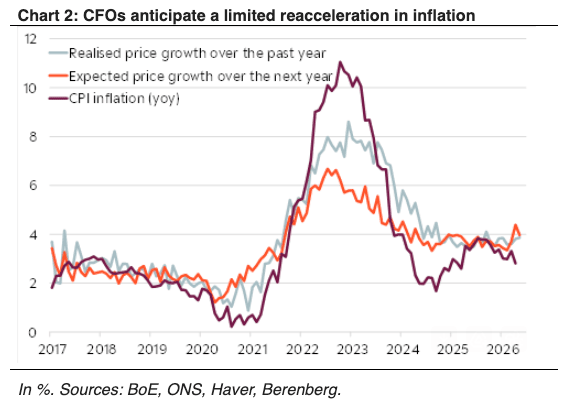
The Bank's latest Decision Maker Panel (DMP) survey of Chief Financial Officers reported a surprising moderation in year-ahead inflation expectations.
Expectations for inflation in 1-year fell to 3.7% in May from 4.0% in April.
Survey evidence also showed no sign of second-round effects, via the urge for businesses to raise prices or workers to demand higher wages.
For the Bank of England that's significant as it argues against the need to raise interest rates.
"The combination supports our notion of long-term BoE inertia, through 2026. A paring in growth destructive rate hikes is GBP supportive," says Jeremy Stretch, Chief Global Strategist at CIBC Capital Markets.
Andrew Wishart, UK Economist at Berenberg, goes further, saying the data makes the case for the Bank to consider lowering interest rates in the coming months.
"We need not worry about the energy price shock triggering a fresh price wage spiral. We stand by our forecast that the BoE will not raise interest rates as investors expect, but instead resume cuts by year end," he says.
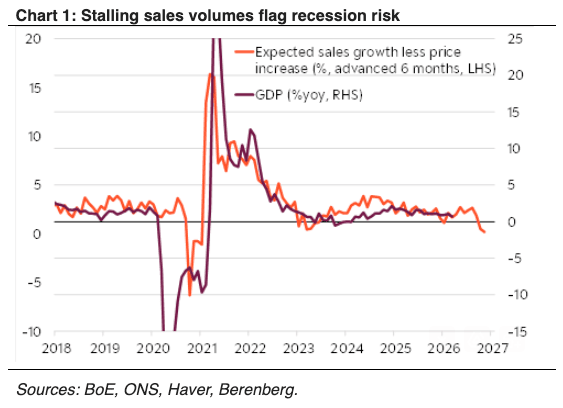
The DMP data shows companies think sales volumes will stagnate in the coming months; they "believe demand is too weak to bear significant price rises, 68% accept that higher energy prices will squeeze their margins over the next year. Lesser profitability and weak sales volumes will detract from already-soft demand for labour," says Wishart.
That weak labour demand will pressure wages, lessening the odds of a lasting inflationary spiral.
For the Bank of England, doing nothing in June looks increasingly attractive, and should the Strait of Hormuz reopen during the summer and oil falls, talk of a Bank of England rate cut will only increase.
"We think more dovish and central MPC members can view this report as supportive of a weakening labour market and contained inflation expectations, particularly in the medium term," says Jack Meaning, an analyst at Barclays.