
Image © Adobe Images
The NZD puts in a strong start to the week and threatens to pressure GBP/NZD further.
The pound-to-New Zealand dollar exchange rate drops below the 200-day moving average to hit 2.30 on Monday, the culmination of three successive weekly losses.
The key question for the week ahead is whether buyers can defend the 200-day moving average, currently at 2.3025, which has repeatedly acted as a pivot over recent months.
Holding this level would keep the broader recovery intact, whereas a decisive break below would suggest the failed breakout has evolved into a more meaningful bearish reversal.
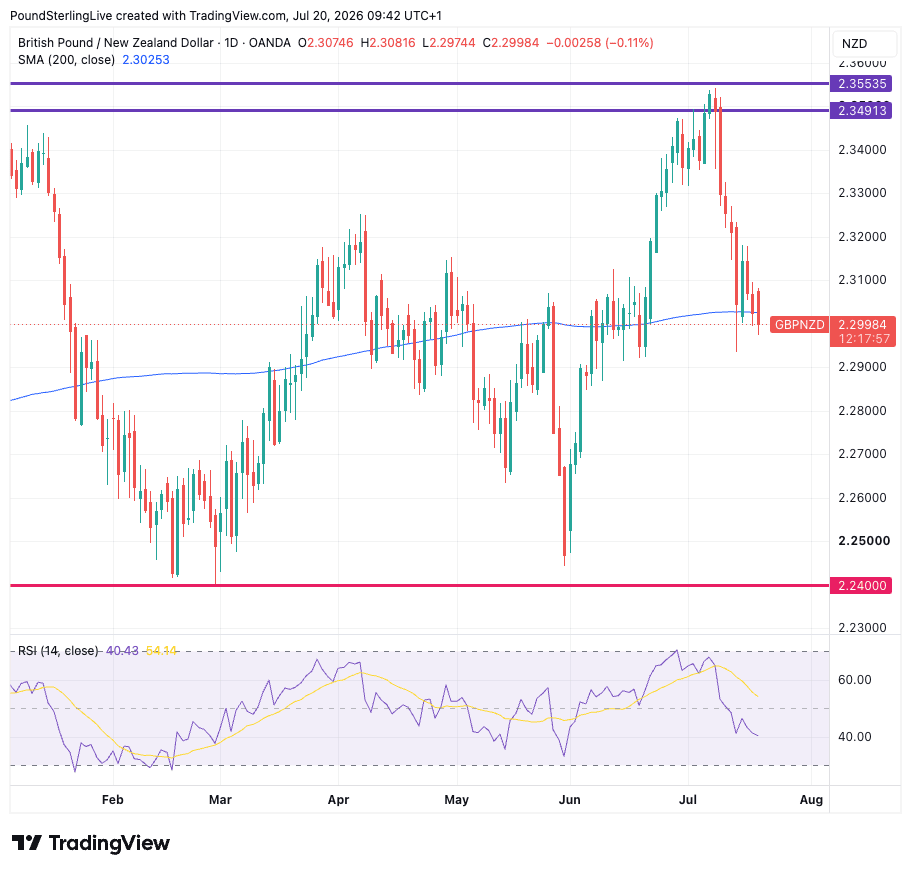
In early July, buyers briefly forced a breakout to fresh highs above the 2.3490-2.3550 resistance zone, but that appears to have been a bull trap, and the move quickly reversed.
Failed breakouts often trigger accelerated profit-taking as late buyers are forced to exit positions, and last week's price action fits that pattern.
The 200-day moving average will now prove decisive: long-term moving averages frequently act as dynamic support during healthy uptrends, making this one of the most important levels on the chart.
A successful defence of the 200-day would suggest the recent setback is corrective rather than the start of a broader reversal. A breakdown, and GBP/NZD enters a more sustained period of weakness.
Leaning on such an outcome is evidence that momentum has weakened materially; the RSI has fallen from above 70 to around 40 in a short period, highlighting how aggressively bullish momentum has unwound.
Although RSI is approaching the lower end of its recent range, it has not yet reached oversold territory, leaving scope for further downside if the 200-day fails to attract sufficient buying interest.
NZ This Week: Inflation Pressures Build
The calendar highlight of the week ahead is New Zealand's inflation print, where it should be confirmed that the RBNZ has cause to raise interest rates further in the coming months.
It's that expectation for higher rates that's helped shore up the Kiwi dollar of late, and should the inflation numbers suggest more of the same, then the currency can extend its winning streak.
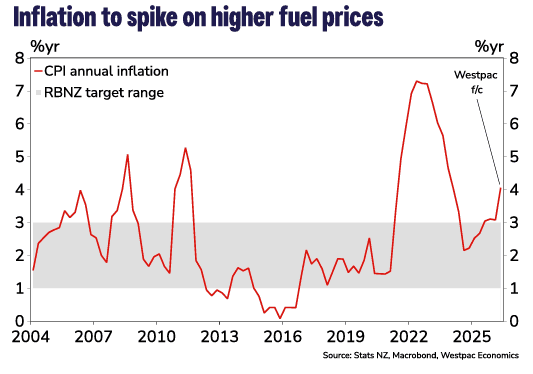
Quarterly inflation is expected to have risen 1.5% in Q2 from 0.9%, taking the annual pace of change to 4.1%, which would put it well above the RBNZ's most recent forecast for 3.9%.
That implies further rate hikes are in the offing.
"With the war in the Middle East pushing oil prices sharply higher, consumer price inflation is set to rise to a two-year high. We estimate that New Zealand consumer prices rose by 1.5% in the June quarter," says a note from Westpac.
Westpac's economists think core inflation should also remain above the RBNZ's 2% target midpoint, despite the downturn in economic growth and softness in the labour market.
NZD Puts in a Solid Start
It's a firm start to the week for the NZD which is benefiting from the broader pullback in the USD. We've noted that of late the NZD has proven highly responsive to USD behaviour: when the USD is rising, the NZD tends to underperform more broadly.
That means the recent USD setback has helped the Kiwi stage a strong comeback against most of its peers.
Interestingly, the U.S. dollar hasn't taken advantage of weekend news that the U.S. and Iran have upped the tempo in their conflict, which has pushed oil and gas prices.
The reason the USD is lagging is most likely because the market has come to realise the U.S. economy is more immune to the conflict than previously thought: the oil and gas spikes of the first phase of the conflict didn't translate into an enduring inflation trend.
June's inflation data undershot expectations and cooled expectations for Fed rate hikes later in the year, which weighed on U.S. bond yields and the dollar.
It makes sense, then, that the recent rise in oil and gas prices hasn't prompted the market to rebuild bets. That's weighed on the USD somewhat, and given the NZD further space to advance.