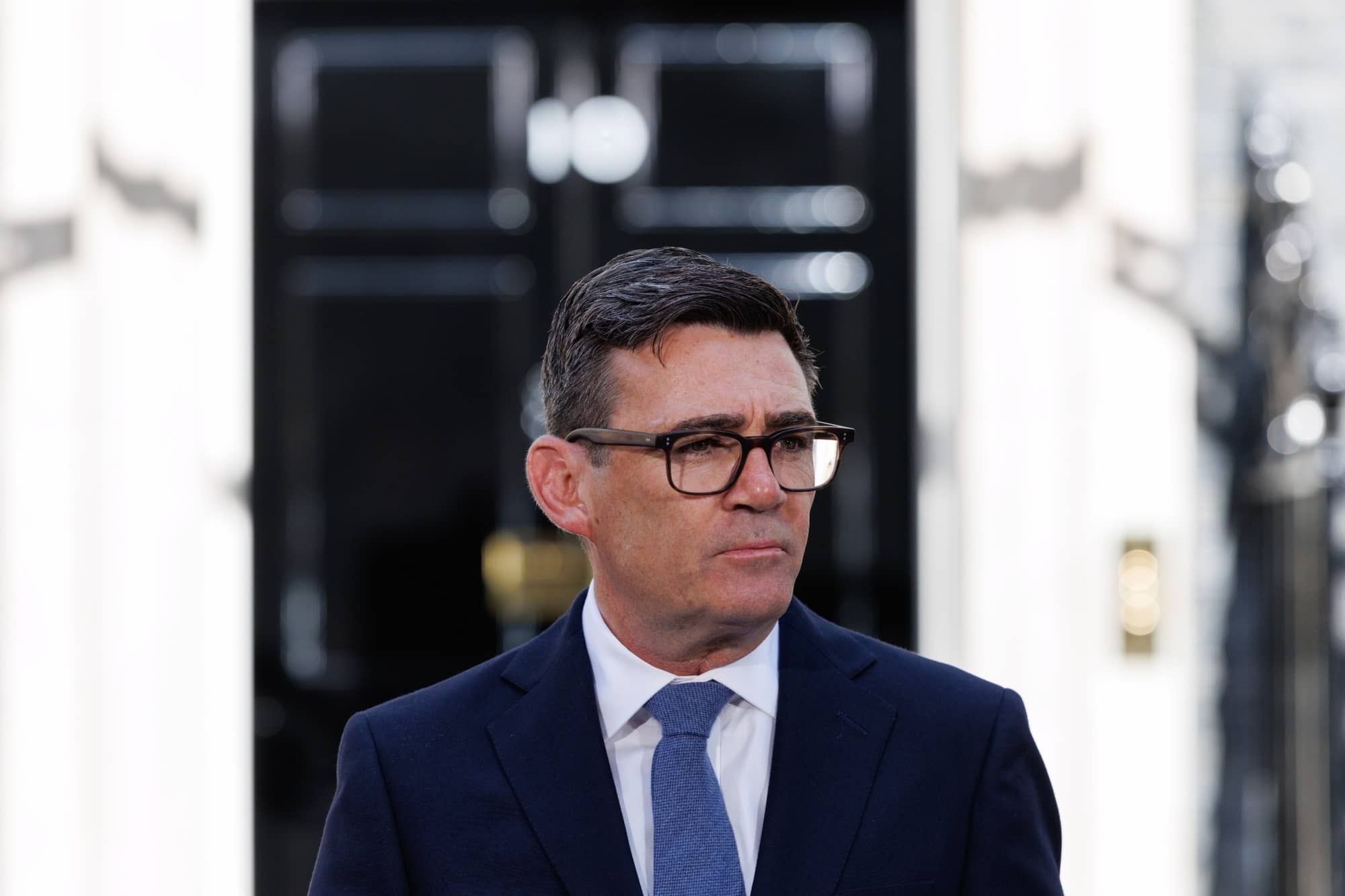
Picture by Lauren Hurley / No 10 Downing Street
There was some noticeable price action in foreign exchange and fixed income markets after new Prime Minister Andy Burnham suggested he would be creative when it came to borrowing.
"I’ve said we’ll stick to the fiscal rules, and by that I mean the existing fiscal rules, and use obviously any flexibility within them," Burnham told reporters.
It's the "flexibility" bit of the statement that's important for markets, as it is a shorthand way for saying he will find ways to borrow more.
"Gilts reacting negatively to this," says Alex Wickham, UK Political Editor at Bloomberg.
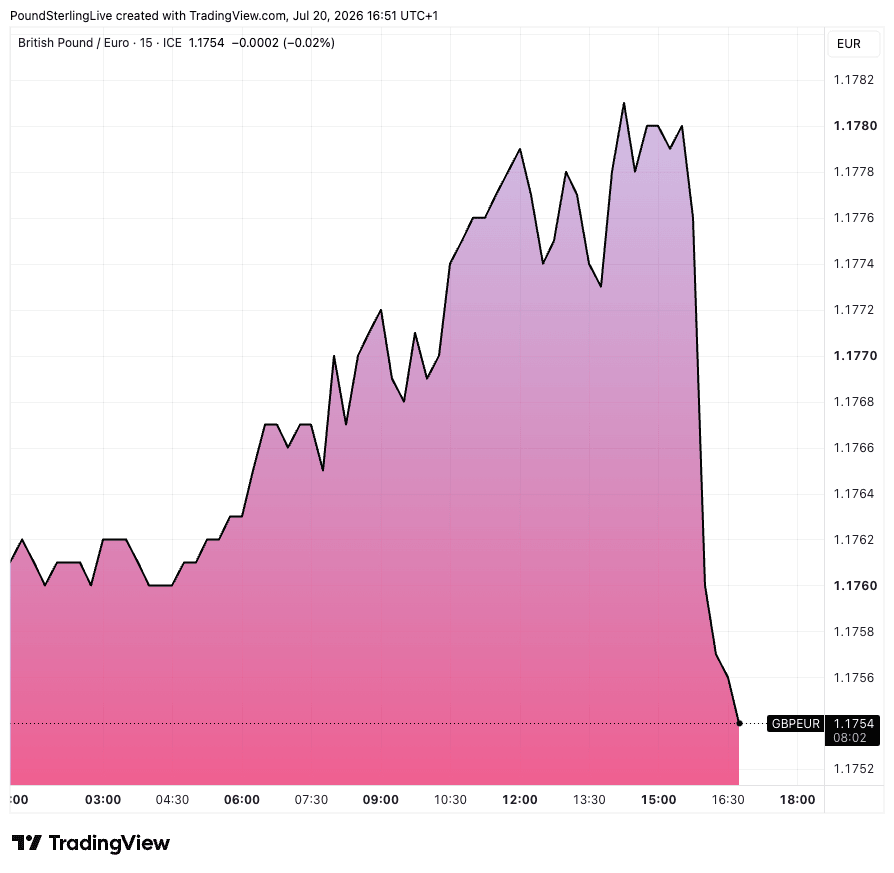
In the minutes following the statement, the pound-to-euro conversion squandered a daily advance to sink into the red, going from 1.1780 to 1.1755. The pound-to-dollar went from 1.3450 to 1.3415.
The UK ten-year gilt yield jumped from 4.98% to 5.04%, the differential with the German bond rose to 1.88%.
Typically, the GBP/EUR would be expected to rise when the yield differential rises. When they head in opposite directions, it is often due to fiscal risk concerns.
"UK 10-year yields are back at their highest level since May, back before the Burnham coup, when markets took fright at the possibility of his premiership," says Kathleen Brooks, research director at XTB. "In a rare occurrence, UK bonds, stocks and the pound are all falling together on Monday."
Last year we saw it on a number of occasions when markets grew nervous about Rachel Reeves' inability to cut welfare spending.
The moves that follow Burnham's comments are relatively contained in scale, but it is nevertheless surprising that they have come so early in his premiership.
It's a reminder that the market is nervous and will be very unforgiving when it comes to fiscal profligacy.
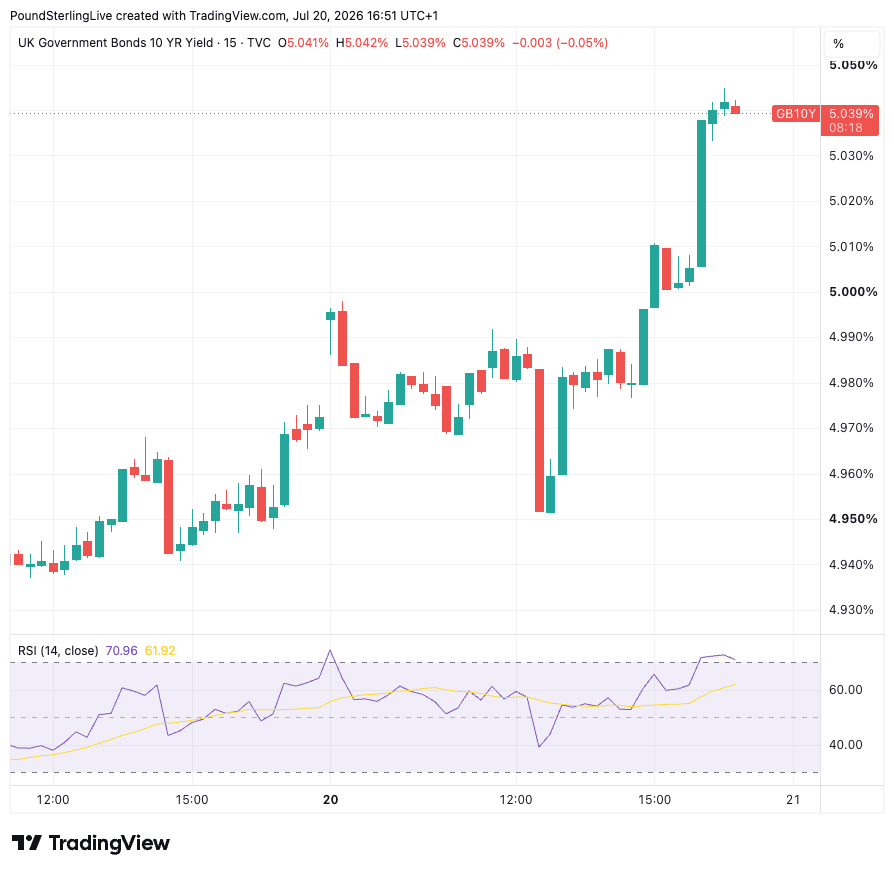
Above: The cost of borrowing rises. The ten-year UK bond yield rises sharply in the London afternoon session.
Another angle to view the negative market developments is Burnham's slow-footedness in appointing a Chancellor.
Rachel Reeves resigned the office during late afternoon, and by the time of writing there is still no replacement in sight.
"The risk is that he is delaying the announcement in case the markets do not like it. This increases the chance that Ed Miliband will be announced as Chancellor, the market’s least favourite choice, and one who could cause yields to rise rapidly. We still think that Mahmood will make it as Chancellor, but the delay in the cabinet member announcements is deeply unsettling for financial markets," says Brooks.