Image © Adobe Images
The August employment report removes the labour market as an argument against a September rate rise, leaving inflation to decide.
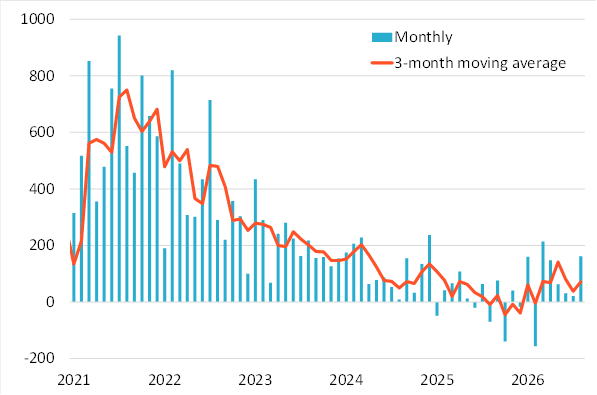
The U.S. economy added 162K jobs in August said the BLS, a figure above every estimate submitted to the Reuters poll, and one that puts a September Federal Reserve rate hike back on the table.
Economists had looked for a gain of 56K, with individual forecasts running from a loss of 25K to a gain of 121K.
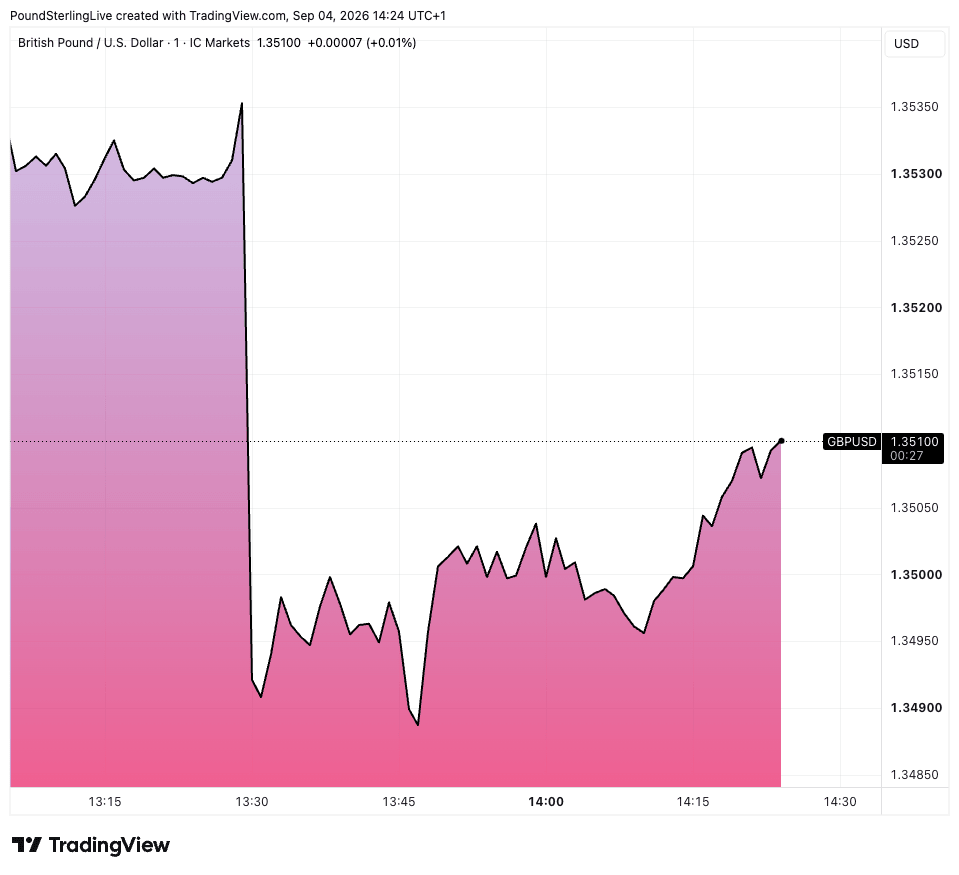
The reaction was immediate: the pound-to-dollar conversion fell from 1.3535 to a low at 1.3487 within twenty minutes of the release, before recovering to 1.3510 at the time of writing.
The unemployment rate held at 4.1% and July's reported decline of 23K was revised to a gain of 21K.
The revision carries as much weight as the headline because it removes the contraction that had become the strongest argument against further tightening.
August's gain also runs more than five times the average monthly increase of 31K recorded over the prior twelve months, which makes it difficult to describe the summer slowdown as ongoing.
The dollar sold off on Thursday after Federal Reserve Governor Christopher Waller said he did not expect the employment report to look materially different from recent labour data.
It did so emphatically, removing his argument to hold rates later this month.
Rate futures had put the probability of a September hike at around 52% ahead of the release, down from 63.2% on Wednesday following Waller's intervention.
Wage growth offers the reason the repricing was contained, with average hourly earnings up 0.3% on the month and 3.1% on the year, a pace that sits well below the 3.7% annual increase in PCE prices through July.
"The strong labour market report pushed the market-priced probability of a Fed interest rate hike on 16 September up from 54% before the job figures were released to 61% afterwards." - Felix Schmidt, Berenberg.
A labour market generating jobs without generating wage pressure does not by itself make the inflation case that Chair Kevin Warsh, who has called inflation "a choice", would need to carry a divided committee.
Three regional presidents dissented in favour of a quarter-point rise at the July meeting, and the arithmetic on the committee has not changed since.
U.S. yields are the complication for anyone reading this as straightforwardly dollar positive.
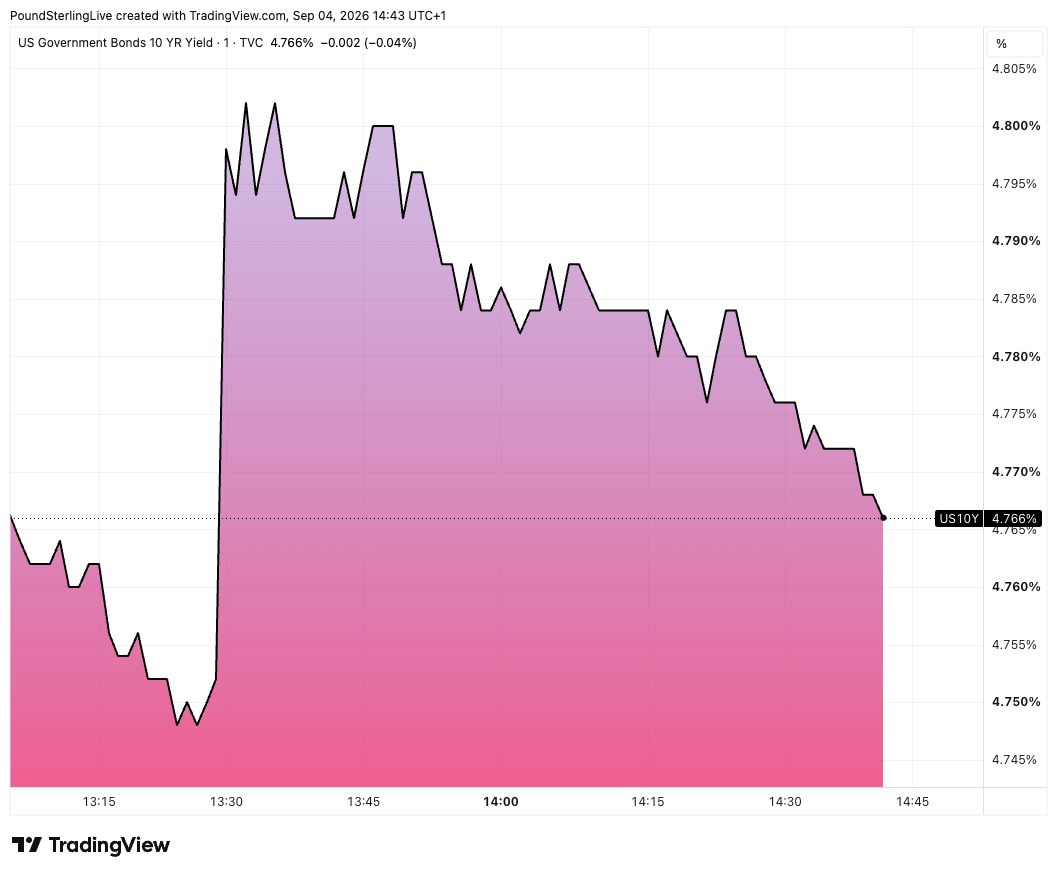
The 10-year Treasury yield entered Friday at its highest since January 2025, having risen for five consecutive sessions on inflation concerns and the absence of forward guidance from a Fed that has deliberately reduced its signalling.
My reading is that the payrolls print raises the stakes for the August inflation report on 11 September without settling anything ahead of it, and that a hot number is now the clearest route to a materially stronger dollar.
Sterling arrives at that test with speculative positioning already short and with the Bank of England's own decision on 17 September, including the vote on the pace of balance sheet reduction, still to negotiate.
Pound-dollar had traded to a two-week low at 1.3485 on Thursday, and the failure to break beneath that level on a payrolls beat of this size tells us the market is unwilling to sell sterling further until the inflation data confirms the direction.