Image © Adobe Images
Pound sterling to see further losses against the euro in the coming hours and days.
The technical setup has deteriorated over the past 48 hours, with the break below 1.1647 attracting our attention as it triggers a signal that a breakdown is underway.
The pound-to-euro's losses come at a time of anxious glances at the bond markets where short- and long-term bond yields surged to uncomfortably high levels amidst concerns about the trajectory of global inflation trends
The GBP/EUR conversion sank 0.20% through the midweek session, taking it below the 1.1647 line that we've drawn on our chart; that is the graphical horizontal support zone that has held the pair up since the beginning of July, defining the late-summer lower bound for the GBP/EUR pairing.
The breakthrough here is consistent with further weakness occurring in the near term, as is the reading we are receiving from the RSI: it is weak at 38, which heralds further short-term losses while not being in danger of triggering oversold conditions.
The next area of support emerges at 1.1622, where the pullback meets the rising 100-day moving average, which is some 20 pips lower than the current level of spot.
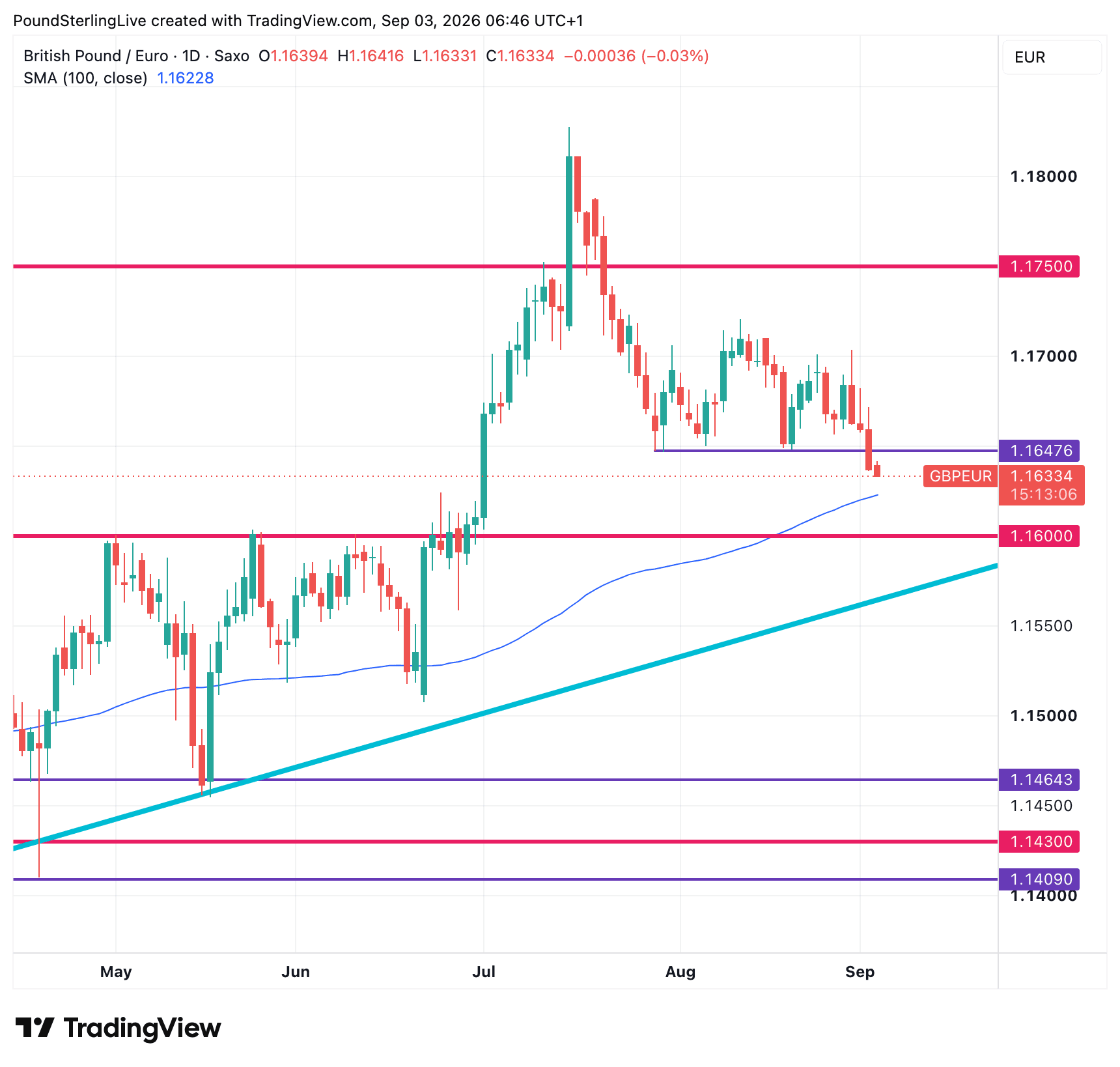
It's worth noting that moving averages don't always tend to work as support or resistance zones, but the 100-day looked to have supported the medium-term uptrend when tested in June.
If that is the case this time around, then the uptrend, in place since last November is still alive and the recent sequence of weakness is regarded as a pullback in a sequence of 'higher lows' and ultimately a push to a fresh multi-year high beckons before year-end.
However, the fundamental picture clouds that still-bullish stance and is consistent with the current pullback extending further:
- The current rise in funding costs - watch surging bond yields - is particularly acute for the UK
- This means the government might have to pursue higher taxes in the Autumn budget, which can weigh on growth
- Talks of higher mortgage rates are percolating through the national press, which could well flatten consumer confidence.
This combination risks softer growth trends in the Autumn.

The Bank Consensus, Without the Terminal
The median, mean, highest and lowest from the October survey update, plus named point forecasts out to 2027.
Free information pack, issued by World Wide Currencies.
In his first prime minister's questions session, Burnham declined to rule out further borrowing or tax rises in the budget.
"The big headache for politicians is the continued sell off and underperformance in gilts, which have seen the 10-year yield surge to an 18-year high above 5.2%. This rise in yields, which will eat directly into the government's fiscal headroom, raises the risk of tax hikes in the autumn, even before accounting for any additional spending increases that Burnham seems likely to pursue," says Matthew Ryan, Head of Market Strategy at Ebury.
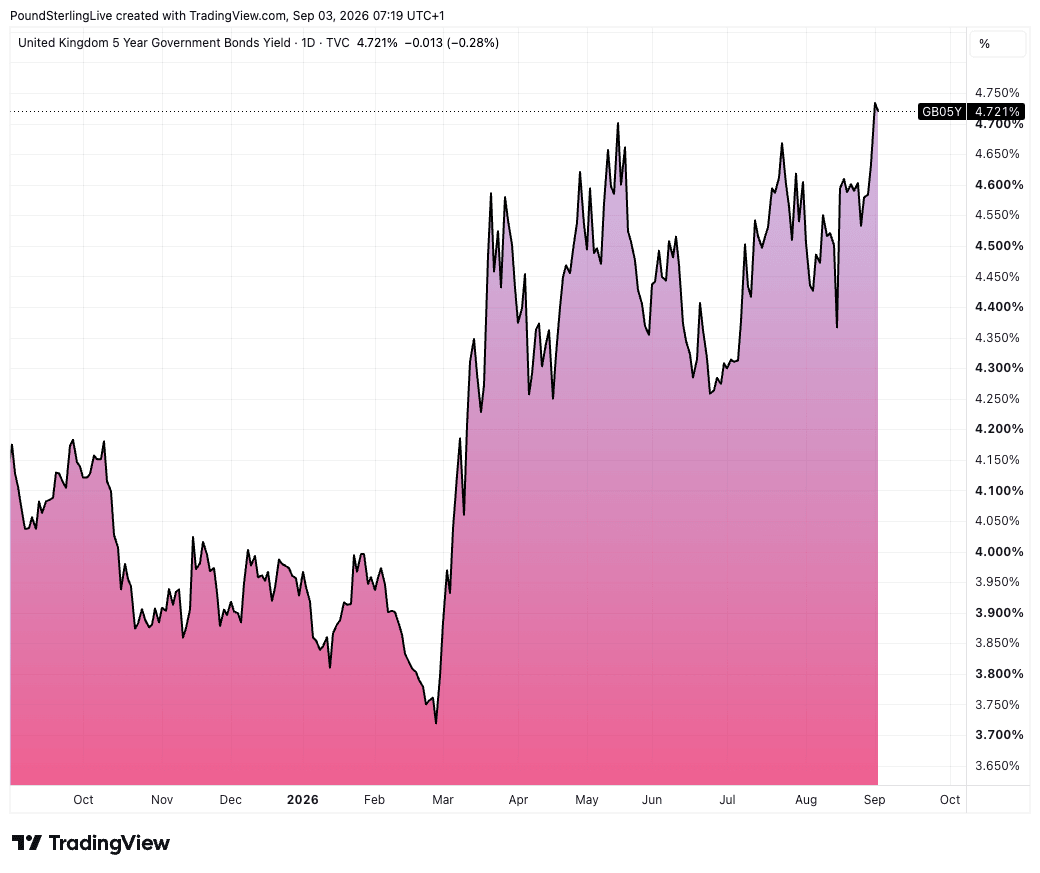
Above: The 5-year bond yield is particularly important as it is a benchmark for mortgage lending.
Should Burnham maintain a practical approach to the market setup he will try and push through a no-frills budget with minimal implications for overall debt dynamics.
He is proving an astute politician, and Pound Sterling Live's house view is that his instincts for survival at this time will mean he won't test the markets.
Post-budget relief could therefore prove the trigger to a resumption in the medium-term pound-euro rally.