
Politics will be a feature of the pound's Autumn. File image of Andy Burnham. Picture by Lauren Hurley / No 10 Downing Street.
The 'hive mind' of the world's major investment banks is locked onto lower levels from here.
Pound sterling looks overvalued against the euro and is vulnerable to a notable correction according to a new survey of the world's major investment banks and financial institutions.
The latest data shows the consensus looks for the pound to fall against the euro into year-end and stay below current levels for the remainder of the forecast horizon that runs into 2027.
The median of the forecasts shows the pound is some 300 pips above where it can be expected to be by the turn of the year, suggesting it is elevated relative to where economic models suggest the pound-to-euro rate should be.
The consensus forecast is derived from the rolling Bloomberg survey of close to 70 major banks. It is reserved to the Bloomberg terminal, but it is now available as part of an information pack issued by World Wide Currencies.
The pack can be requested free of obligation here.
The median forecast is particularly useful, as it provides those with future currency payments a credible anchor for their budgeting plans.
However, we also find that the variance in the forecast pack can be quite instructive: what are the highest and lowest calls? These often speak of the risks and opportunities inherent in the FX market and offer worst- and best-case scenarios for those with payment needs.
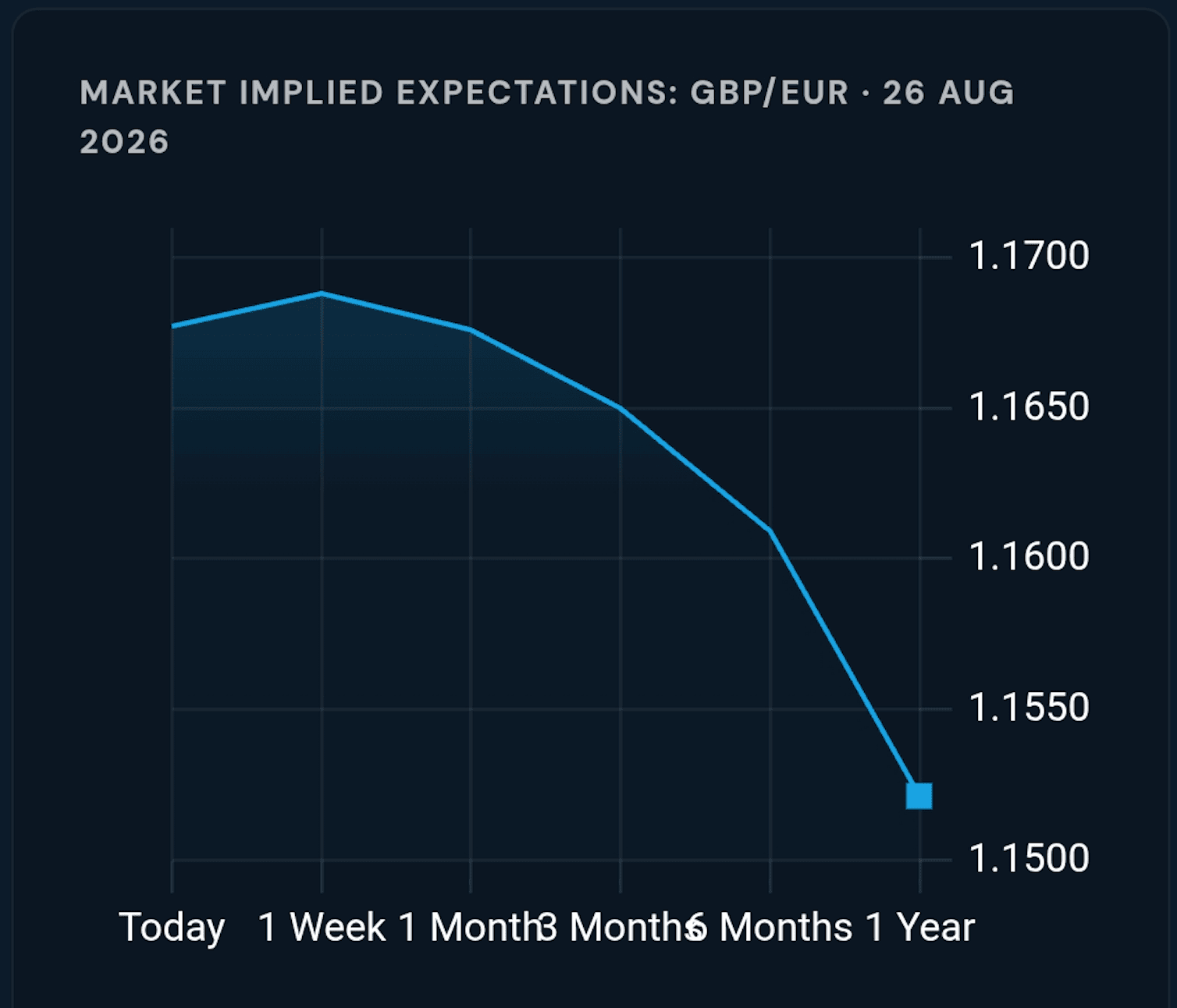
Above: Market-implied curve based on forwards data (this is not the institutional forecast, but a function of how markets are positioned).
The latest pack from World Wide Currencies shows that the topside forecasts are actually close to where spot in GBP/EUR currently resides (1.17), suggesting to us that we're already looking at the more optimistic end of the scenario landscape.
Rather alarmingly, at least for those wanting to buy euros, the downside outlier is at 1.0753, a prediction that is more consistent with sterling levels during the various crises of the past decade.
To delve deeper, request your no-obligation forecast pack from World Wide Currencies. The report also contains selected point forecasts from Citi, Barclays, Santander, Wells Fargo and more.
GBP Has a Knack of Frustrating the Analysts
The pound has tended to exceed consensus forecasts over recent quarters, which speaks of an underlying bias by institutional models and thinkers to underappreciate the UK currency's ability to outperform.
For instance, the mean Q3 forecast, as of March, set the pound-euro rate at 1.1460. The highest forecast point in the sample was 1.1880, ensuring the bullish view was closer to the money than the crowd.
It is why Pound Sterling Live's house view is for the pound to outperform into year-end, a bullish stance that looks for GBP/EUR to end the year closer to 1.20 than 1.14.
The Data Sits On a Terminal
The reason bank forecast surveys carry weight is not that any individual call is likely to be right. It is that the spread of calls tells you what the institutions currently consider plausible, and what they consider unlikely. That is a different, and more useful, thing than a single prediction.
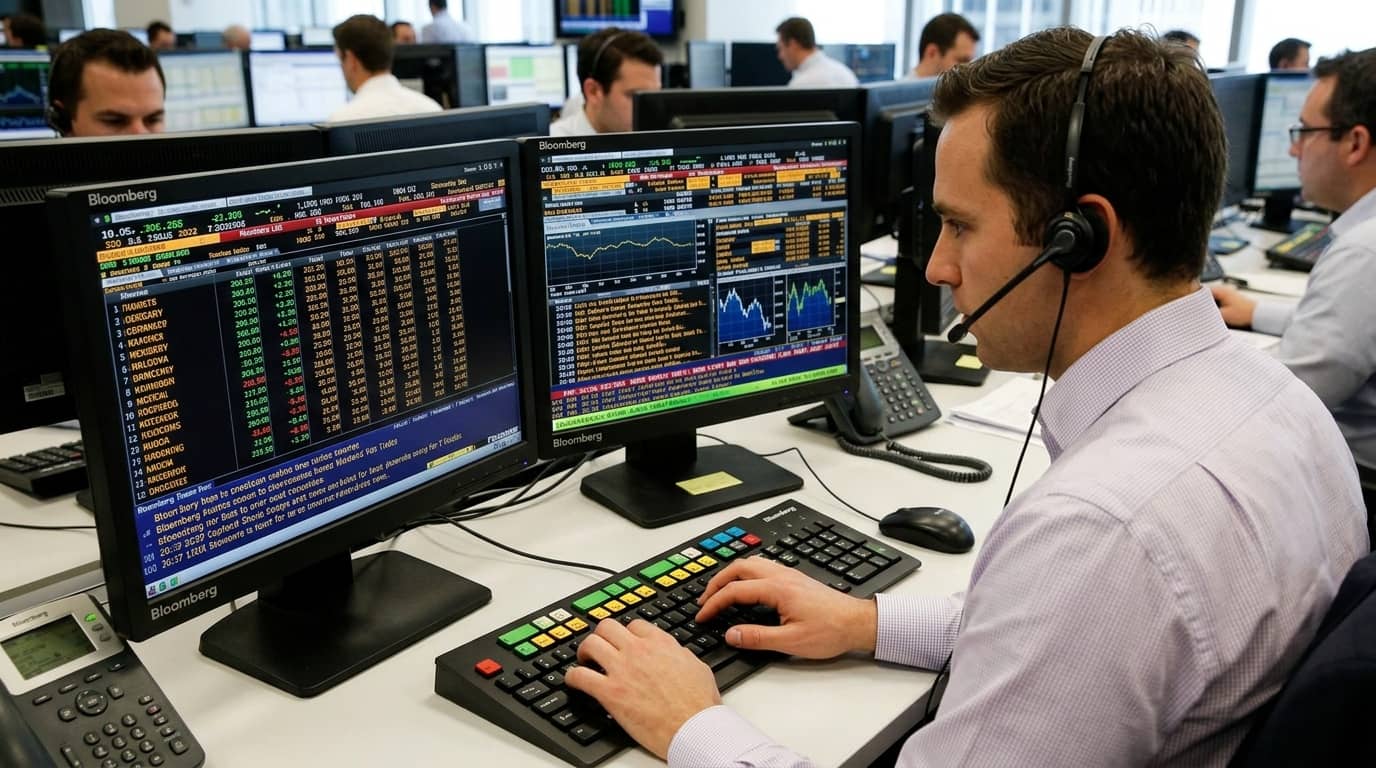
Above: The rolling survey is held on the Bloomberg terminal, which puts it beyond the reach of most businesses making currency payments. Image: Pound Sterling Live.
The survey behind this article polls close to 70 major banks and updates on a rolling basis. It sits on the Bloomberg terminal, which is where the access problem starts. A terminal subscription runs to tens of thousands of pounds a year, so the data is routinely available to the banks quoting you a rate and routinely unavailable to the business receiving the quote. That asymmetry is the practical case for reading the survey rather than the headlines written about it.
How to Read the Median, and Why the Outliers Matter More
The median is the anchor, a number to budget against, because it strips out the most bullish and most bearish calls and leaves the central case. On current numbers that median sits around 300 pips below where the pound-to-euro rate is trading, which is the finding at the top of this article.
The high and the low are the part most readers skip, and they are arguably the more valuable half of the dataset. The topside forecasts currently cluster close to spot near 1.17, which tells you the optimistic scenario is largely priced already. The downside outlier at 1.0753 tells you what a bank is prepared to put its name to if things break badly. For anyone with a euro payment scheduled over the next year, those two numbers define the range you should be able to survive, not the range you should expect.
Treat the whole exercise with appropriate scepticism. As set out above, the pound has repeatedly exceeded consensus over recent quarters: the mean Q3 forecast in March sat at 1.1460 while the highest call in the sample was 1.1880, and the bullish minority proved closer to the mark than the crowd. A survey tells you where institutional opinion sits. It does not tell you where the market will go, and the two have parted company often enough to be worth remembering.