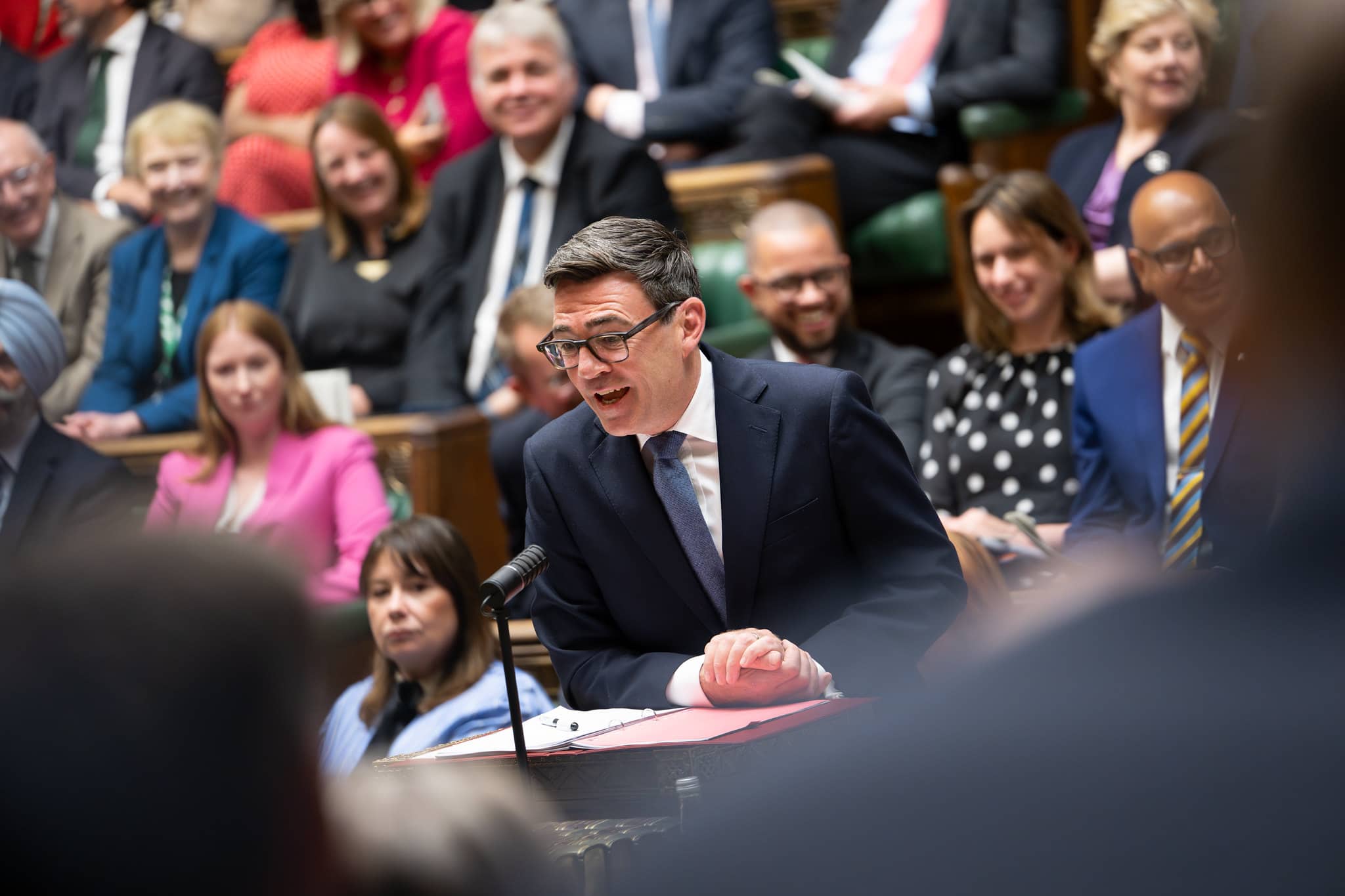
Andy Burnham denied ruling out tax hikes on Wednesday. Image: House of Commons.
Pound sterling volatility will be energised by surging debt costs and the Autumn political cycle.
The country's new Prime Minister is at his desk, but the challenges he faces on the fiscal front are all too familiar: debt dynamics are uncomfortably tight and the obvious tax levers have all been pulled by his predecessor, meaning the government will likely need to borrow more to fulfil Burnham's spending ambitions.
As Parliament returns, it is greeted by global borrowing costs that have surged, and the UK is paying a particularly heavy price due to its unique position as a small and open economy with a significant debt pile and an economy with supply-side constraints.
UK borrowing costs have surged across the curve, taking their lead from crude oil prices, which rose 5% on the first day of September following the escalation of U.S. military strikes on Iran, with Brent crude creeping back above $90 a barrel.
"One of the most notable moves is in the UK, what I have characterised here and elsewhere as one of the 'high beta' advanced economies, where the 10-year has traded up to a level not seen in almost 20 years, while the 30-year yield is at a level not seen in almost 30 years," says Mohamed A. El-Erian, the former CEO of Pimco, one of the world's largest debt market traders.
The UK two-year yield surged to a high at 4.629%, the ten-year to 5.25% and the 30-year to 5.89%.
Walking into these higher borrowing costs is a government that has yet to consolidate its spending and therefore will likely need to borrow more than expected in the coming months and years.
Increased borrowing looks likely because the current Labour manifesto locks the government out of raising the main tax-earning levers of income tax, VAT and corporation tax.
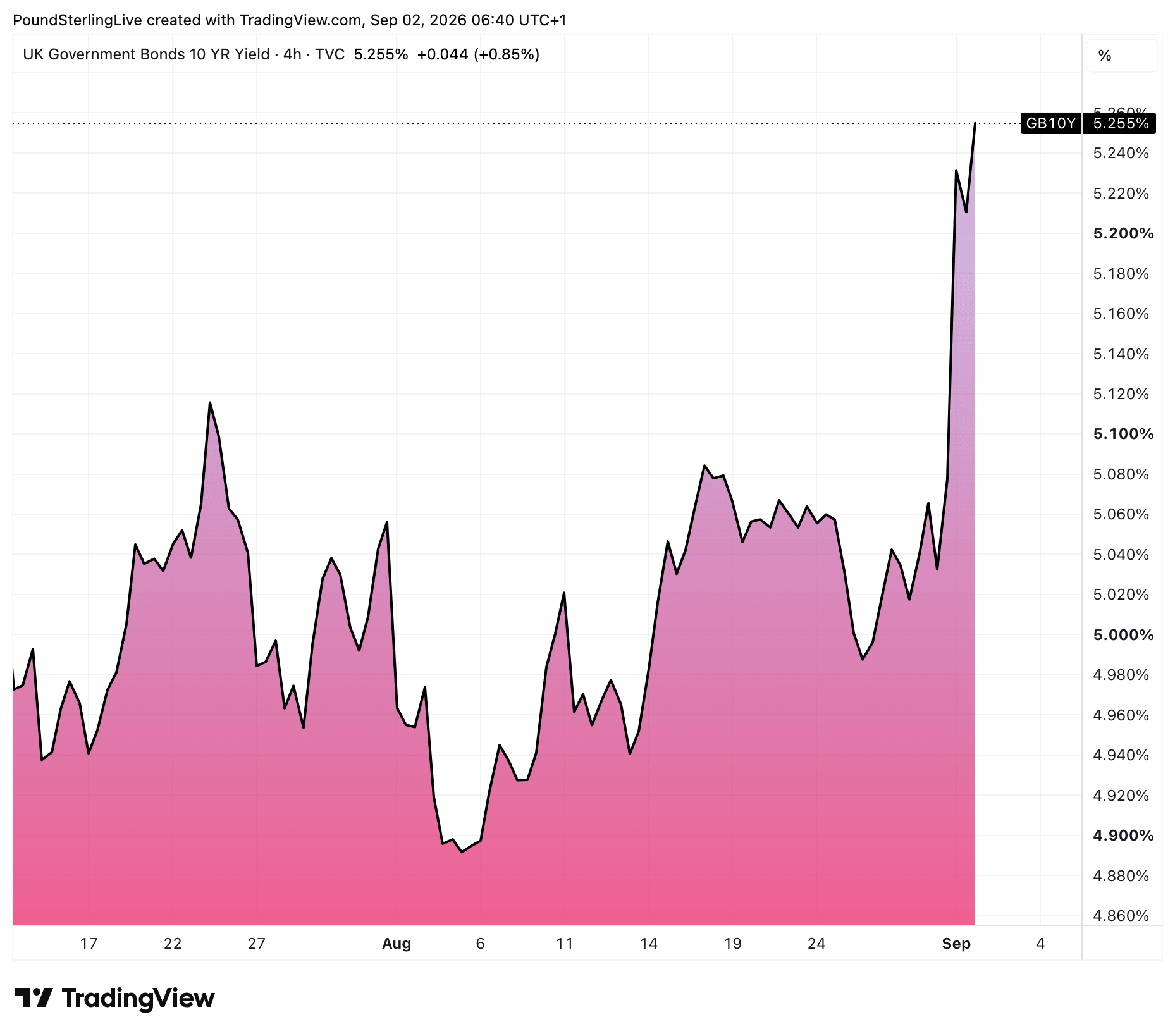
Above: The yield on the UK ten-year bond hits a 20-year high.
With borrowing costs already uncomfortably high, the margin for error in the October budget is incredibly thin.
"Chancellor Healey looks to be heading into his first Budget with something like £13–17bn of headroom left, down from roughly £c25bn back in March - a significant deterioration," says Kallum Pickering, Economist at Peel Hunt.
"Andy Burnham has been a lucky and deft Labour leader and prime minister. But is his luck running out? Or rather, is reality catching up with him? Because he has just been hit by a fiscal juggernaut," says broadcaster Robert Peston.
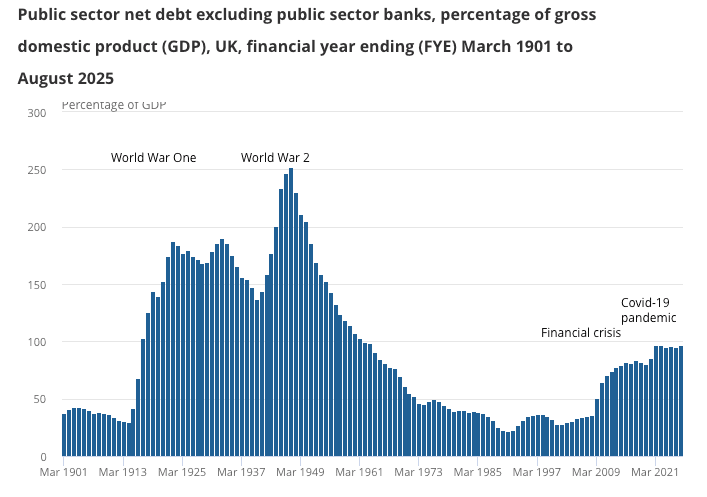
He explains the interest rate the UK government pays to service £3 trillion pound of debt is rising more than elsewhere.
Addressing Burnham's costly policy agenda, Peston warns the Prime Minister that "if he promises anything that investors see as costing real money - like taking state control of the utilities in the way he has hinted - he’ll find interest rates moving against him even more."
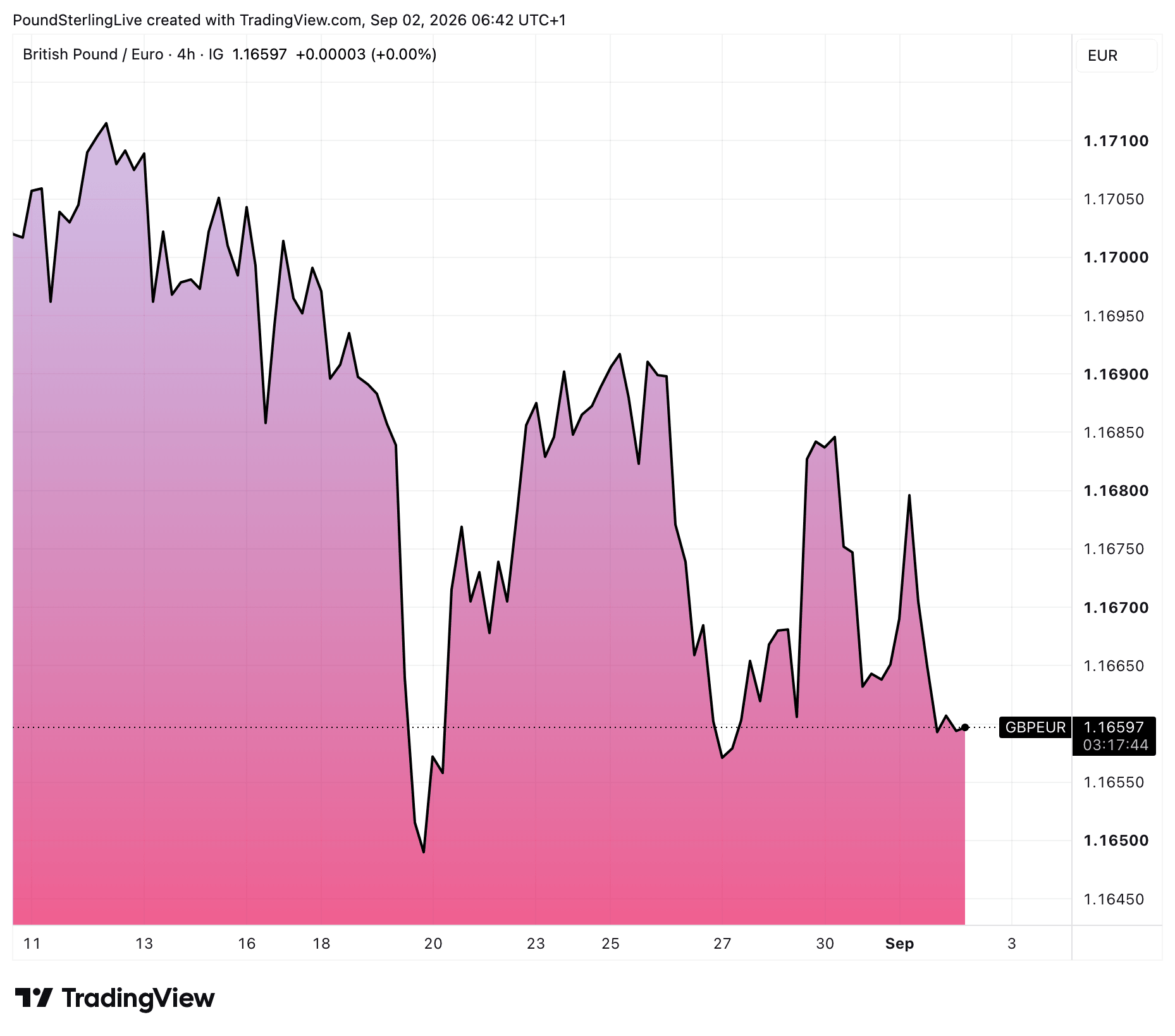
Above: The pound-to-euro rate edges lower.
It's a UK-specific problem
Global oil price rises have triggered concerns about a higher run-rate in global inflation. That eats into the value of bonds and pushes higher the compensation investors require to hold the underlying debt.
That compensation is the yield; therefore, higher yields confirm investors require governments to pay them more in interest for the money they lend.
But some governments and economies have different risk profiles: the premium demanded of UK debt signals structural concerns about the UK's specific dynamics.
"Yes it is an international bond market sell-off. But the UK's high beta status is a function of its impaired supply side. Insufficient focus on a dynamic labour, land, capital and energy market for many, many years means the cumulative price level is an eye-watering 21% above the level it would have been had inflation averaged 2% since 2004," says Simon French, economist at Panmure Liberum.
Risks to Sterling
The risk for the pound is that Burnham pursues one of his big-ticket policies that is ultimately not credibly funded. Such policies are mass nationalisations, something he hinted at in his speech to Parliament on Monday. Mass state house building and radical reform to social care are also totemic Burnham policies.
Yet, Burnham has shown himself to be deft at navigating the various pitfalls that lined the route to Number 10. He also has the Liz Truss episode to reference when approaching debt and spending, so he will know any meaningful spending commitments will have to be postponed until the debt markets can accommodate him.

The Bank Consensus, Without the Terminal
The median, mean, highest and lowest from the October survey update, plus named point forecasts out to 2027.
Free information pack, issued by World Wide Currencies.
If he chooses to keep fiscal policy settings more or less unchanged, engaging some small giveaways at the budget that generate headlines but don't bother the finances, sterling assets will breathe a little easier.
Our base case is that he is cautious and aims to maximise positive headlines with gimmicky giveaways that don't ultimately rock the boat.
That means UK bond yields will remain elevated when compared to elsewhere, which will underpin the pound against the euro, dollar and other major currencies.
The risk? Continued rises in bond yields that mean he might have to cut spending, something he and his party are not willing to do.
A run on UK debt is the biggest downside risk to the pound in the coming months.
The pound-to-euro exchange rate trades at 1.1657, the pound-to-dollar rate at 1.3503.