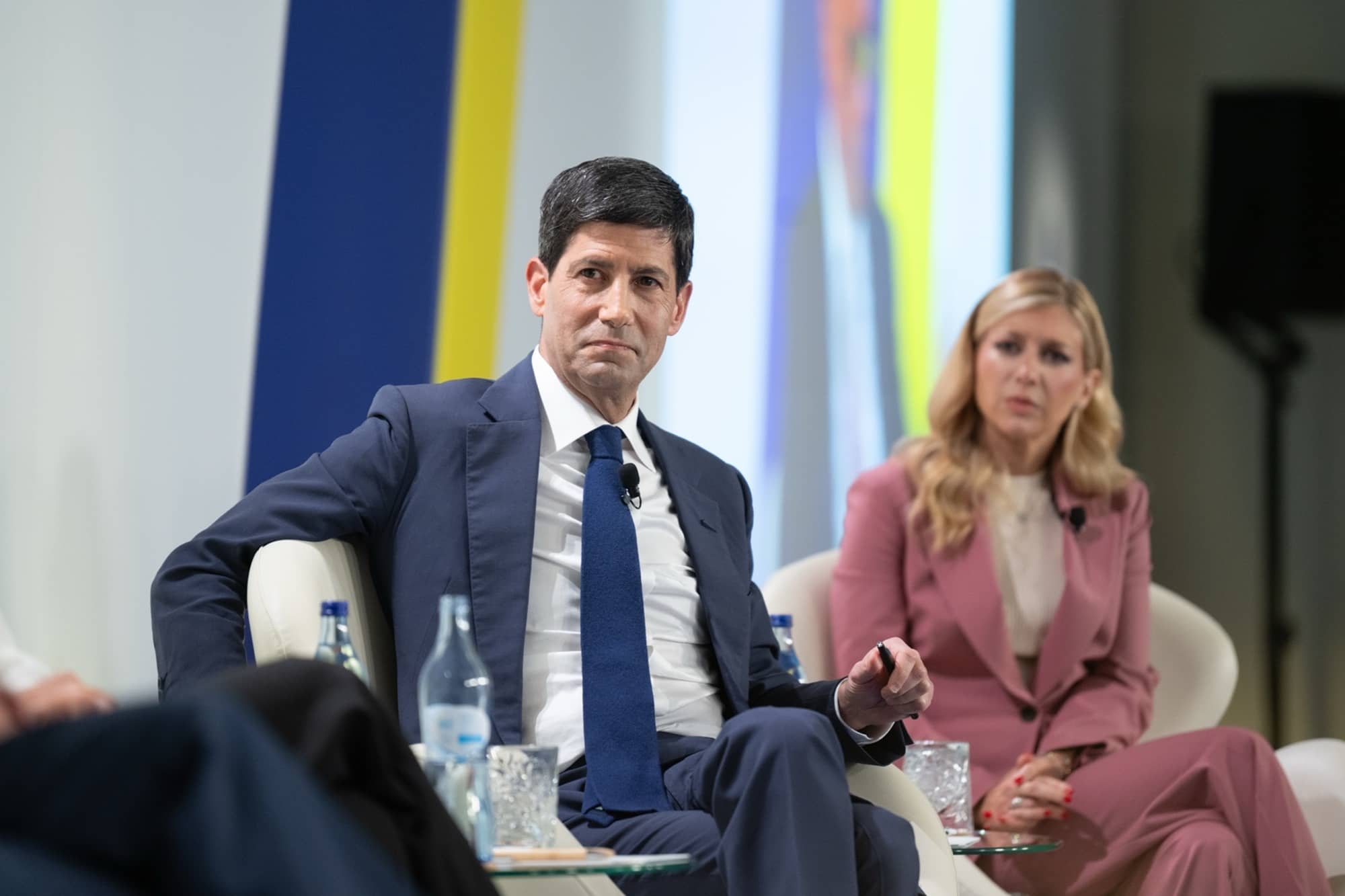
File image of Kevin Warsh. Sérgio Garcia/Your Image for ECB. Copyright: European Central Bank 2026.
British pound has reached the top of the year's range against the Dollar and the trend behind it is robust enough to clear it.
The Pound-to-Dollar exchange rate started the new week with a slight loss but that setback comes in the context of a six-month high being achieved last week, and the observation that the market is currently at the technical shelf that has capped its upside advances all summer.
The strength of the August advance has carried technical momentum readings above the level that is conventionally described as overbought, a reading that argues for a pause somewhere in the coming week without necessarily negating the constructive setup.
From a tactical perspective, a more confident peek above the range high could follow the outcome of Wednesday's U.S. PCE inflation report, which resets the inflation picture, while Friday's Jackson Hole speech from Federal Reserve Chair Kevin Warsh dictates developments ahead of the weekend.
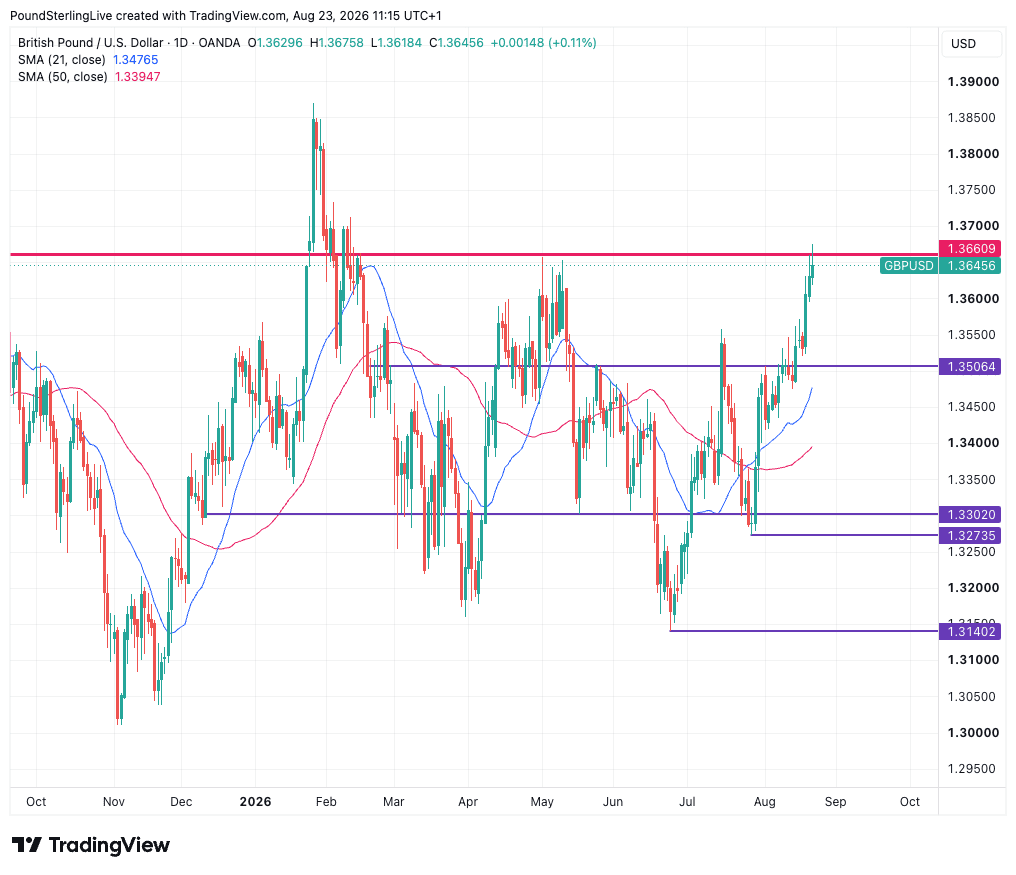
Above: GBP/USD daily chart. Image © Pound Sterling Live, chart created with TradingView.
The pair ended Monday at 1.3630 having traded as high as 1.3675 last Thursday; that leaves spot sitting above the 21-day moving average at 1.3476 and the 50-day at 1.3394, both of which are rising, with the 21-day climbing steeply since the middle of August.
Last week's breach through 1.35064 was a constructive technical development, and the market has added a cent and a half on top of it.
That particular resistance line had capped every attempt through May, June and July before giving way, and it now graduates to a meaningful support level on the old-resistance-becomes-support principle.
The below chart adds a couple of additional indicators: the 200-day moving average which is an indicator of medium-term trend and the Relative Strength Index (RSI), in the lower panel:
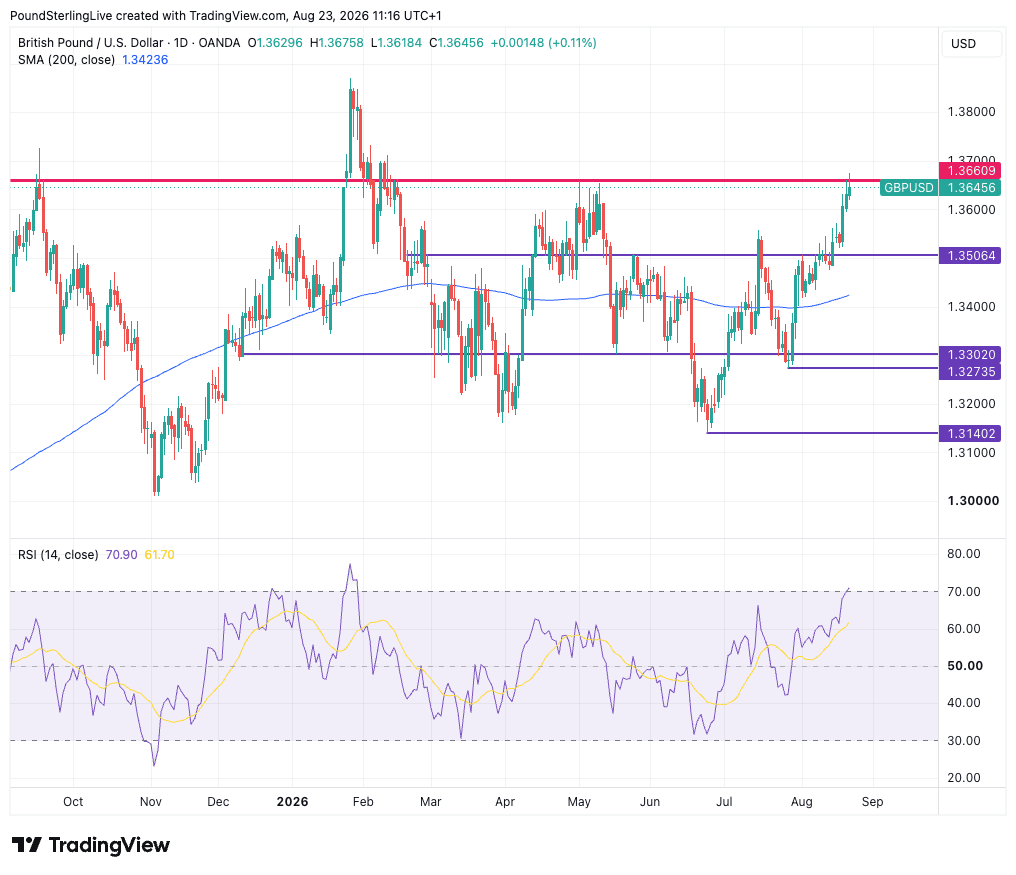
Above: GBP/USD daily chart with the 200-day moving average and RSI. Image © Pound Sterling Live, chart created with TradingView.
The RSI reads 70.90 against its signal line at 61.70, the strongest reading of the year and above the 70 threshold for the first time since February. To be sure, a reading of 70 signals overbought conditions and could bode for a pullback or consolidation in the coming days.
Turning to the key levels, resistance is 1.36609, the horizontal drawn from February's highs, which Friday's session traded through intraday before closing below, and CIBC Capital Markets identifies 1.3680 to 1.3690 as the band above it.
Support runs to 1.35064, then to the 1.33020 and 1.32735 pair that framed the July base, then to the year's low at 1.31402.
Taken together, our Pound to Dollar forecast is for a break above 1.3660 during the coming week that opens the 1.3680 to 1.3690 band, with any failure at the first attempt producing a pullback towards 1.35064 that would be a correction inside the uptrend rather than an end to it, and only a daily close back beneath 1.35064 changing that reading.
The Bank Consensus, Without the Terminal
The median, mean, highest and lowest from the October survey update, plus named point forecasts out to 2027.
Free information pack, issued by World Wide Currencies.
USD Week Ahead: July PCE Lands Two Days Before Warsh Speaks
It's a U.S.-centric calendar this week.The July personal consumption expenditures deflator arrives on Wednesday at 13:30, with headline inflation expected to ease to 3.6% from 3.7% and the core rate to hold at 3.3%.
DNB Carnegie expects core PCE to rise 0.2% month-on-month for an unchanged annual rate, and the Norwegian bank notes that consumer and producer prices have already been published, so the print should land close to expectations while still reminding markets that inflation remains uncomfortably high.
The second estimate of Q2 GDP is expected to confirm annualised growth of 1.5% in the same release, with durable goods orders and personal spending alongside.
The Jackson Hole symposium runs from 27 to 29 August under the theme "Financial Innovation: Implications for Payments and Policy", with Warsh scheduled to speak on Friday at 15:00.
This year's theme has less market-moving potential than usual, according to research from DNB Carnegie, which expects the Chair to use the platform to set out his proposed Federal Reserve reforms.
Dollar's Decline Underpinned by Treasury Market Manipulaton

Above: File image of U.S. Treasury Secretary Scott Bessent. Image: Official U.S. Government image.
The greenback's August decline has been driven by a combination of credibility questions about American policy, as well as a softening in the data.
Of the dual drivers, it's the actions of the U.S. government that are proving most relevant, and will continue to do so in the coming days: the dollar fell after the Treasury's bond buyback announcement that sought to cap long-term debt yields.
The move helps cap the long-term debt yield by issuing more shorter-term debt which is anchored at lower levels, but it clearly fails to address why borrowing costs rose in the first place: rising expectations for an increasingly inflationary future.
The only release valve under these circumstances is the dollar.
The market questions the credibility of the Treasury's unanticipated move, says Sarah Ying, Head of FX Strategy at CIBC Capital Markets, who places the episode in a sequence running from January's yen rate checks to the early-August discussion of reduced long-dated issuance.
A currency falling on credibility rather than data cannot be rescued by a data print, which is why Wednesday matters less for this pair than its billing suggests.
The caution from the same source is that Sterling has travelled beyond what the fundamentals justify.
CIBC puts fair value here at 1.35, citing a tepid UK labour market and a Bank of England already in restrictive territory, and expects the Dollar index to find support around 97.80 to 97.90 while retaining a view that the currency weakens into year end.
Westpac is positioned similarly, forecasting 1.35 for both September and December 2026.
Two of the three houses reviewed this week therefore see the market a cent rich, and neither will trade against it, which is the position of an analyst who expects a correction without being able to name its trigger.
Our house view remains that Sterling can outperform through the second half and end 2026 higher against the Dollar.