
Image © Adobe Images
Pound sterling is stronger across the board after Washington's bond market intervention triggered a broad Dollar sell-off.
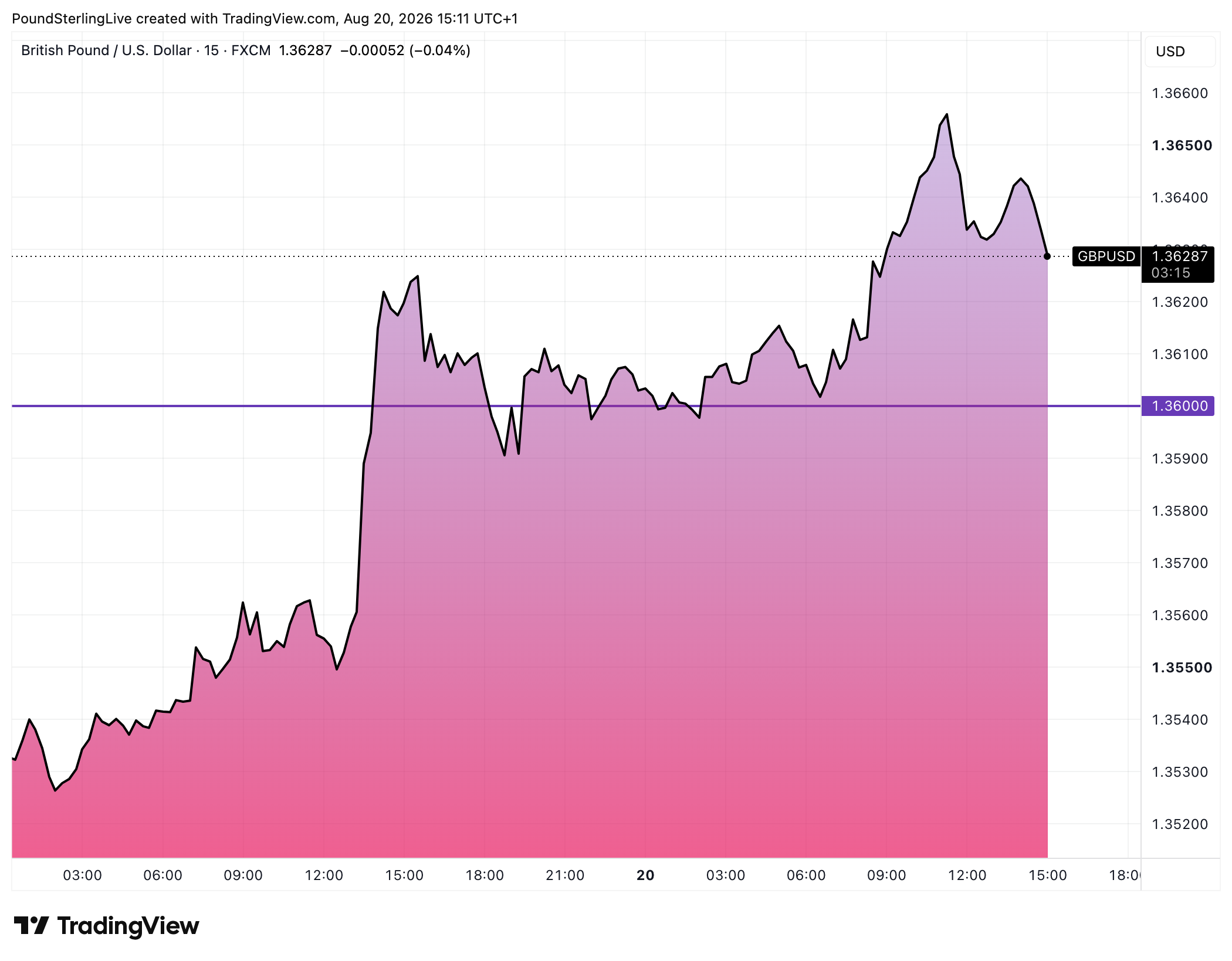
The Pound-to-Dollar exchange rate has pushed to a fresh six-month high above 1.36, extending an advance that began when the US Treasury announced it would at least double its purchases of long-dated Treasuries.
The Pound-to-Euro has recovered to 1.1690, clawing back Tuesday's slide that saw the pair test 1.1650, the floor of its one-month range.
EUR/USD is quoted at 1.1707 and the Dollar index sits near 98.60, close to a three-month low, and has fallen roughly 2.9% since late July.
The move has nothing to do with sterling and everything to do with a Dollar that is being sold on the credibility of American policy rather than on American data.
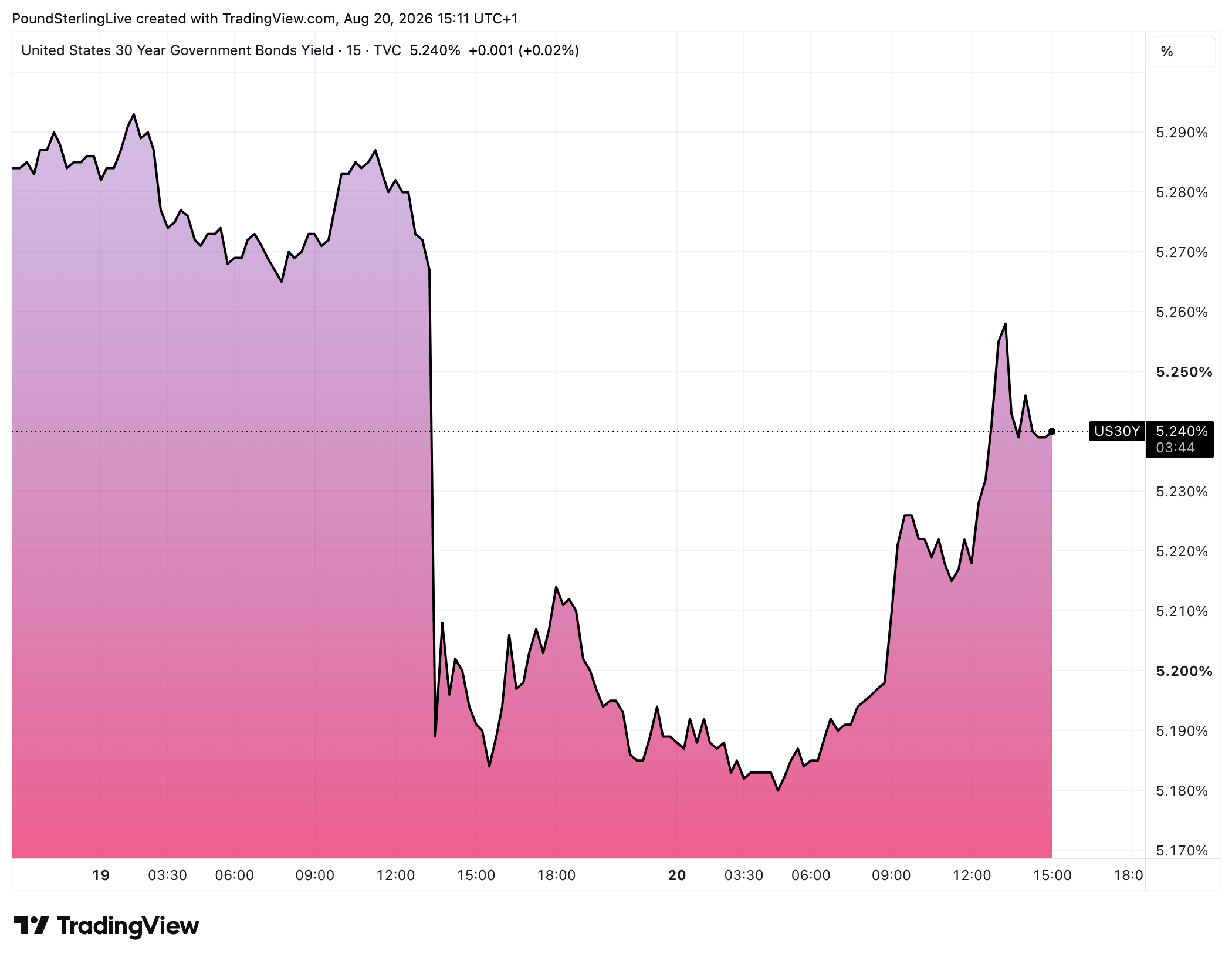
Above: The markets are already pushing back against the Treasury's actions.
Why the Treasury's Bond Buying Is Hurting the Dollar
The intervention was designed to calm a bond market rout by capping long-end yields. It has instead raised questions about the framework itself.
Buying its own long-dated debt marks a departure from the Treasury's stated commitment to being regular and predictable in its issuance, a principle Scott Bessent restated as recently as his November 2025 speech.
Markets have read the change as the latest in a sequence of interventions rather than an isolated technical adjustment.
"The greenback continues to weaken as the market questions the credibility of yesterday's unanticipated move by the US Treasury," says Sarah Ying, Head of FX Strategy at CIBC Capital Markets, who points to yen rate checks in January, yen purchases on 31 July and the early-August discussion of reduced long-dated issuance as a pattern investors are now pricing.
daily note from Saxo captures the ambiguity that is doing the damage, observing that the policy is neither quantitative easing nor quite yield curve control.
Brown Brothers Harriman frames the trade-off directly in its morning note: the buyback plan curbs yields while exposing the fiscal strain underneath them.
That is the mechanism. Capping the price of government borrowing without addressing why borrowing costs rose transfers the pressure into the currency.
The move landed despite hawkish Federal Reserve minutes released in the same session, which is itself the story. When a dovish surprise in the bond market overwhelms a hawkish surprise in the rates market, the currency is trading on institutional confidence rather than the interest rate outlook.
Sterling Is a Beneficiary Rather Than a Driver
The Pound's gains this week owe more to the Dollar's problems than to anything domestic, but the UK backdrop has quietly improved.
CIBC lists a reduced political risk premium among the reasons sterling has run, citing an improvement in Labour's polling position and a easing of the fiscal concerns that shadowed the currency earlier this month.
That is a meaningful shift from the position a fortnight ago, when nerves over fiscal flexibility were the dominant sterling story.
Carry and risk-on flows have done the rest.
A weaker Dollar of this kind is typically accompanied by firmer equity markets and falling volatility, and that combination favours the Pound against both the Dollar and the Euro while working against the safe-haven currencies.
It is also why the recovery in the Pound to Euro rate has arrived without any supportive UK data. Tuesday's firmer inflation print failed to lift the pair, and last week's labour market figures pointed the other way. The move up from 1.1650 is a risk sentiment move.
Where the Analysts Say This Stops
The caution is that sterling has now travelled beyond what the fundamentals justify.
CIBC puts fair value for the GBP/USD rate at 1.35, taking into account a tepid labour market and a Bank of England already operating in restrictive territory. Spot is comfortably above it.
"We suspect that the run-up in sterling has gone too far, but we are not prepared to fight it at this moment," says Ying, who identifies resistance in the 1.3680 to 1.3690 area.
For the Dollar more broadly, CIBC expects the index to find support around 97.80 to 97.90, and describes itself as looking for a bottom while retaining a view that the currency weakens into year end.
There is already a hint of that stabilisation. An afternoon note from Saxo reports Treasury yields moving back up, with ten and thirty-year yields adding five to six basis points and unwinding part of the buyback-inspired rally in bonds.
On the Euro leg, CIBC argues EUR/USD upside above 1.18 is limited, because elevated natural gas prices remain a growth risk and increase the danger of policy error if the European Central Bank keeps tightening.
For those with currency payment requirements, the practical read is that sterling is at the top of its recent ranges against both the Dollar and the Euro, and the analysts who follow it most closely regard the level as generous rather than justified.
GBP/USD faces resistance just below 1.37, and the GBP/EUR rate has recovered to the middle of a one-month range that runs from 1.1654 to 1.1766 rather than broken out of it.