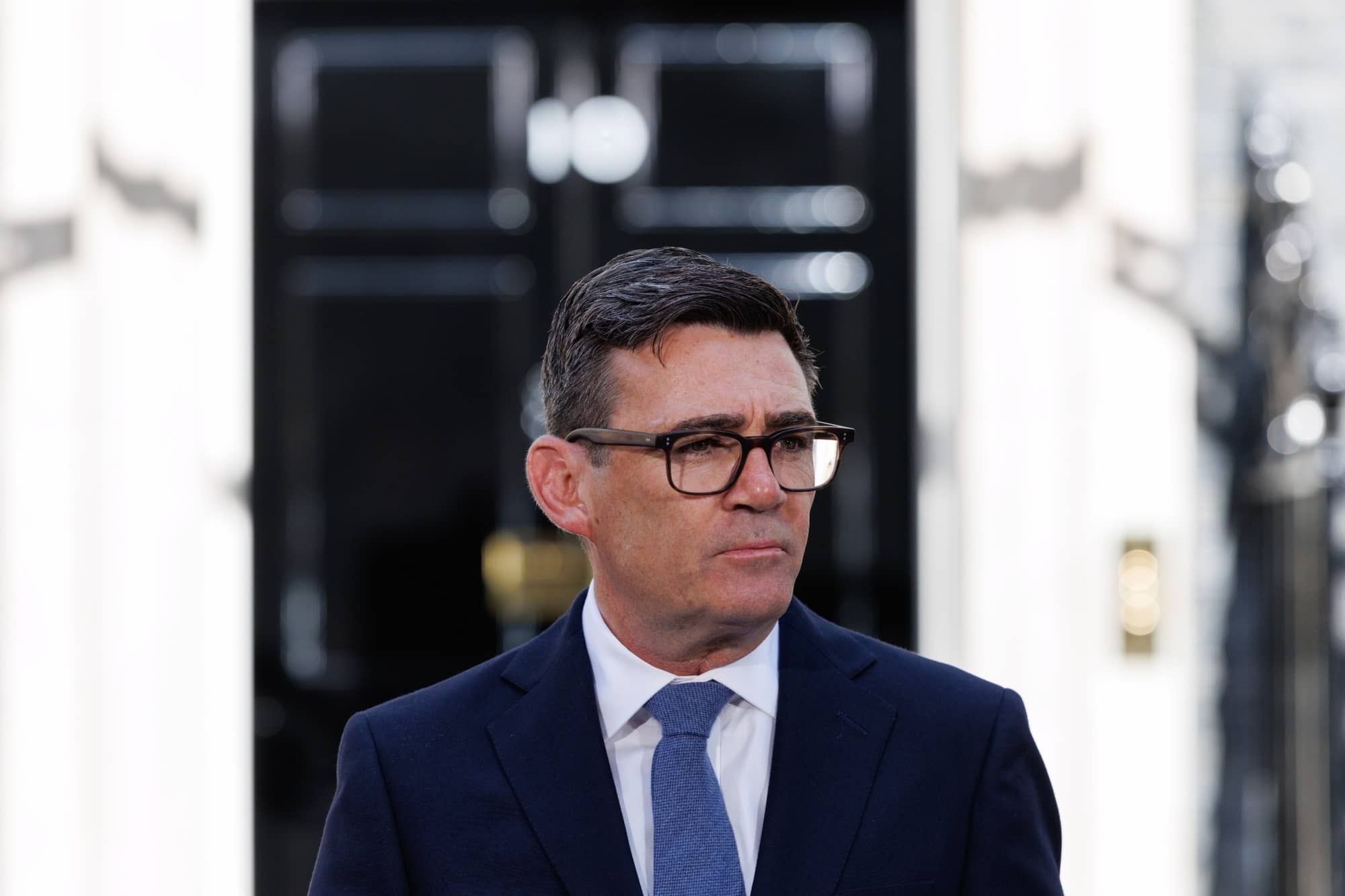
Picture by Lauren Hurley / No 10 Downing Street
UK Treasury officials fear Burnham's fiscal 'flexibility' plans could destabilise markets, risking the British pound's ascent against the euro and dollar.
UK Treasury officials are concerned that the Prime Minister's talk of using "flexibility" within the fiscal rules to ramp up investment could backfire by destabilising financial markets, including the pound, according to a financial newswire.
"Mounting speculation that the new government might use the arrangement more aggressively than previously has raised fears that investors could be spooked and send borrowing costs soaring," Bloomberg reports, adding that officials are "alert" to the risk.
The "flexibility" refers to a 2024 rewrite of the fiscal rules that could theoretically allow almost unlimited borrowing for investment in Andy Burnham's priorities of housing, transport and defence.
The fear inside the Treasury is that markets deem flexibility-for-investment a fiscal flaw, one that leaves the government without a binding constraint, with higher borrowing costs the consequence.
Burnham set the tone on July 20, the day he became Britain's Prime Minister, saying he would stick to his predecessor's rules but would "use obviously any flexibility within them."
The Pound and gilts - UK bonds - fell in tandem the first time Burnham aired the flexibility idea, a reminder of how quickly this channel can bite.
For Now, the Pound Isn't Listening
The news comes as Sterling engages a short-term recovery mode, rising against the Euro and Dollar into Tuesday.
The Pound-to-Euro exchange rate is back at 1.17, and a technical floor looks to be establishing at 1.1650, just beneath the support zone we identified in the week ahead forecast and holding despite a week of bearish bank research and compressed yield spreads.
The Pound-to-Dollar rate rises to 1.3509, reclaiming the 1.35 level that capped it a week ago, with short-term momentum improving.
The explanation for the resilience is simple: no news is good news.
Parliament is in recess, and the Prime Minister is leaning heavily on ambiguity, telling reporters at a pre-recess outing in Bath: "We'll have to look at it at the budget alongside everything else. So no commitment, no unfunded promise. There is no commitment at this point to change, but we will look at that at the budget."
The political-fiscal interplay has proven a difficult one for markets in the context of the UK's rising debt and elevated interest rates, so an absence of commitments is, for now, an absence of trouble.
"Given the jittery reaction in gilts and the pound to Burnham’s early announcements, his honeymoon period could be short-lived," says Jane Foley, senior FX strategist at Rabobank.
Why the Second Half Gets Harder for GBP
The concern is that the second half of the year proves tougher for the Pound than the summer.
No commitments let the currency trend higher, but when Burnham returns from the summer break, his wish-list will run into the debt and spending realities his government faces, with the October 28 budget the deadline for reconciling them.
"Andy Burnham has made little secret of his desire to boost home-building significantly, reform social care, and increase defence spending... Risks lie towards large tax hikes and more short-term borrowing in the autumn Budget," says Elliott Jordan-Doak, economist at Pantheon Macroeconomics.
All the while, the global backdrop offers no cover: global bond yields are elevated everywhere amid a significant increase in issuance from the likes of the US, France and Japan, meaning investors are being asked to absorb ever more debt, with elevated energy prices and bond issuance by AI hyperscalers adding to the supply of debt.
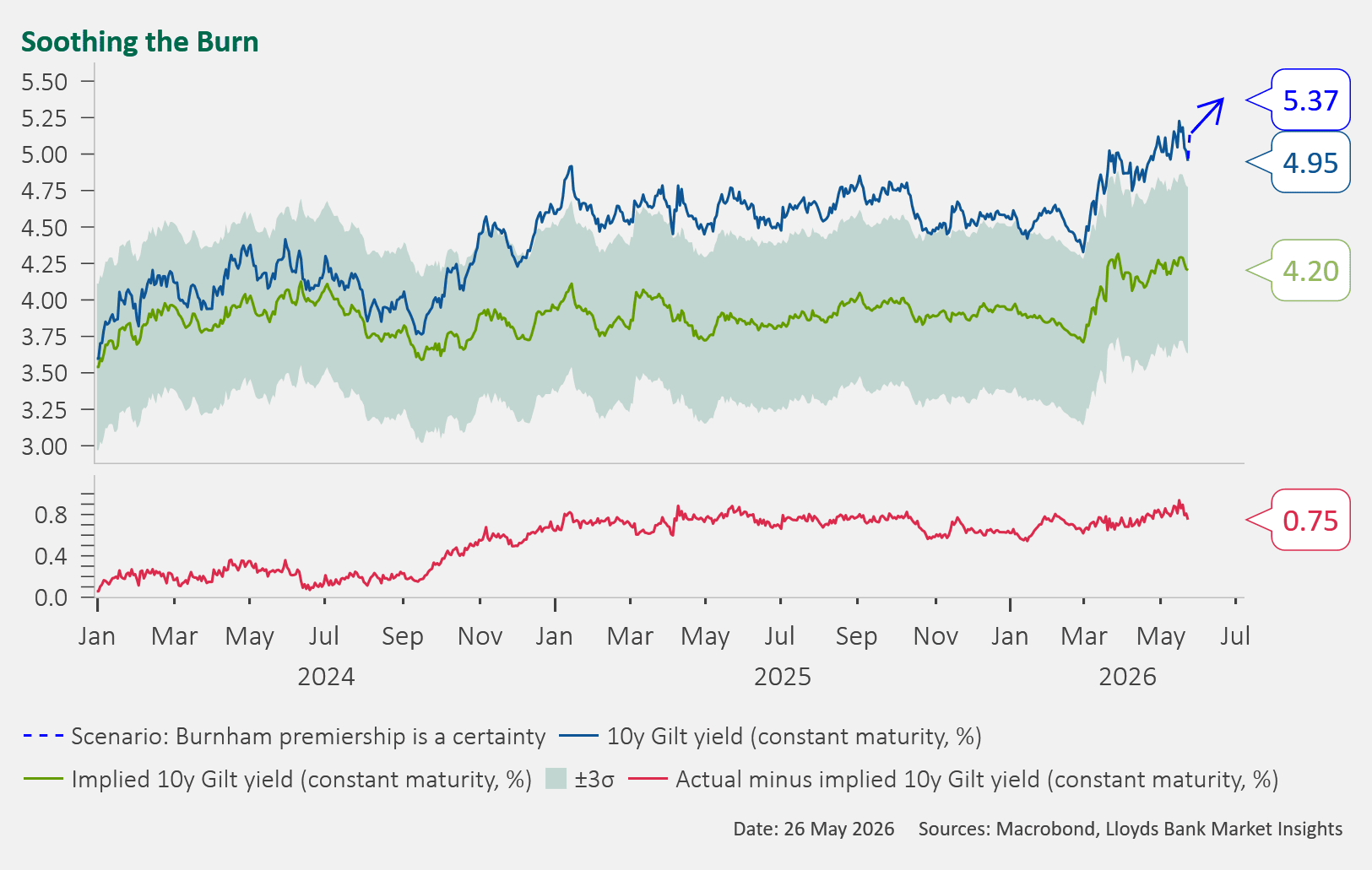
Above: The UK government is paying a premium to borrow money, with economists saying that's due to elevated political risks associated with the country.
The UK carries a high beta to global yields owing to the premium investors require to hold its debt, meaning UK bond yields rise faster than global equivalents.
Notions that the UK is some kind of safe harbour in the bond market ocean are misplaced.
For a government that wants to spend more, that amplifier is an acute problem: every basis point the world adds, Britain adds with interest.
"The U.K. is testing fiscal protection. Burnham’s removal of VAT on household electricity bills offers relief to consumers, with business-rates relief also under discussion. But gilt and sterling weakness underline the trade-off: household protection can quickly become a credibility problem if investors question whether fiscal easing is fully funded," says Geoffrey Yu, a strategist at Bank of New York.

The Bank Consensus, Without the Terminal
The median, mean, highest and lowest from the October survey update, plus named point forecasts out to 2027.
Free information pack, issued by World Wide Currencies.