
Image © Adobe Images
The euro-to-dollar exchange rate is looking better supported than other major peers during this period of USD strength.
The dollar is strengthening widely, but the euro is one currency that is holding back the tide and is even attempting to carve itself a piece of short-term support.
A look at the daily chart shows EUR/USD holds above the 100-day moving average at 1.5657, which is where Wednesday's selloff found buyers.
Those buyers have stepped up again on Thursday and have pushed the market to 1.1602, a move that reinforces the graphical support - at 1.1578 - that we've drawn on our running chart:
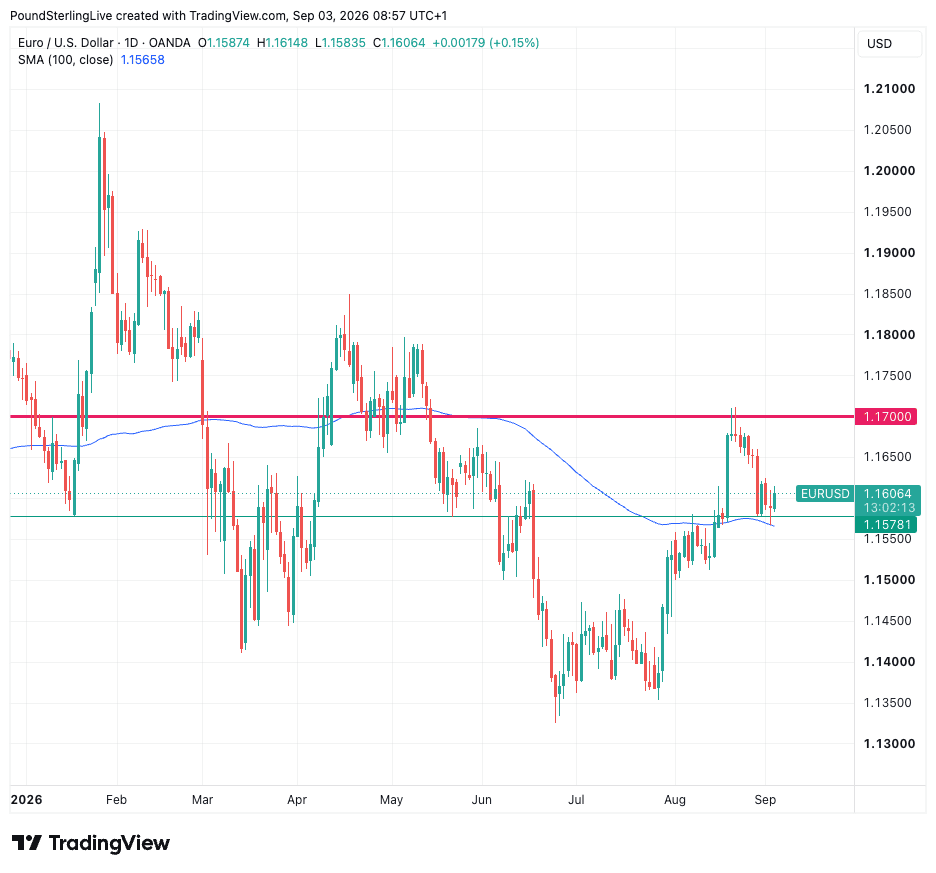
I note that 1.1578 has often provided support and resistance for euro-dollar, going back as far as January. Back then, a pullback actually reversed off this line and the pair surged to 1.2050 within the space of two weeks.
I doubt that will be the case this time around, and instead will watch for the recent selling interest to continue and grind the pair steadily lower to 1.15.
The driver for that stance is the current phase of USD strength, which still has legs to run on divergent central bank policy:
- The ECB is expected to raise rates this month
- The Fed is now odds-on to raise rates
- However, ECB pricing has been settled for some time, the market has expected it
- Fed pricing has however only really been shifting up over the course of the past two weeks
- There's more Fed hike pricing to come
But, the euro isn't capitulating.
There's a decent backstop for the euro: although the ECB hike is 'in the price', further tightening isn't. If ECB President Lagarde delivers hints that further hikes are possible, further euro resilience becomes possible.
Notice how I choose the word resilience, as it's difficult to see the euro leg outperforming the dollar leg while the market is repricing towards Fed hikes.
"The US dollar reacted positively to Fed Chair Kevin Warsh’s hawkish speech at the Jackson Hole Economic Symposium. Mr Warsh left no one in any doubt that the US central bank’s focus was on getting inflation back to its 2% target," says Angus Campbell, analyst at Trade Nation.
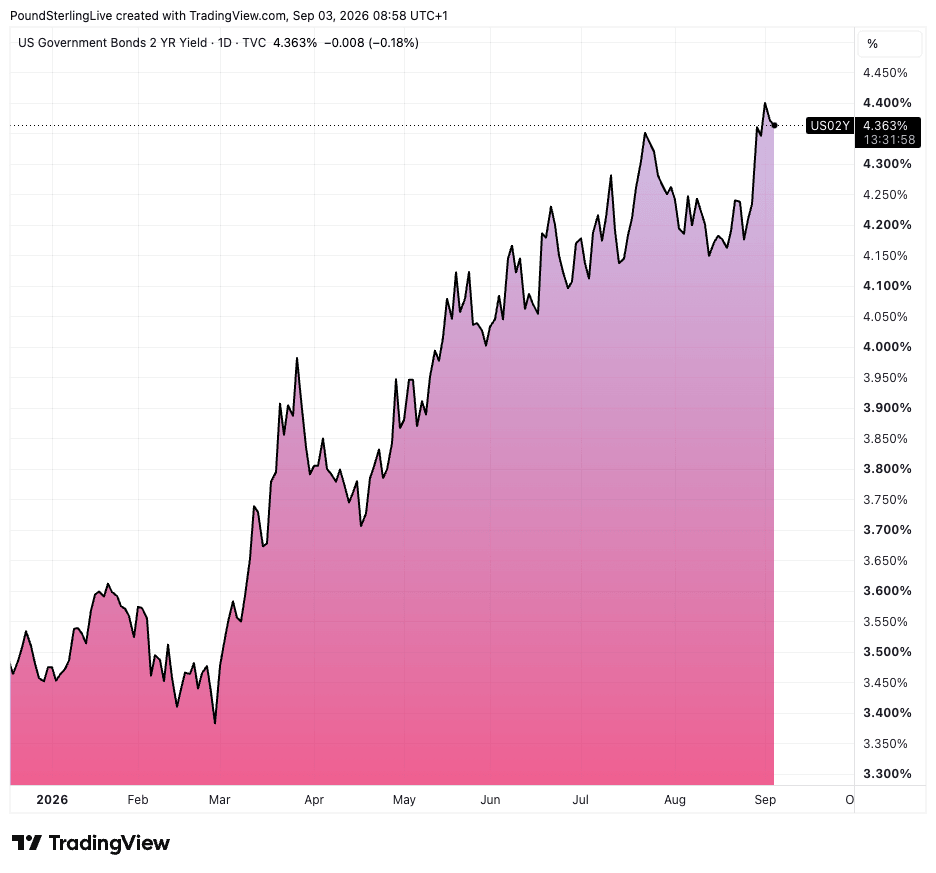
The U.S. two year yield - which is closely correlated to Fed policy rates - peaked at 4.4% on Wednesday, the highest since January 2025.
Higher U.S. yields tend to feed into a firmer dollar, but only if the rise outperforms gains elsewhere.
What we're seeing on the charts is that the dollar is not tearing away owing to the counterweight of rising global yields; they're up everywhere, meaning any strength should be relatively contained.
So it's a case of steady grind by the dollar that leaves the euro-dollar's broader ranges intact, limiting weakness in the exchange rate.

The Bank Consensus, Without the Terminal
The median, mean, highest and lowest from the October survey update, plus named point forecasts out to 2027.
Free information pack, issued by World Wide Currencies.