Image © Adobe Images
The Euro is exposed if the ECB underdelivers on rate hike expectations, says Danske Bank.
The euro faces a setback if the European Central Bank (ECB) disappoints 'hawkish' market expectations, but the strong performance of European equities warns against betting against the single currency.
To be sure, much of the Euro's summer advance rests on an assumption the European Central Bank is going to deliver a handful of rate hikes, a view that's been burnished by a run of European data surprises.
Markets currently price a September rate hike as certain as a result and expect further tightening beyond, a repricing that has lifted German yields to cycle highs and pushed the euro higher against the dollar and pound.
However, ahead of next week's ECB decision, Danske Bank says it thinks the market has over-ordered.
"We expect the ECB to deliver a final rate hike in September, but unlike the markets, which expect two additional rate hikes, we do not see the war triggering more persistent inflationary pressures," says the bank.
A central bank that stops after September, set against a market priced for more, is a recipe for the hawkish premium in the Euro to unwind, and that is the downside risk in the pair of scenarios now facing the single currency.
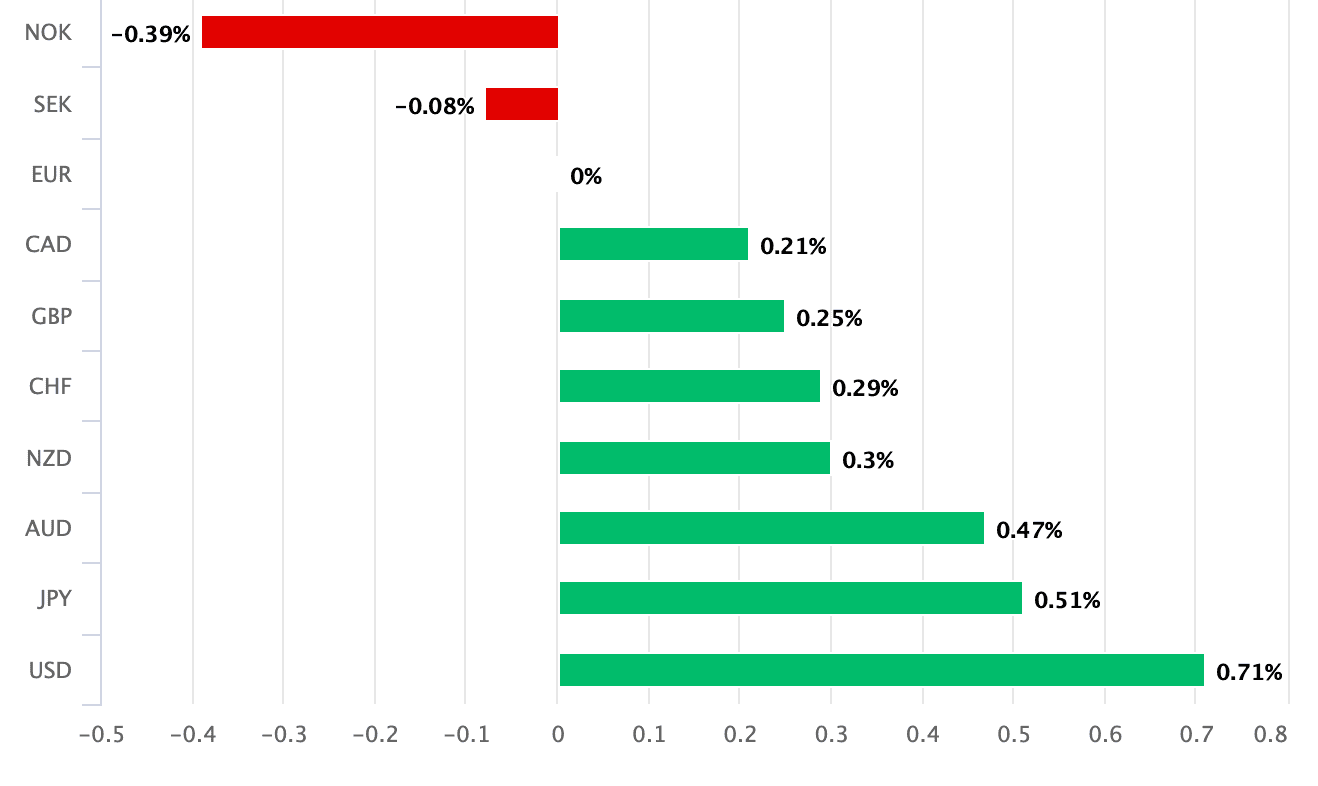
Above: EUR performance on a one-week timeframe.
Euro Resilience Has Solid Economic Foundations
It's been a decent run of late for the euro: The past month puts the currency in the top half of performers in the G10 bracket, and it rises to third when screened over one week. The euro-to-dollar rate is where the lion's share of the single currency's advance reflects: up 0.70% on the week and 1.70% on the month.
The economic backdrop explains why the currency is performing well.
"In contrast to the US economy, the European economy surprised positively over the summer," says Danske Bank, with quarterly growth of 0.4% in the second quarter and several soft indicators pointing to an improvement in activity.
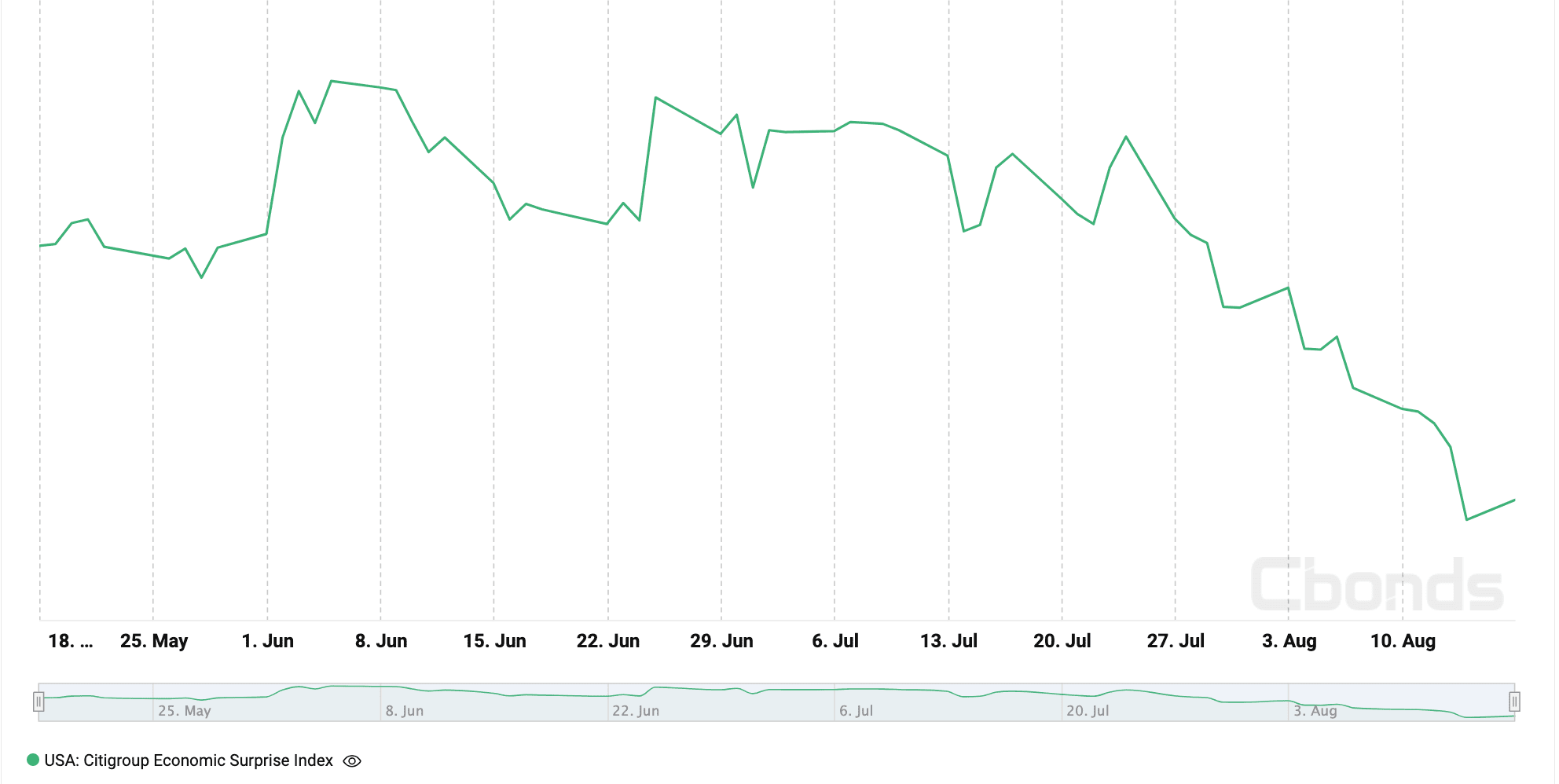
Image courtesy of Cbonds.
The growth resilience buys the ECB time in both directions, with Danske noting the lack of clarity in the Middle East and the run of positive surprises postponing the immediate need for rate cuts next year.
The bank continues to expect cuts in the first half of 2027, but increasingly sees the possibility they will not be delivered until later that year.
Why Betting Against the Euro is Risky
A currency's value is typically driven by inward flows of capital that are matched against corresponding outward flows.
In FX analysis, we often fix on the fixed income flow: investors chasing bonds that offer superior returns, and these are influenced to a degree by central bank policy, hence the importance of next week's ECB call.
But, let's not forget another important source of flow: stocks.
European equities are outperforming, and that can prove to be an underappreciated support for the euro.
"Positive European earnings and revisions have surprised markets. Expectations define surprises," says Davide Oneglia at TS Lombard. "Beneath the Iran shock, European macro is stronger than it looks, while banks and AI's performance is structural, and Europe's high beta to 'good news' is downplayed."
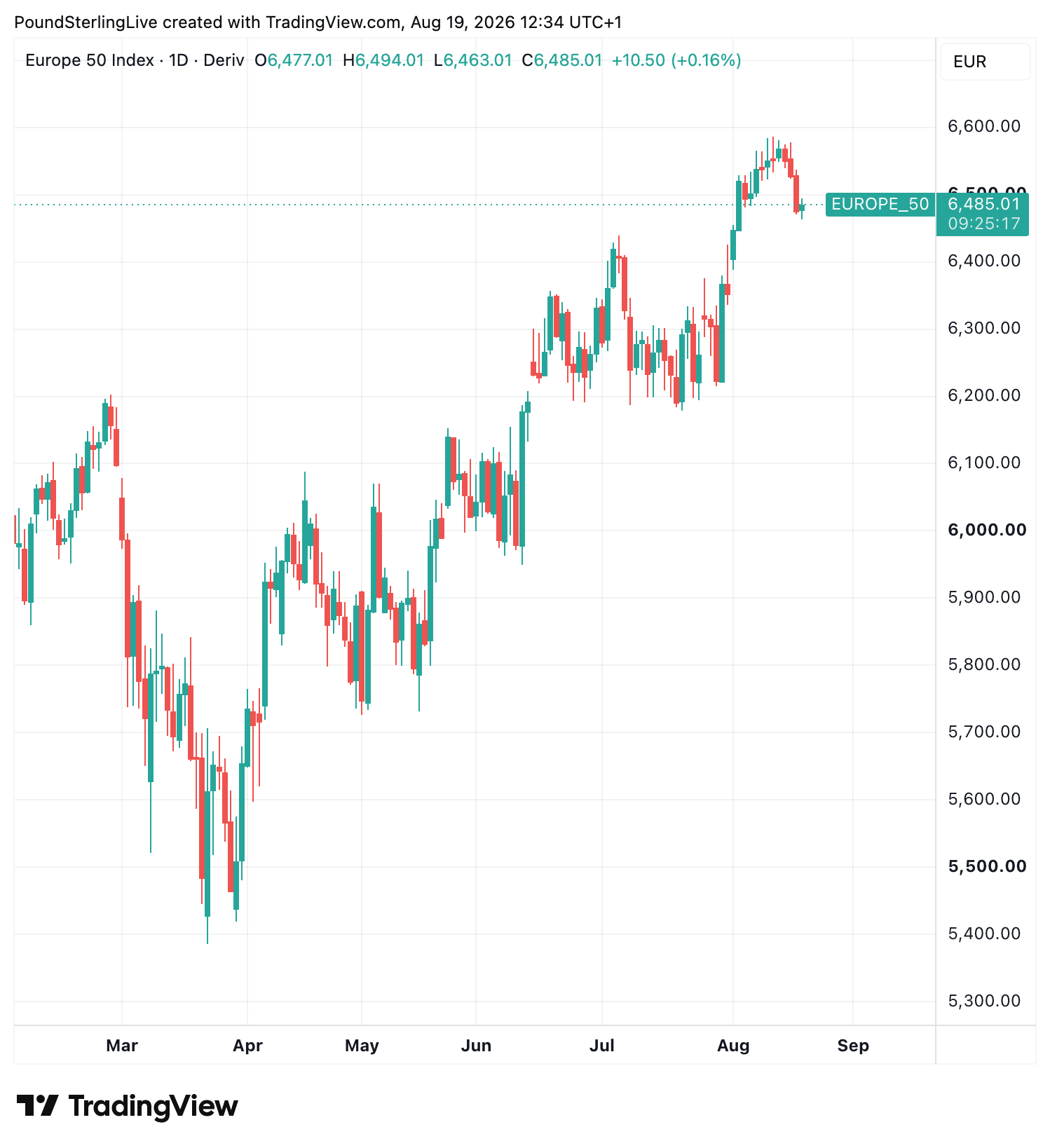
The Europe 50 stock index.
The point is that consensus was quick to price in bad news after the Iran war began, implying a big rebound in economic and earnings surprises when decent data hit, which is exactly what has happened.
Oneglia is not blind to the risks, citing a still-shut Strait of Hormuz, a "growing risk of panicked ECB response" and rowdy politics, "but we stay positive on balance, in line with our above-consensus growth outlook," barring an energy crunch this winter.
For the currency, that growth resilience acts as downside protection: an ECB that stops hiking into an economy that keeps surprising positively is a milder bearish mix than an ECB that stops because the economy has rolled over.