Image © Adobe Images
Key Takeaways
- The rise in U.S. Treasury yields, with the 30-year at 5.337% and the 10-year at 4.748%, is not a bond market crisis, Julius Baer tells Pound Sterling Live, finding no evidence of a buyers' strike.
- Treasury auctions are clearing normally and the 10-year breakeven inflation rate near 2.3% shows long-term inflation expectations remain anchored, meaning the yield rise reflects real yields, according to Julius Baer.
- Julius Baer expects intermediate U.S. Treasury yields to fall as excessive Federal Reserve tightening expectations unwind, leaving the U.S. Dollar a front-end interest rate story into the September FOMC meeting.
The global rise in long-dated bond yields is not a buyers' strike, says Julius Baer.
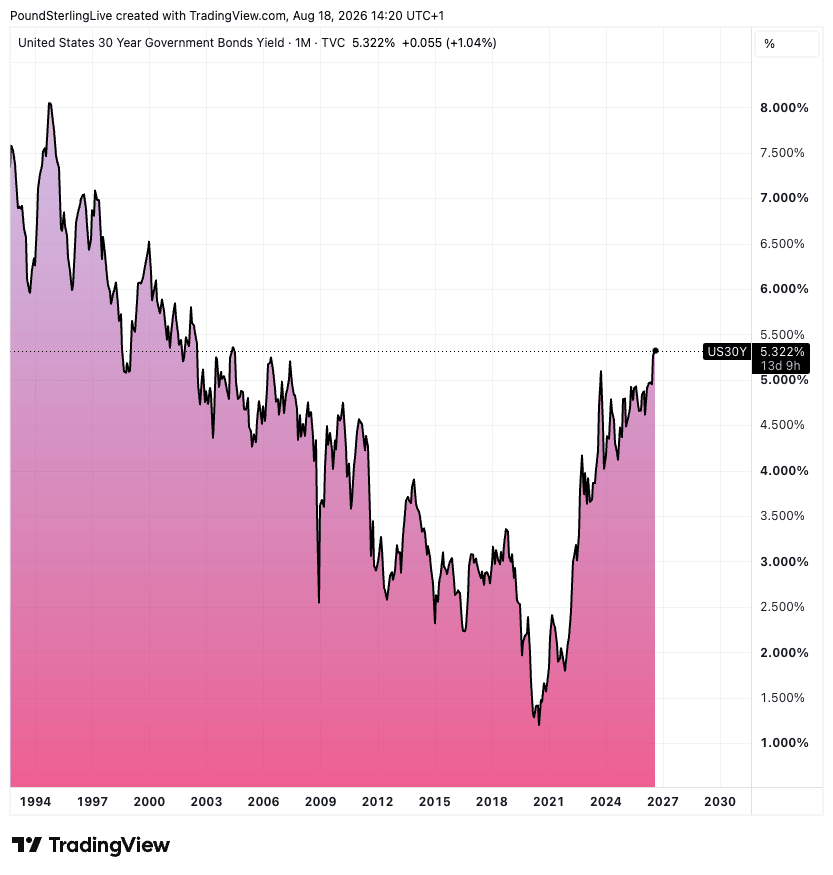
The bond market grind continues, with the 30-year U.S. Treasury yield trading at 5.337%, its highest in over two decades, and the 10-year at 4.748%, a level last seen in January 2025.
The move is global, with long-dated yields across other major developed markets also at multi-decade highs as investors absorb heavy issuance from the U.S., France, the UK and Japan.
With mainstream media outlets picking up on developments, there's a rising sense of concern, but analysts at Julius Baer say this is not the start of a crisis moment some fear.
"We see no evidence of a buyers' strike: Treasury supply continues to clear without persistent auction indigestion, while long-term inflation expectations remain anchored," says the Swiss bank in a research note out Tuesday 18.
The bank's fair-value model attributes the bulk of the move to Federal Reserve repricing, with the 63 basis point rise in one-year forward rate expectations accounting for most of the 80 basis point selloff in 10-year Treasuries since the end of February.
The curve still prices roughly 40 basis points of restriction over the next year, which Julius Baer attributes at least partially to the strength in energy prices.
The latest leg has nevertheless been harder to explain through U.S. data alone, with the daily correlation between U.S. 10-year yields and the bank's broad global rates factor reaching 0.88 over the past month, its highest since the start of the Iran war.
Despite this, there's no need to panic says the Julius Baer analyis, which notes U.S. treasury auctions have been "remarkably unremarkable," with supply clearing at higher yields but without the persistent tails, weak end-user participation and heavy dealer takedowns that characterised the genuine auction indigestion of late 2023.
The 10-year breakeven rate stands near 2.3%, meaning the pressure on yields is coming through real yields and not through inflation compensation; markets are demanding more return, but they are not doubting inflation control.
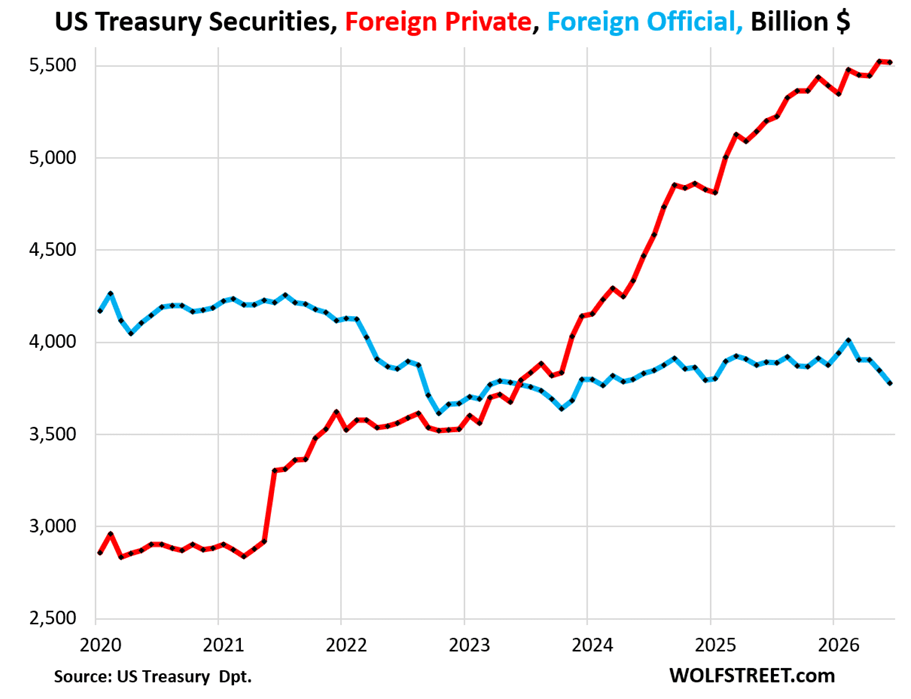
Who buys U.S. debt: increasingly it's the private sector who might be less inclined to hold.
The global impulse can keep Treasuries above fair value for some time, "but it is unlikely to anchor them at current levels indefinitely," says the analysis, with intermediate yields expected to retrace lower as excessive Fed tightening expectations unwind.
For currency markets, the assessment lands on the calmer side of the debasement debate weighing on the Dollar: if Julius Baer is right, the long end is noise and the Dollar remains a front-end Fed story into September.