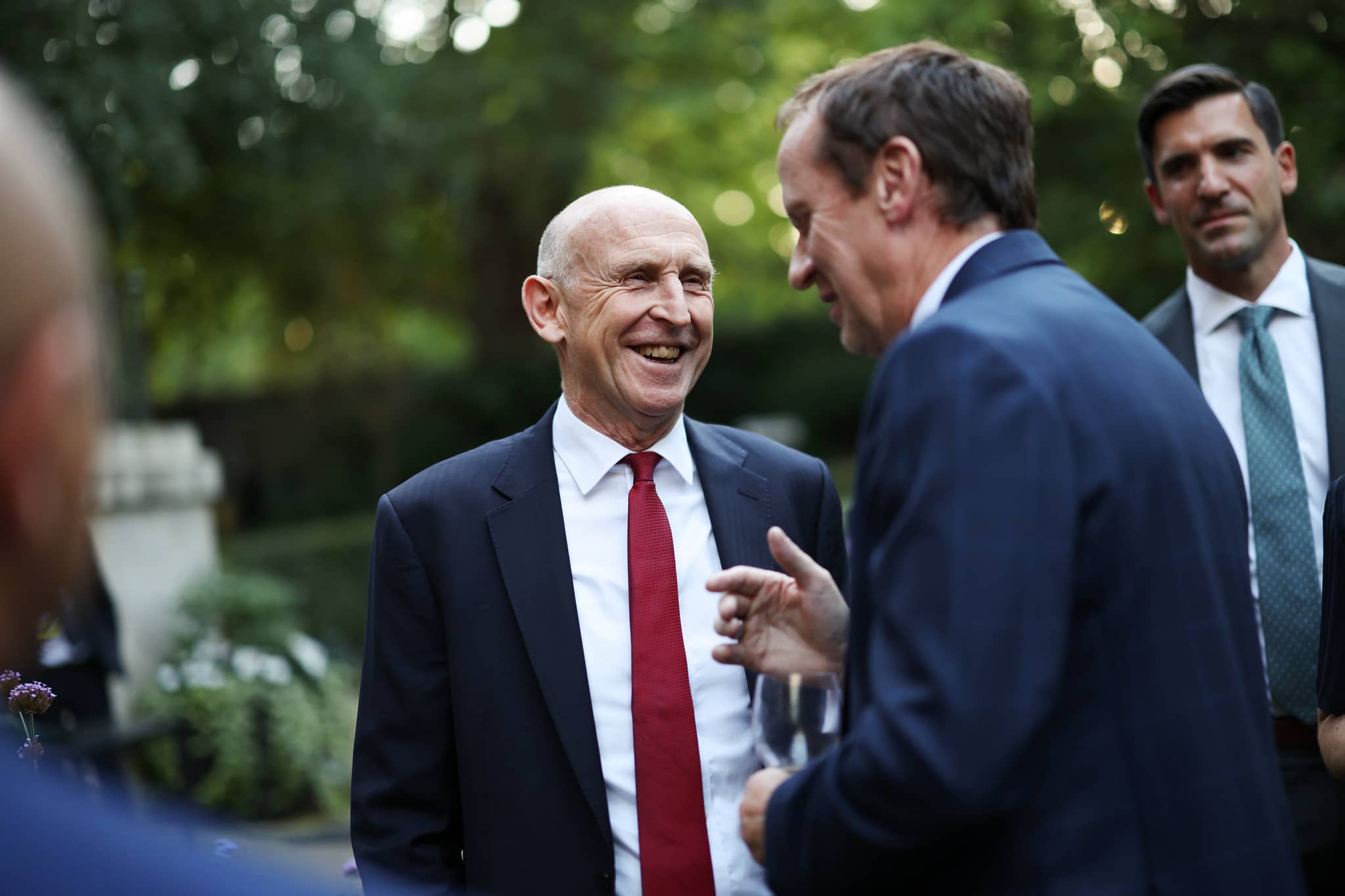
John Healey. Picture by Lauren Hurley / No 10 Downing Street.
The Chancellor must raise at least £12bn at the Budget, with bigger tax decisions likely held back.
Chancellor John Healey needs to find at least £12bn at the 28 October Budget to repair lost fiscal headroom and fund pledges already made, according to new analysis from EY, a sum that can be raised without the broad tax rises that would unsettle the pound.
According to EY analysis, "a limited Autumn Budget focused on pre-announced measures would require the Chancellor to find at least £12bn in additional raised revenue."
EY estimates the Chancellor's headroom has more than halved to £11.3bn from £23.6bn in March, with rising gilt yields the single largest drag at £10bn.
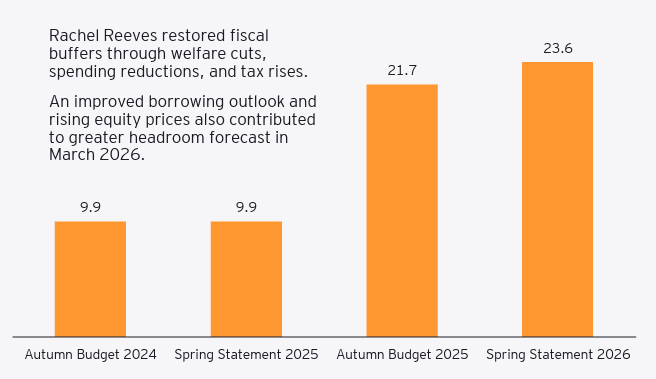
Above: Previous headroom forecasts
The £12bn tax hike breaks down as follows:
• £9bn to repair headroom lost since March
• £2.1bn to fund cost-of-living measures already announced: the national bus fare cap, business rates relief for pubs and live music venues, and a VAT cut on household electricity bills
Manifesto pledges lock the rates of income tax, employee National Insurance, corporation tax and VAT, which together raise £772bn of the UK's £1.1trn in annual tax receipts.
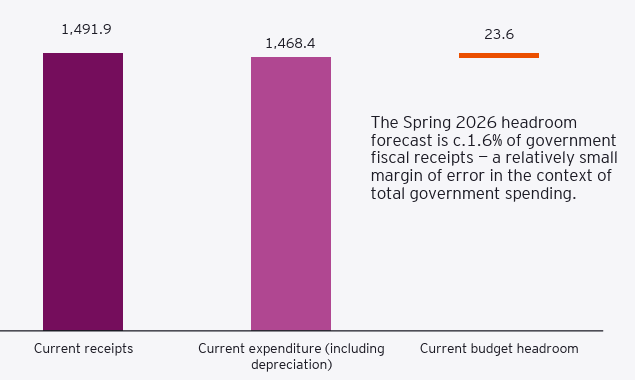
Above: What the headroom looks like.
That leaves Healey with "a relatively narrow and shallow pool of revenue raising options," says Chris Sanger, UK Tax Policy Leader at EY.
He adds that individual measures from that pool tend to raise hundreds of millions of pounds, not billions.
How a Small Budget Gets Funded
EY's full report identifies targeted measures worth around £12.5bn, led by:
• Reclassifying R&D spending as capital under the fiscal rules: £5bn
• Normalising capital gains tax: £2.5bn
• Cutting the cap on the pension tax-free lump sum to £100k: £2bn
• Adding 5p to the additional rate of income tax: £1.2bn
• Doubling the bank surcharge to 6%: £1bn
"Targeted revenue measures could repair headroom without increasing manifesto-protected taxes," says the report, which flags the additional rate rise as the only measure on the list that breaks a pledge.
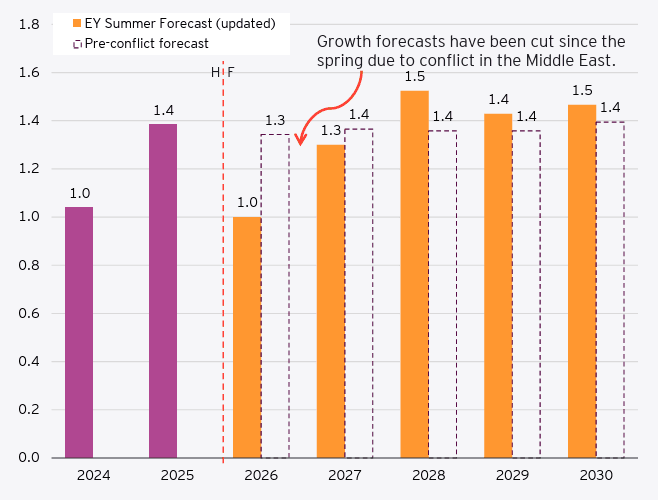
Above: GDP growth forecasts.
Big Decisions Deferred to the Spring
Our view is that the larger decisions will be held back, giving the fiscal position time to improve and clearing the ground for a Spring election.
The Treasury this week played down the timing of its next spending review, with Healey reported to be eyeing autumn 2027 for the multi-year carve-up of department budgets, defence included.
Labour also held Holborn and St Pancras in Thursday's by-election, seeing off a challenge from Green Party leader Zack Polanski in Sir Keir Starmer's former seat.
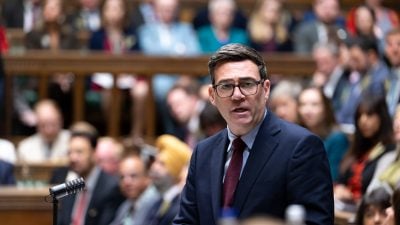
EY expects Prime Minister Andy Burnham's costlier ambitions on defence, social care and housing to be signalled at this Budget, with funding deferred until the economic outlook clears.
Carrying those ambitions now would add a further £40bn of cost, which EY says cannot be met without raising the protected taxes.
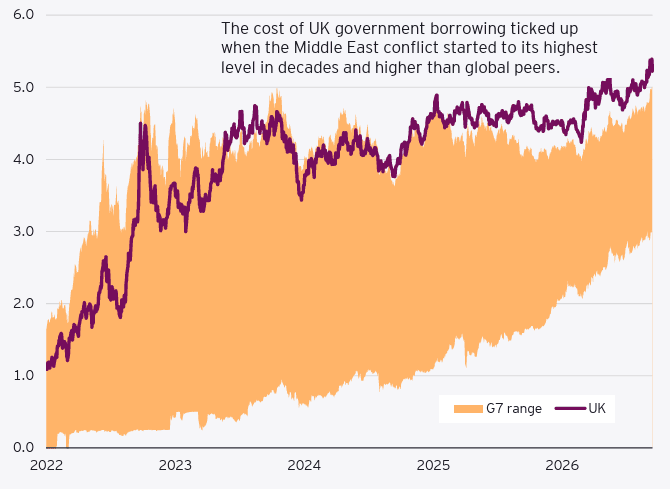
Above: British bonds carry a premium 'headache' compared to others.
What It Means for the Pound
Sterling heads into the final weeks before the Budget firm against the euro: the Pound to Euro rate is at 1.1792, with the Pound to Dollar rate at 1.3244.
Our house view is that the pound stays capped into 28 October and recovers once a Budget of this size passes as a non-event.
Gilt yields are the main risk to that view, given EY names them as the biggest single drain on headroom; Mats Persson, UK&I Macro and Geostrategy Leader at EY, says yields have reached their highest levels this century.
Growth offers the way out, says Peter Arnold, Chief Economist at EY, with the OBR's cyclical upswing scenario lifting headroom to around £40bn, enough to fund Spring ambitions without the tax shock that would weigh on the pound.