
Image © Adobe Images
UK borrowing costs at their highest since the financial crisis are reaching households through mortgage pricing.
Britain's gilt market selloff is being passed straight to households, with HSBC, Halifax and BM Mortgages all repricing parts of their residential and buy-to-let ranges this week.
"This is being driven by the bond markets. Gilts and swaps aren't kind to borrowers, and the Bank of England has yet to meet this week," says Rohit Kohli, Director at The Mortgage Stop.
Sub-4% fixes have already gone from the market and brokers now expect the 5% line to be tested next.
"Borrowers with the biggest deposits or the most equity can still find 2- and 5-year fixes around 4.5% to 4.6%, but that window is narrowing by the week," says Craig Fish, Director at Lodestone Mortgages.
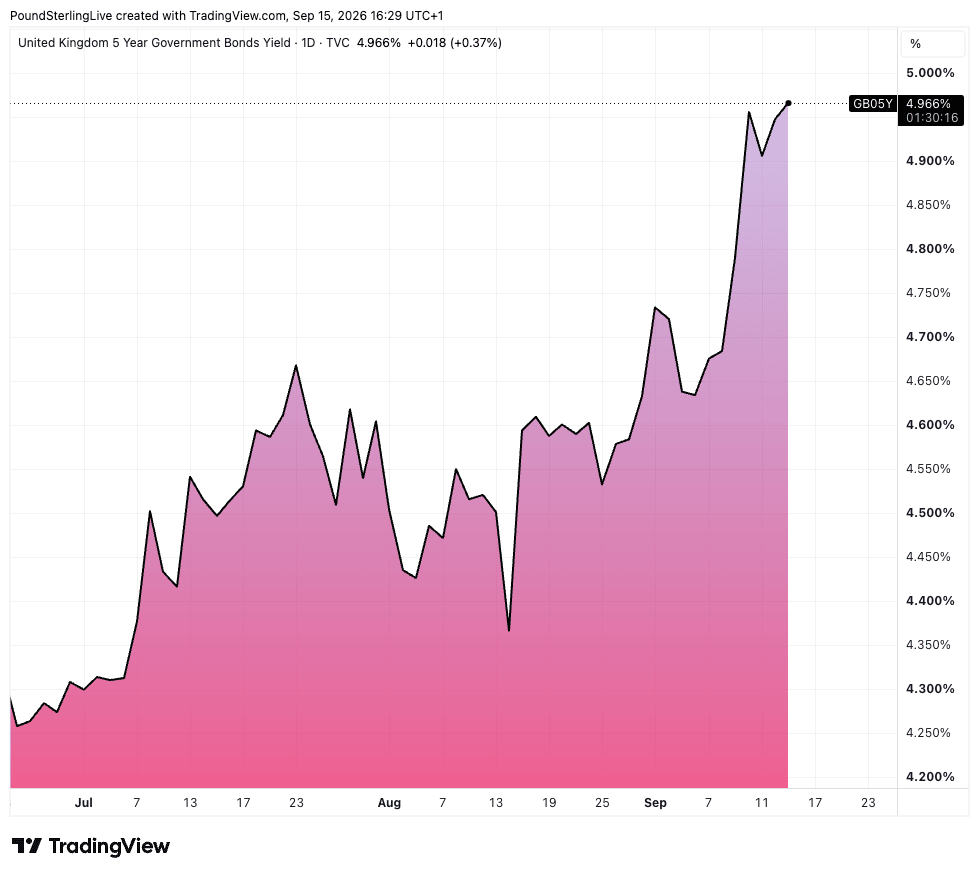
Above: The yield on the 5-year UK government bond, to which mortgage pricing is highly sensitive.
"Swap rates will decide the next move, and they look spooked. Until they settle, expect rates to keep drifting up, not down," he adds.
The pricing pressure traces directly to a gilt curve that has reached levels not seen in a generation, with the ten-year yield hitting a 19-year high near 5.40% on 10 September and UK yields now the highest in the G7.
"UK gilt markets are doing much of the heavy lifting. Sovereign bond yields globally have continued to rise in recent weeks, and gilts have been no exception," says Matthew Ryan, Head of Market Strategy at Ebury.
The 30-year yield has risen to its highest level since 1998 and the ten-year to its highest since the financial crisis, which tightens financial conditions without the Bank of England doing anything at all.
"This both acts to weigh on the growth outlook, while effectively tightening financial conditions in its own right, a dynamic that the committee itself has acknowledged," says Ryan.
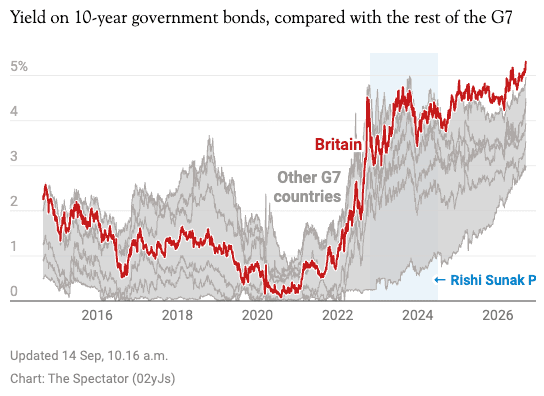
UK bond yields are unique in their outperformance. That reflects a higher inflationary run-rate in the UK.
"We think that officials will be also cognisant that raising rates risks compounding the sell off in an already strained debt market," he adds.
Investment bank analysts and asset managers point to the speed of the move as the problem, not simply the level.
"The recent gilt market movements seem to be intent on showing central banks they are out of time, the market is expecting action," says Anthony Brinkman, High Yield Portfolio Manager at Principal Asset Management.
"UK government bonds are selling off, with shorter-dated gilts particularly hard hit. The UK is especially vulnerable because of the combination of oil prices at $100-110 a barrel and concerns about the credibility of the public finances ahead of the October 28 Budget," he adds.
Brinkman warns Thursday's Bank of England decision carries more weight than a hold would ordinarily imply, saying that if the Bank fails to communicate its long-term trajectory convincingly, even 2-year yields at 5% may begin to look a little rich.
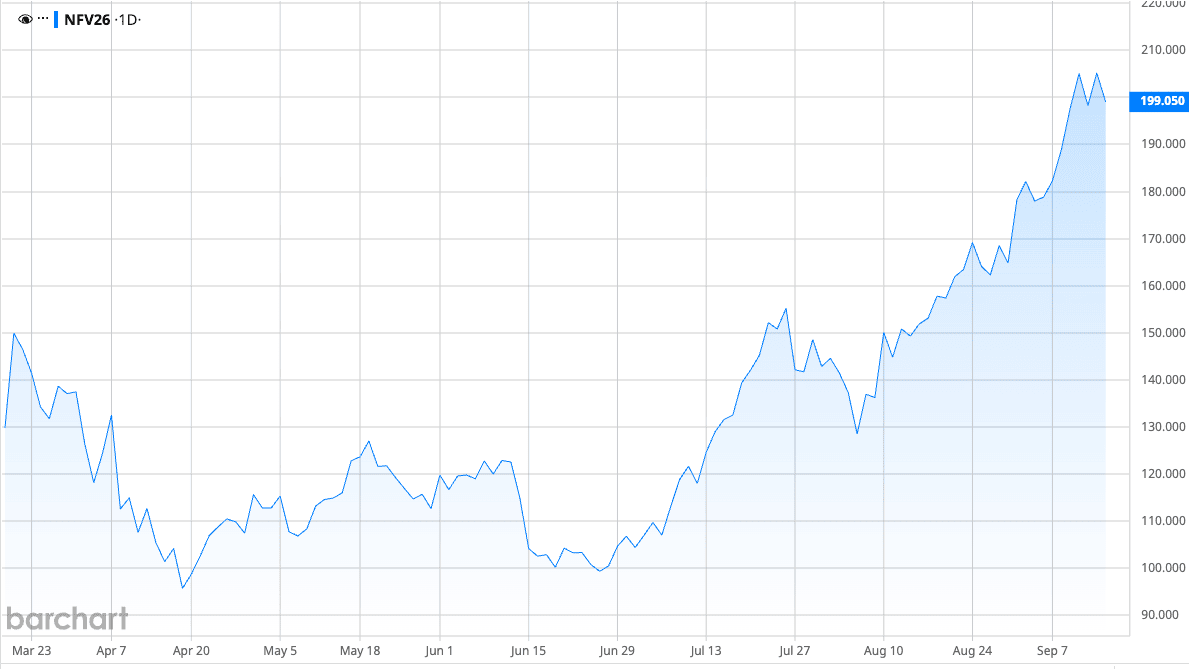
Above: UK wholesale gas for November delivery has surged in price.
Oil sits underneath all of it, with Brent back above $107 a barrel after drone strikes closed a Saudi pipeline to the Red Sea port of Yanbu and Houthi forces seized the Hanish islands.
"The oil price and sovereign yields, especially Treasury and Gilt yields, are moving in lockstep with the oil price, so when the price of oil rises, this drags yields higher," says Kathleen Brooks, research director at XTB.
That correlation is what converts a geopolitical supply shock into a domestic household cost.
"When crude climbs, yields climb with it, and that pressure doesn't stay contained to the bond market. It spreads into mortgage rates, corporate borrowing costs, and eventually into equity valuations," says Nigel Green, CEO of deVere Group.
Why UK Bonds Are Particularly Vulnerable According to Goldman Sachs
Goldman Sachs lifts its end-2026 ten-year gilt yield forecast to 5% from 4.4%, alongside upgrades to its U.S. Treasury and Bund forecasts to 4.75% and 3.25%, and a new call for a Bank of England hike in November.
"Gilt yields are the highest among the G10," says George Cole, rates strategist at Goldman Sachs.
Cole sets out four reasons gilts carry one of the highest betas to energy prices and global yield moves:
- greater forecast uncertainty around UK growth and inflation than in other major economies,
- the largest increase in duration-weighted bond supply of any market,
- a monetary policy record of outsized surprises on meeting days,
- and fiscal headroom too thin to absorb rate and energy volatility.
By the narrowest of margins, gilts have seen the biggest yield increase of any market since the war in Iran began, though Goldman notes swap spreads sitting at the wides of the year, which points to an absence of supply-related stress.
Beyond Thursday, Goldman identifies the end-October Budget as the next major test, with any reliance on near-term borrowing through a substantial increase in FY 2027 gilt issuance likely to pressure the gilt risk premium.
Cole expects front-end rates to be the main source of volatility for the UK curve, absent deeper inversion or hard evidence that financial conditions have turned restrictive.