
Image © Adobe Stock
The euro looks set for further losses against the dollar this week, with surging European gas prices now driving the market and a Federal Reserve decision to come on Wednesday.
The euro-to-dollar exchange rate has fallen through the support that held it through the first half of September, with a surge in European gas prices after weekend developments in the Gulf doing the damage.
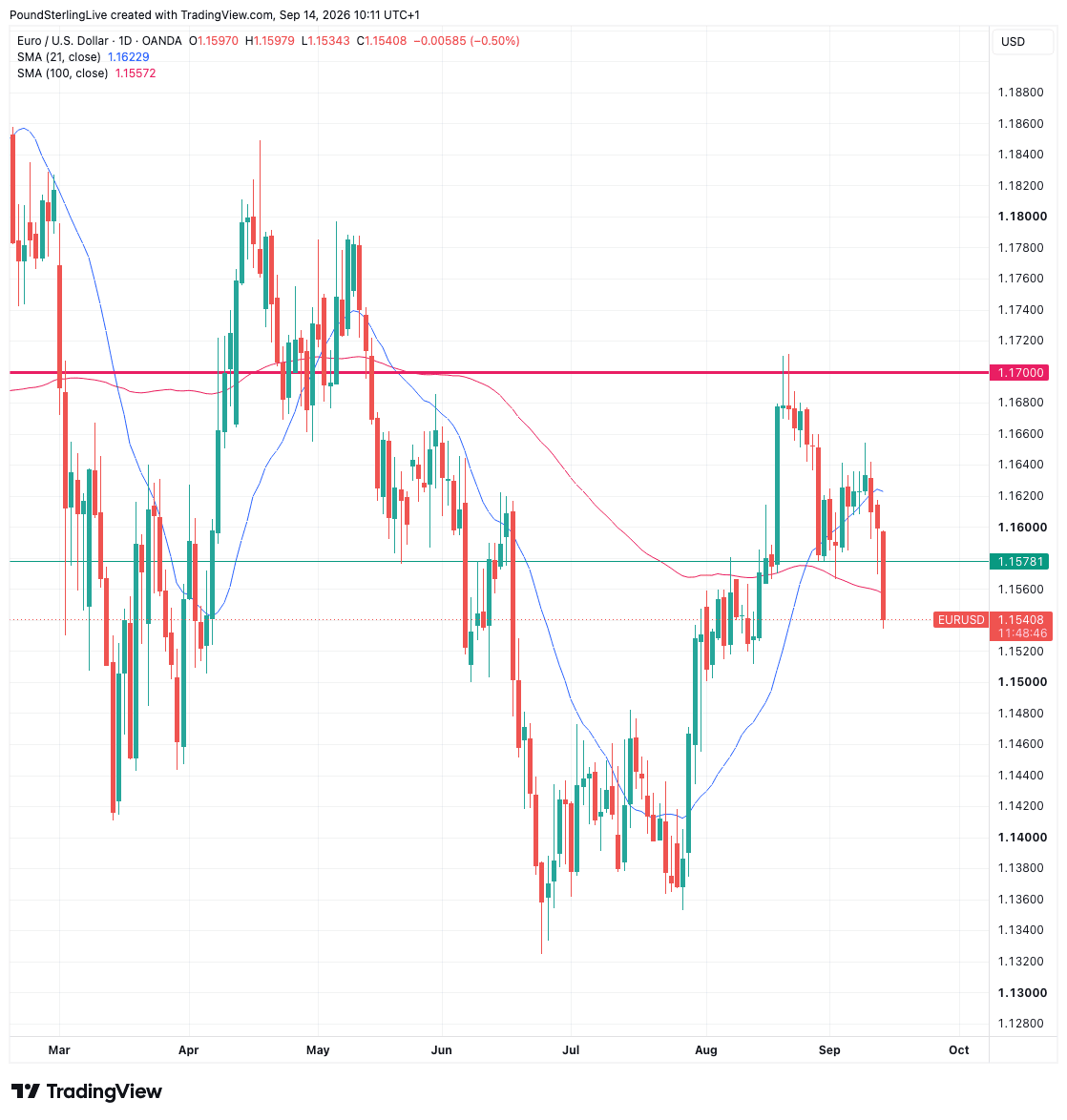
That leaves EUR/USD at 1.1539 on Monday, beneath the 100-day moving average at 1.1557 that had been the floor of the range.
The move has taken out the band that defined this market for a month, and it has done it before the Federal Reserve has said anything:
Above: EUR/USD daily chart. Image © Pound Sterling Live, chart created with TradingView.
1.1578 caught the early-September low and the 100-day at 1.1557 sat immediately beneath it, so the two worked as one narrow band. Monday has gone through it, with the session low at 1.1534.
The early-August consolidation near 1.1500 now looks to be the first structure that could support a falling euro. Under that, the chart stays empty until the July low near 1.1320, which is not a level for this week.
A week ago we looked for the euro to hold the 21-day and the 1.1578 support beneath it, with 1.1700 the ceiling and the range holding into the Federal Reserve's 16 September decision.
The range has not held and we recall a note by Rabobank warning that further damage to Qatari or other LNG infrastructure was the main risk to a slower normalisation.
That risk has arrived.
European Gas Prices Are Now Driving the Euro
TTF front-month gas prices have surged following negative weekend developments in the Gulf, and the global context is pipping every other consideration for the single currency at this stage.
"The price of diesel and natural gas in Europe are climbing at faster rates than the oil price, for example, Brent crude futures climbed 13% last week, and Brent is above $107 per barrel, this is the highest level since May. In contrast, the price of European Natural Gas is at its highest level since 2023," says Kathleen Brooks, analyst at XTB.
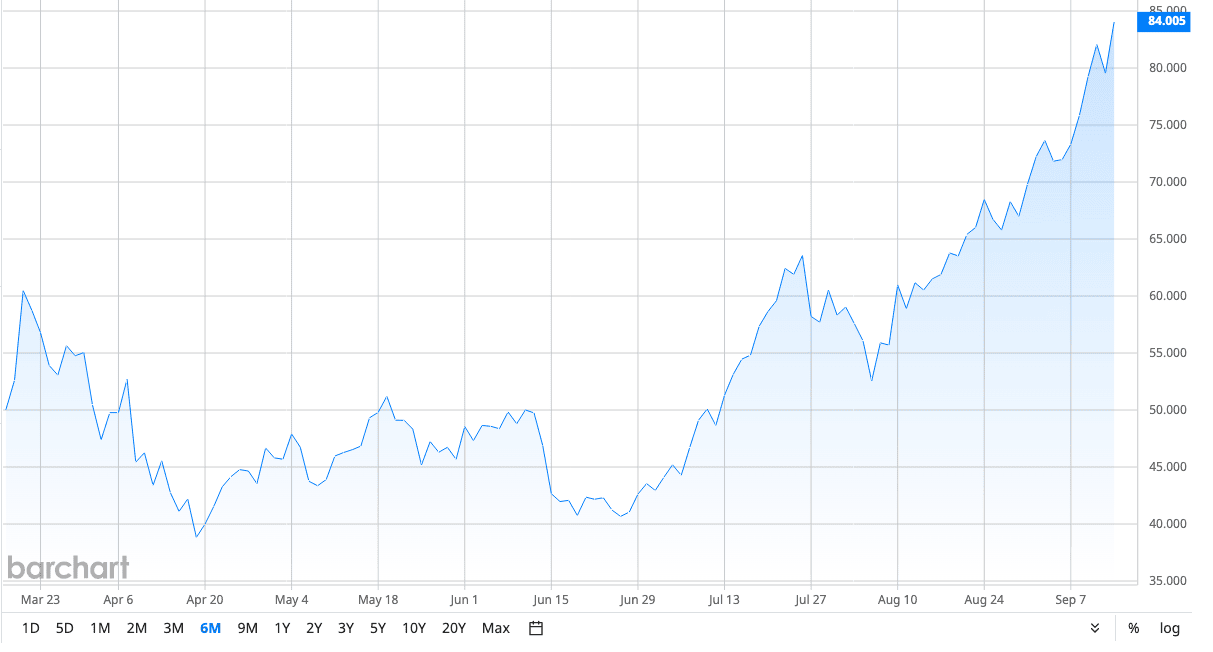
TTF, the wholesale European benchmark, rose to 83.77 euros per megawatt-hour on Monday, see above. Eurozone storage was 65% full at the end of August against a norm closer to 80%, and the bloc is going into winter with a deficit it has to buy in the spot market.
The United States sits on the other side of the same shock as a net exporter.
Why does a gas price move a currency? Europe buys most of its gas from abroad and pays for it in dollars, so a price surge raises the import bill, worsens the terms on which the bloc trades with the rest of the world, and forces euros to be sold to buy the energy.
It also threatens growth, which weakens the case for the higher interest rates a currency needs to attract buyers.
The Federal Reserve Decides on Wednesday
Turning to the USD side of the equation, Wednesday's Federal Reserve decision is the week's calendar highlight for euro-dollar, and it is the only central bank meeting either side of this pair has.
The FX rule of thumb is that an outcome above expectations lifts bond yields and draws buyers to that currency, while one that undershoots does the reverse. The market has priced a move as more likely than not since the August payrolls report landed well above consensus.
A Federal Reserve that raises rates and points at more adds to what the gas market has already done to this exchange rate. One that raises and signals it has finished gives the euro somewhere to recover to, and the band at 1.1557 to 1.1578 is where such a recovery would be tested.
Altogether, our euro-to-dollar forecast leans on the gas story staying in charge, which makes for a down week in euro-dollar; the Federal Reserve can add to Monday's move on Wednesday or hand some of it back, but the read is that we're looking at some heavy euro-specific traffic here.