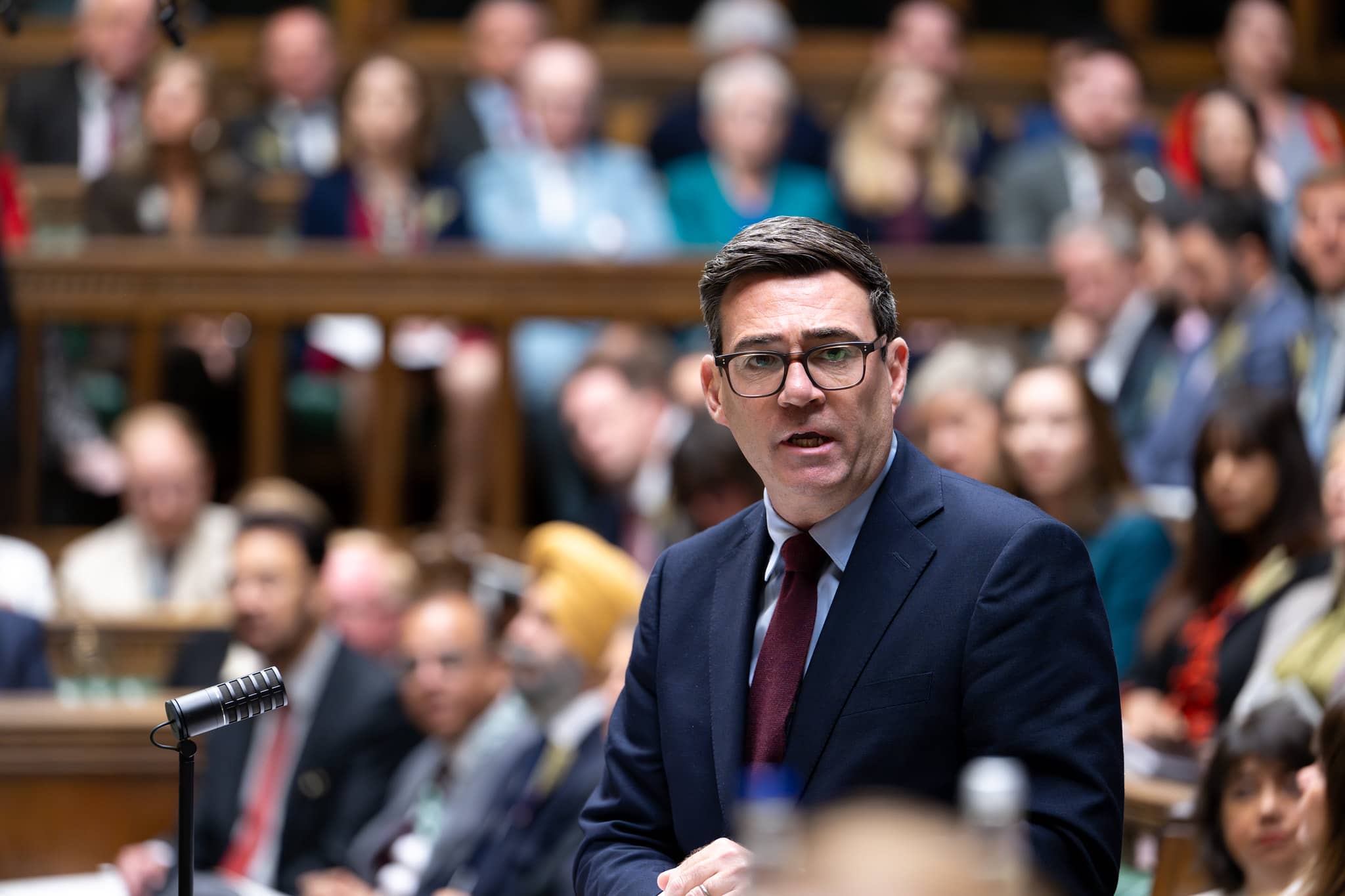
Image © House of Commons
The Prime Minister is in hoc to social spending; markets will take notice.
Pound sterling struggled on the day Prime Minister Andy Burnham confirmed the centre of gravity in the government's fiscal policy lies in welfare, inadvertently confirming the country's exceptional inflationary framework is here to stay.
Political pundits widely agree that Burnham has suffered his first political slip: in Wednesday's Prime Minister's Questions, he stated: "We do everything to support our national security, but it can't come at the expense of social security."
Political opponents jumped on the statement: "Labour are too weak to cut welfare."
"Burnham would rather fund welfare for foreigners than Britain's national security," said Nigel Farge.
Political pundit Dan Hodges was forthright in linking the politics to the markets: "One other thing about Andy Burnham's social security line at PMQs. It's not just the political impact. The markets are watching. And UK Gilts are edging towards crisis territory."
Indeed, the comments came on the day we saw some impressive, if worrying, rises in bond yields, which are effectively the interest rate the government pays to borrow.
The 10-year yield rose 1.73% on the day to 5.261% The mortgage-relevant 5-year to its highest level since 2023 at 4.79%. The 2-year, which is more a reflection of future Bank of England interest rate decisions, rose to its highest since November 2023 at 4.723%.
Burnham famously said the government shouldn't be in hoc to the bond markets, but what he will learn is that being in hoc to social spending ties his fate more tightly to the market.
"I think everyone shares Andy Burnham's desire not to be in hock to the bond market, but in this environment it's the bond market that's defining his Budget choices," says Rupert Harrison, Senior Advisor at PIMCO.
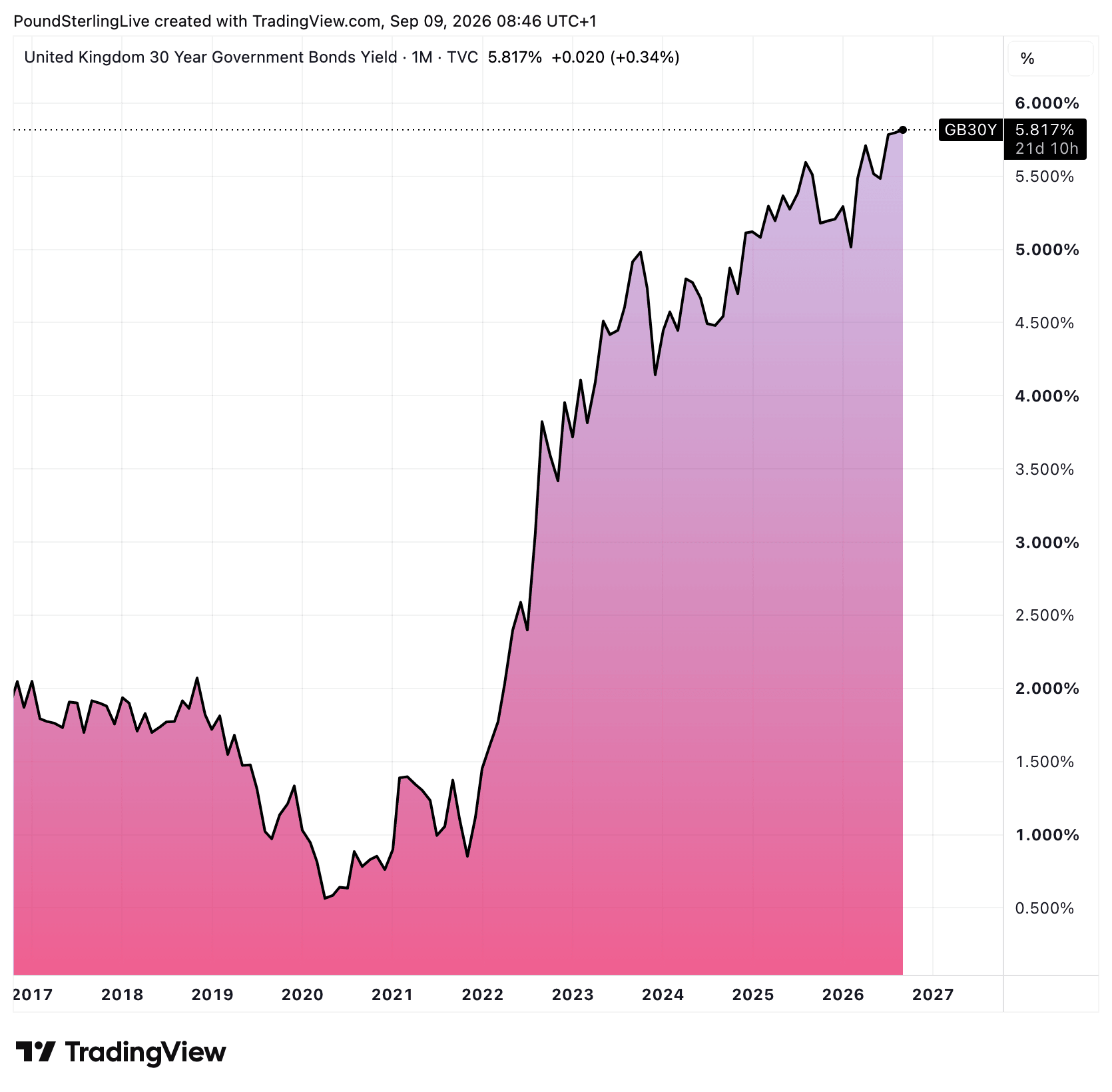
Above: The U.S. 30-year is at multi-decade highs, i.e. the cost of government borrowing on long-term debt is higher than any chancellor of recent years has had to account for.
Economists reckon that the rise in bond yields has slashed Chancellor Healey's fiscal breathing space by half. A tough budget awaits as a result.
Why does Burnham's message on social security have implications for bond markets, and the pound?
Because Burnham's commitment to social security spending puts welfare spending as the priority, it is emphasised by the downgrading of national security at a time when the world is increasingly unsafe, with war raging in Europe and in the Middle East.
The translation is that welfare will not to be cut under this government, meaning the current inflationary settings of government policy won't be addressed.
The context is the aborted attempt to cut the welfare bill by a mere £5BN by Keir Starmer and Rachel Reeves in July 2025. The pound fell, bond yields rose in response.
- The UK pays a premium to other similar countries when borrowing from markets, and economists say that's due to government policy on two fronts:
- massive spending on non-productive demand (welfare and pensions adds demand that does not contribute to supply) and
- restricting supply via industrial and planning policies and, most importantly, via the developed world's most expensive electricity prices owing to the policy of energy transition.
For the pound, this mix poses risks:
- A misstep in the budget that sends bond and currency markets into panic, and
- Punitive tax rises that further skew incentives away from investment and further diminish the supply side.
For the pound, political and fiscal uncertainty has certainly made an unwelcome return.