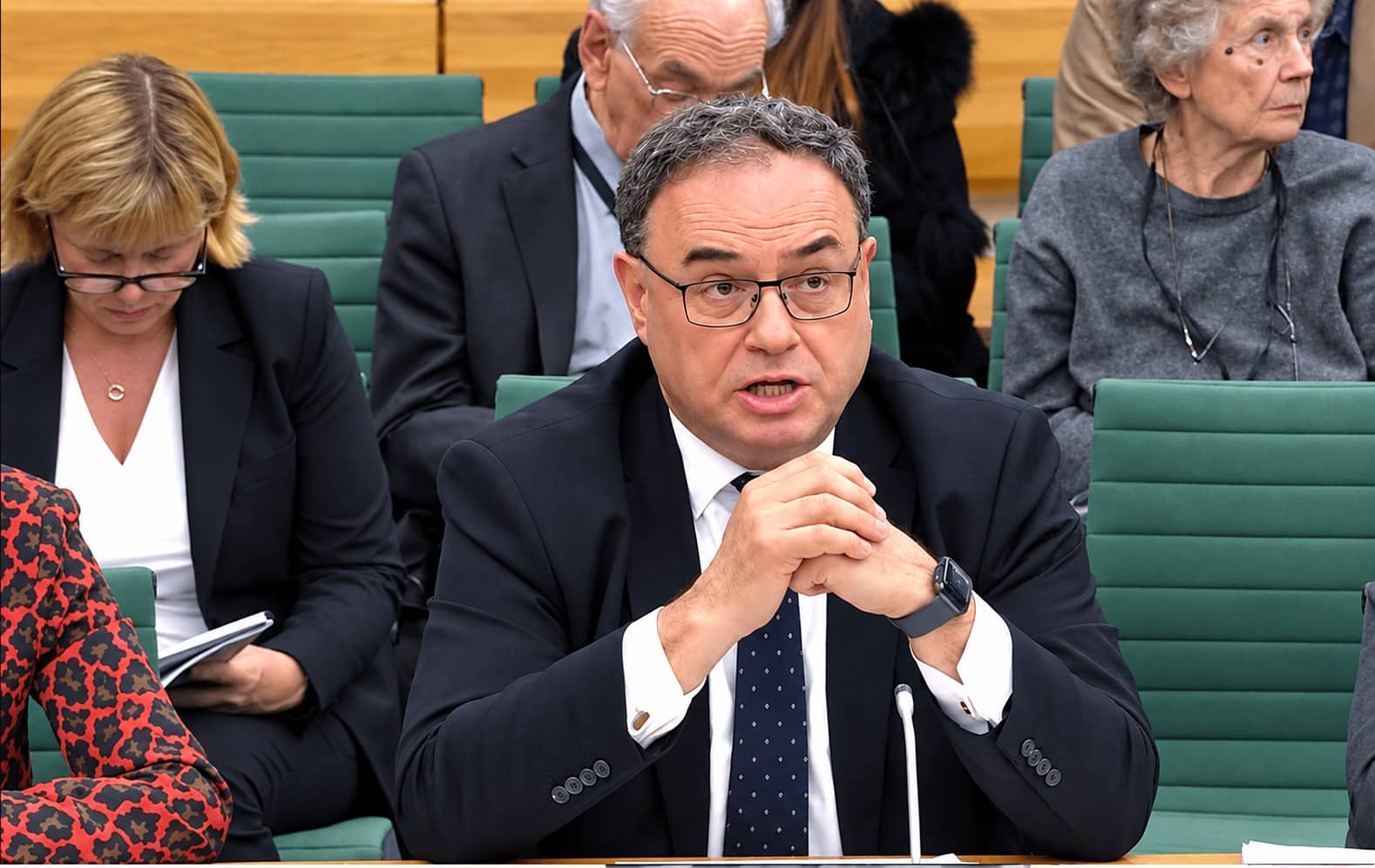
Above: File image of Governor Andrew Bailey before the TSC. Image copyright Pound Sterling Live, courtesy of Parliament.tv
Pound sterling can fall further against the euro in the near-term as a nervous Bank of England keeps resisting the market's expectations for higher interest rates.
Tuesday's daily candle on the pound-to-euro chart is instructive.
The pair opened at 1.1650, ran to 1.1667 for its best level since 2 September, but promptly fell in the afternoon session and closed at 1.1647, three pips below where it started:
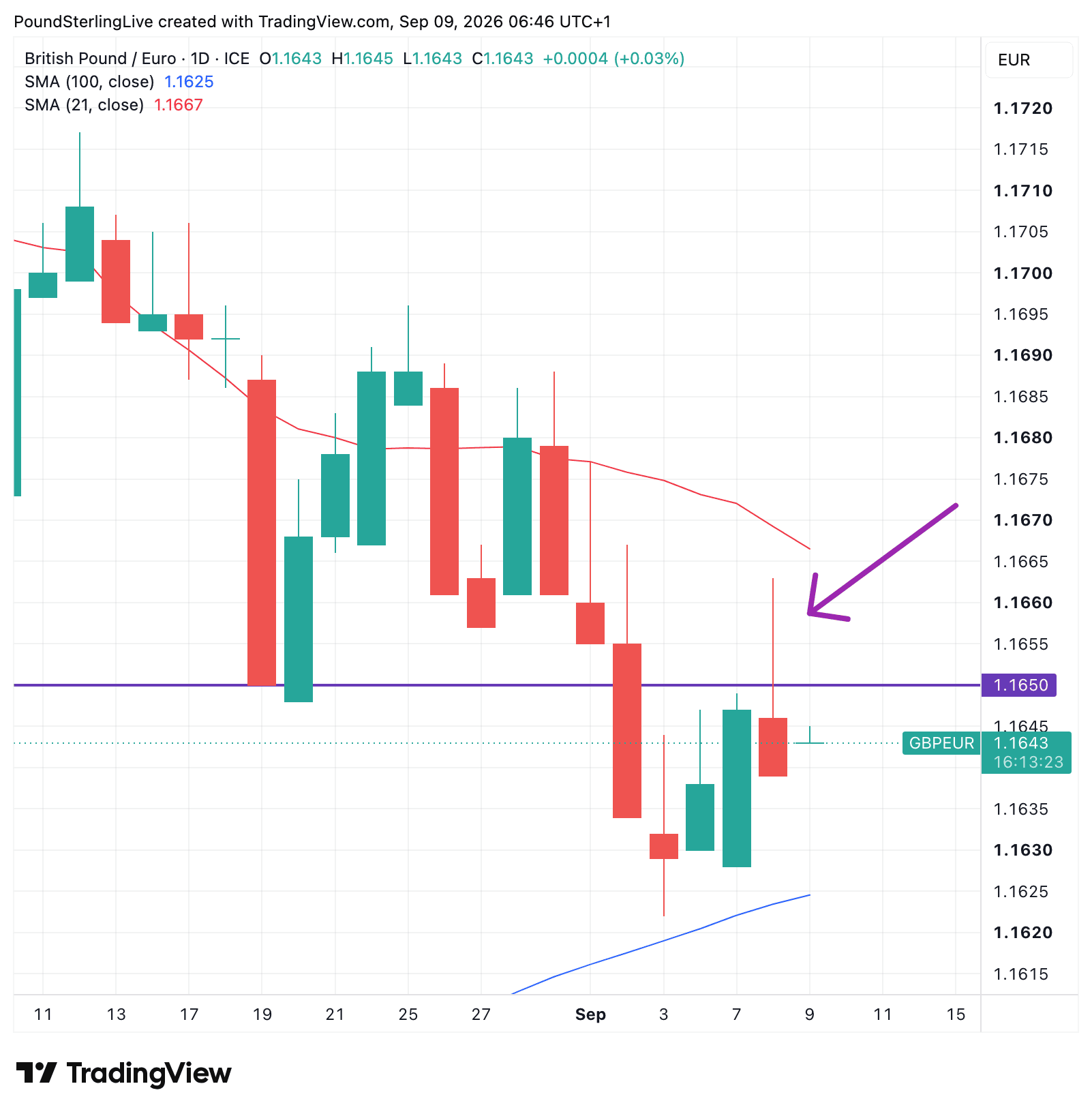
The attempted rally was snuffed out before it could stick, landing the pair back on the shelf at 1.1647, a level which has held itir up on roughly five occasions since late July.
And if you look back to the previous week, that pattern of failed rallies repeats: advances are being extinguished, and GBP/EUR is back on its summer floor, with a risk that short-term momentum deteriorates further.
Why did the pound fall?
The pound's fall looks to be linked to the Bank of England's Governor Andrew Bailey and his comments to the Treasury Select Committee.
"What I want to dispel is the idea that we've really got a secret plan, we know where we're going to go to and it's unconditional," Bailey said of expectations that the Bank would raise rates.
"Bank of England Governor Bailey hosed down expectations for a series of interest rate hikes," says Carol Kong at Commonwealth Bank of Australia.
"Bailey said that current market pricing for three BoE interest rate hikes over the coming year was consistent with a pessimistic view of the risks facing the UK economy," she adds.
The FX market's interpretation is that the Governor is telling the market its own predicted rate path is wrong. Ahead of the appearance, the market had moved to price in 31 basis points of tightening by year-end, making for at least one hike.
With the Governor publicly cooling those bets, pricing for a hike softened, and with it sterling.
Nervousness About 28 October
The rates trade looks to be a key factor behind pound-euro's decline on the day.
But we think this is a market that's lacking demand for reasons beyond the Bank's interest rate pushback: the budget is nearing and it's a potential risk factor to watch.
"The pound showed some signs of strain... under pressure from higher global yields and a gradual - albeit preliminary - shift of focus towards the October Budget," says a weekly strategy note from Barclays.
Deutsche Bank puts the fiscal headroom Chancellor Healey has at his disposal as being halved by recent rises in bond yields - aka borrowing costs.
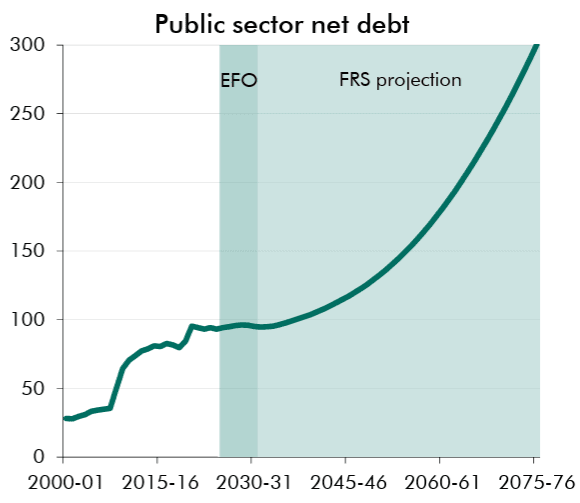
Above: The OBR's forecast for UK public debt.
"With the Chancellor sticking to the fiscal rules and manifesto pledges, there's very little room to manoeuvre in the coming Budget," says Sanjay Raja at Deutsche Bank.
The prospect of tax rises, increased borrowing and a policy misstep offer enough uncertainty to limit rallies, which is why we see that bearish candle printed on GBP/EUR's daily chart.
To be sure, Pound Sterling Live's view is that the current weakness should be temporary owing to firming UK economic fundamentals, and that once the budget passes, the pound can rally again.
But that doesn't downplay the real risks around the budget, which is why short-term weakness is likely to persist.
Debt Warning Bell Sounded
Britain sold £4.25BN of 30-year bonds on Tuesday, but at the highest cost since comparable records began in 1998.
The rising borrowing costs will cast a shadow over John Healey’s first budget, drastically reducing his room for manoeuvre and crimping Prime Minister Burnham's hopes for a revolutionary budget.
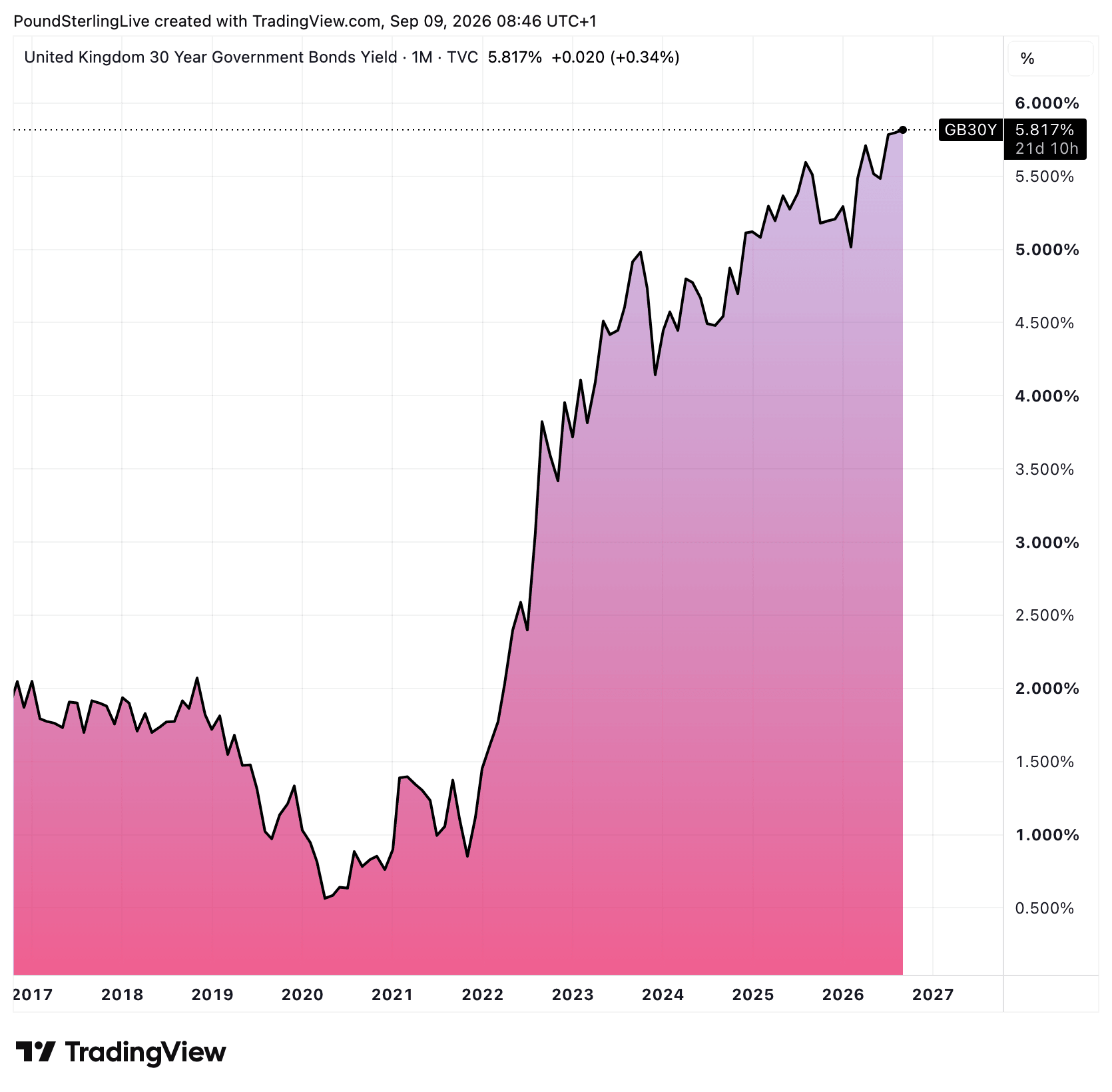
Above: GB 30-year debt yields.
Foreshadowing the budget is the surge in global bond yields owing to higher oil and gas prices and the uncomfortable reality that Britain faces a particularly acute rise in borrowing costs owing to the government's inflationary fiscal policies.
We can refer to it as a 'high beta' - when debt is rising, Britain's debt rises faster.
That premium stems from the country's elevated debt levels and unique inflation profile: it entered the Middle East crisis with inflation rates running well above the Bank of England's 2.0% target.
That high inflation base is a uniquely British phenomenon - elevated government spending on welfare and a policy-led restriction on supply: from energy to house building and manufacturing, Britain has a structural restraint on output.
That government spending-induced demand and policy-ordained restriction on output is why we pay a premium to borrow, and that problem won't go away soon.