
Image © Adobe Images
Pound Sterling Live's forecast for the pound against the euro in the next week is for some relief, even if the broader trend is set to remain heavy into the budget.
Momentum has built against sterling: last week saw the pound-to-euro exchange rate break beneath the shelf that held it through August in the opening days of September, but the decline then stopped on the rising 100-day moving average.
Losses for the pound come amidst renewed nervousness about global bond markets, where the price of debt plummeted last week and sent the cost of borrowing - the yield paid by said bonds - surging to multi-decade highs. The pound is particularly vulnerable to this as UK debt levels are particularly high and domestic inflation has run unanchored above the Bank of England's 2.0% forecast for a protracted period.
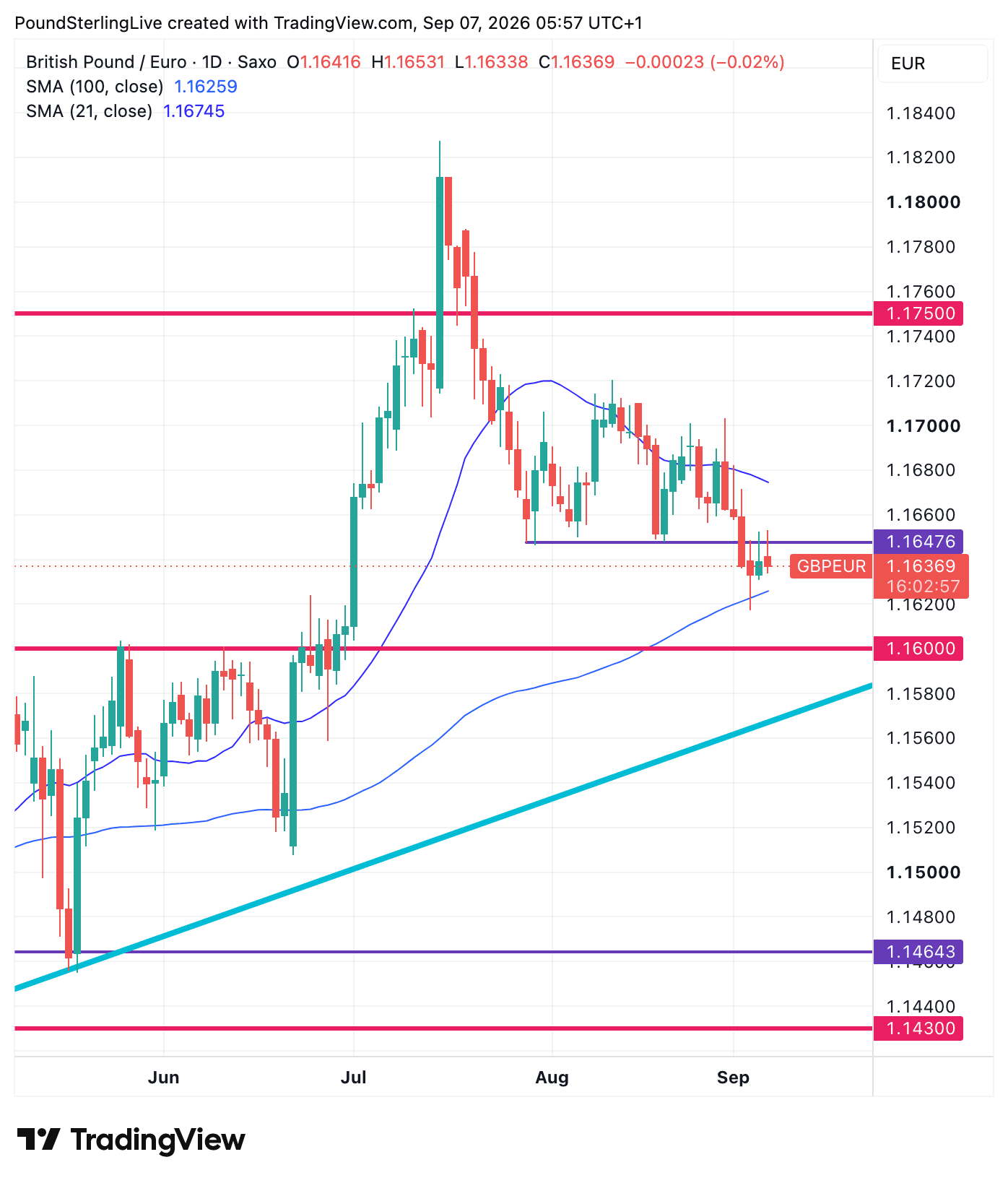
Nevertheless, from a technical perspective, the market might have found its footing on one average while leaving the other well above it, which is the setup that tends to produce a corrective bounce:
Spot at 1.1637 sits just above the 100-day moving average at 1.1626 and some 40 pips beneath the 21-day at 1.1675.
The 100-day has climbed without interruption since June, and last week's decline ran into it for the first time since July before the market closed back above. A rising long-term average that catches a fall is doing precisely the job the GBP's medium-term uptrend against EUR needs of it.
Exchange rates tend to mean-revert to the 21-day when they have run some distance from it, and the pound sits 0.32% beneath its own. I tend to see decent deviations from the 21-day as temporary, and expect the gap to close.
It's this technical reading alone that determines why I predict a soft 'upweek' for the pound against the euro.
Soft is the important word here, as the 21-day has fallen since the first week of August while the 100-day has risen since June, which leaves 49 pips between them, creating a narrowing gap.
Above sits 1.16476, the shelf that floored August and now works as resistance on the level it lost, with the 21-day at 1.1674 beyond it and 1.1750 above both. Beneath, the 100-day at 1.16259 is the immediate support, then 1.1600, then the rising line drawn from March running through the 1.1585 area.
A week ago we looked for 1.1650 to hold and named a daily close beneath it as what would change our mind and bring the 100-day into view.
The close came and the 100-day duly came into view, which is where the market sits this morning. The sequence we set out has run its course, so the question now is no longer whether the market reaches the bottom of it, but what it does there.
For now we look for a corrective bounce towards 1.1647, and beyond it the 21-day at 1.16745, treating both as resistance inside a decline that has further to run. A daily close beneath the 100-day at 1.16259 would end that reading and put 1.16000 in play.
Step back and the uptrend that began at March's low survives all of this: the rising turquose line drawn from it runs through the 1.1585 area and the 1.16000 horizontal sits just above, so the two converge through September, which makes 1.1600 the level separating this retreat from something more serious.
Britain This Week: GDP in Focus
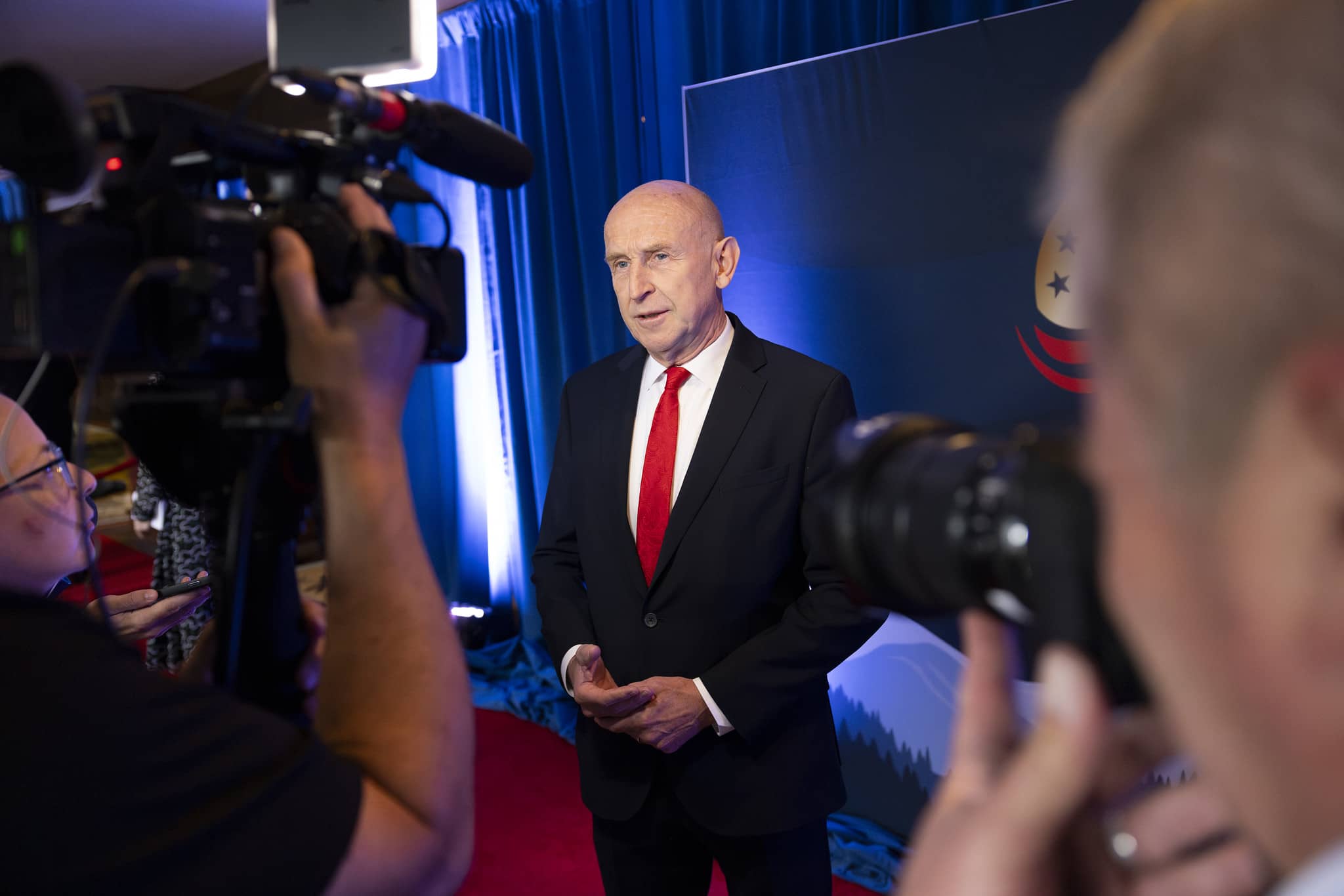
Chancellor John Healey. Picture by Kirsty O'Connor / HM Treasury.
UK July monthly GDP, Friday 11 September: Expected 0.0% m/m against +0.3% in June, as July's fall in retail sales volumes offsets an improved composite PMI. The BoE's baseline Q3 forecast is 0.1% q/q.
A beat argues the economy can carry the rates already priced and supports gilt yields and Sterling; a miss does the reverse. Analysts at Brown Brothers Harriman are explicit that this is unlikely to shift Bank of England pricing either way, so the honest read is that it takes a material surprise in either direction to move the pound. Treat it as a first-tier release with a second-tier reaction function this month.
The thing that actually drives Sterling this week
With no BoE meeting and a thin domestic calendar, the pound is taking its direction from the gilt market and the fiscal picture, which is the established transmission for this pair.
Barclays estimates rising gilt yields have eroded the Chancellor's headroom from over £23bn at the OBR's March outlook to £10-15bn. BBH put it at around £12bn, describing it as halved.
Chancellor Healey has pledged to build a fiscal buffer against uncertainty at the 28 October Budget, which BBH read as pointing to a mix of tax rises and spending cuts. Barclays' framing is that rising global bond yields risk disrupting what was shaping up as a continuity budget.
The rate-pricing risk. The swaps curve implies 75bp of BoE hikes over the next twelve months, to 4.50%. Brown Brothers Harriman calls that too aggressive and say it leaves GBP vulnerable to a dovish repricing, pointing to the UK's negative output gap, a policy rate already above the midpoint of the Bank's 2% to 4% neutral estimate, and the prospect of tighter fiscal policy.
A fortnight ago that gap was at 50bp, now it's at 75bp.
Second tier, in passing: The Q3 BoE/Ipsos household inflation expectations survey is due Friday alongside GDP, which Barclays flagged as informationally rich given the Citi/YouGov 1-year measure hit 3.9% in August.
Last week's BRC index suggested near-term upside inflation risk while firms' expectations in the DMP were more reassuring on the medium term.

The Bank Consensus, Without the Terminal
The median, mean, highest and lowest from the October survey update, plus named point forecasts out to 2027.
Free information pack, issued by World Wide Currencies.
ECB Rate Hike Fully Priced as Energy Costs Cap the Euro
For euro exchange rates, the European Central Bank decision that lands on Thursday is the highlight.
Market pricing shows investors are all but certain of a 25 basis point increase from the European Central Bank on Thursday, at an implied probability of 98%, taking the deposit rate to 2.50%.
When a move is this fully discounted the decision itself carries little for the currency, and the euro takes its direction from the guidance that follows:
- signalling that bolsters bets on further hikes lifts it
- and pushback resolves it lower
Reasons to expect a 'hawkish' ECB decision include:
- August inflation came in at 3.3% year-on-year, well above the 2.0% target, with services falling back to 3.0% and non-energy industrial goods climbing from 0.7% in February to 1.2%, the strongest reading since 2024.
- Growth has held up alongside it, with Q2 GDP recorded at 0.4% on the quarter against the 0.2% the ECB pencilled in back in June, and that combination is what removed the last doubt about Thursday.
Interest rate markets carry 77 basis points of further tightening by the end of 2027, and that pricing has to be validated on Thursday to survive.
Pushing Back Against Consensus...
is Investec, where economists expect the Governing Council to end this mini tightening cycle with Thursday's move, leaving the deposit rate at 2.50%, though Lottie Gosling adds it is "unlikely that Lagarde will explicitly rule out further action", in an Investec research note of 3 September.
Commonwealth Bank of Australia judge the risks skewed towards more neutral communication than the market has priced, in a note from the bank's FX strategy desk on Monday.
The Euro's Gas Headwind
European gas prices have risen from €64/MWh at July's meeting to over €72/MWh, a three-year high, with storage 65% full at the end of August against a norm closer to 80% and a late scramble for LNG still ahead of the winter.
Those same prices work against the currency because the eurozone imports its energy and a tight supply picture implies headwinds for industry in the coming months. That's an inflationary impulse that differs from a supply-lead one and is therefore a headwind to the euro.