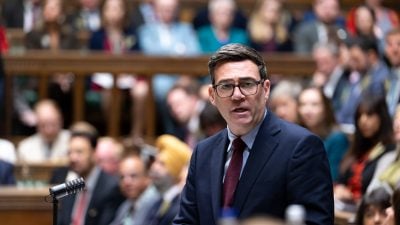
Picture by Lauren Hurley / No 10 Downing Street
Key Takeaways
- UK consumer confidence hit a two-year high in August with GfK's index rising to -14 from -17, driven by under-50s who are more likely to support Labour, evidence of a political "Burnham bounce" rather than an economic improvement, Pound Sterling Live reports.
- The survey's signature is hope over experience, with households' assessment of the past year worsening while expectations for the next twelve months improved, and a confidence gap between over- and under-50s that opened at the 2024 general election and has persisted since.
- One component moved the other way: household expectations for unemployment rose to 37 from 35, and with July retail sales falling 0.5% against confidence consistent with 4% spending growth, Pound Sterling Live notes the tills are not reflecting the mood.
Under-50s drove August's jump in sentiment, a pattern tracking politics since the 2024 election.
UK consumer confidence has climbed to a two-year high, and the detail underneath the headline number suggests the improvement is political.
GfK's composite index rose to -14 in August from -17 in July, well ahead of the -18 consensus.
Sentiment has now fully recovered the ground lost during the Iran war, which took the index to a trough of -25 in April.
The rebound in sentiment comes despite inflation accelerating, ten-year gilt yields pushing back above 5% and Middle East tensions escalating.
These combinations have traditionally worked against confidence.
Enter the Burnham Supporters
Pantheon Macroeconomics attributes much of the improvement to under-50s, who are more likely to support Labour or other left-leaning parties.
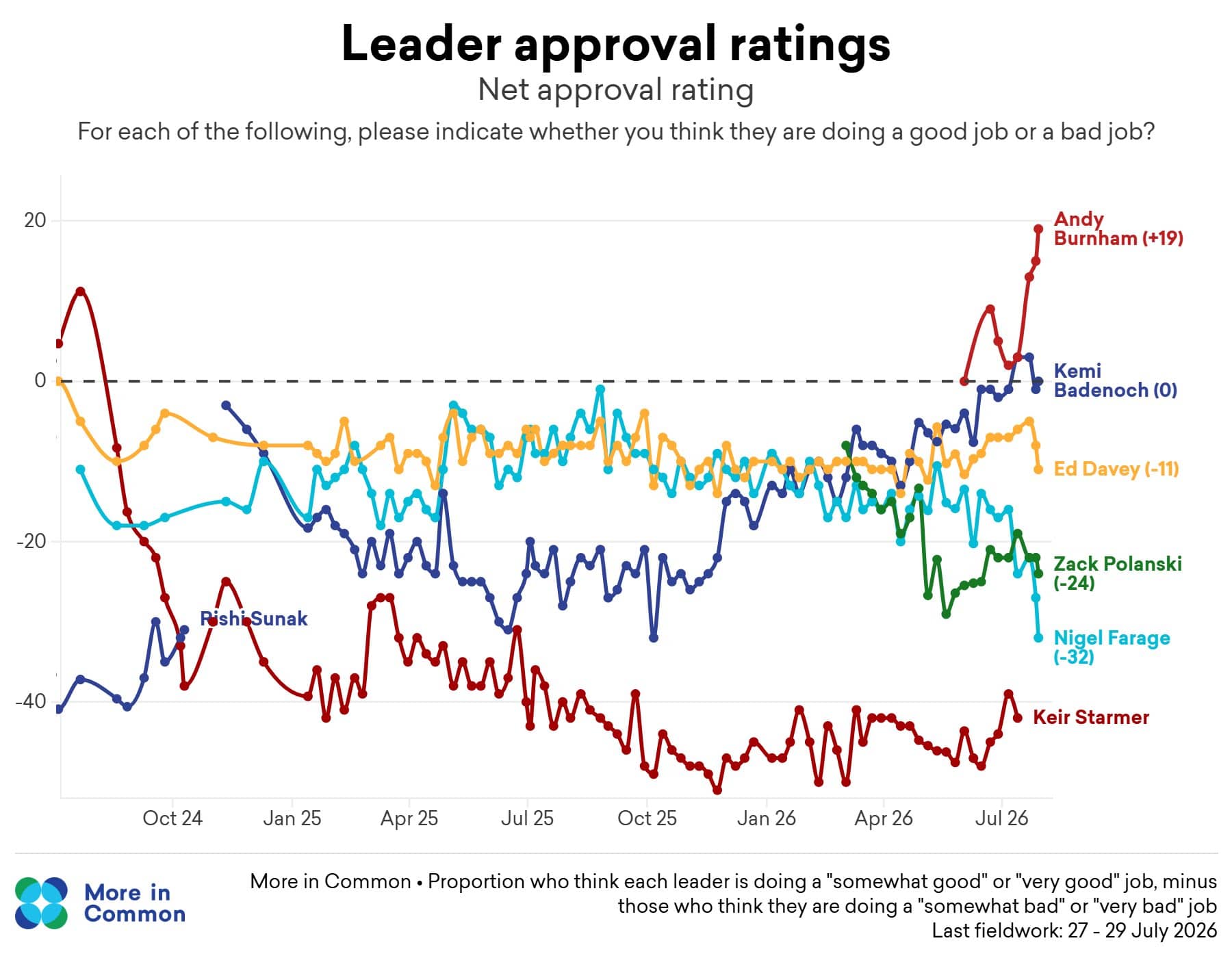
The improvement in confidence matches the new Prime Minister's popularity in the polls, and Rob Wood, Pantheon's Chief UK Economist, suggests we're seeing a genuine 'Burnham bounce' in consumer confidence.
Wood points to the sharp divergence in confidence between over- and under-50s that opened up after the 2024 general election and has persisted since.
A sentiment gap that appears at a political event and does not close is difficult to explain through the economic cycle, which does not sort households by age in that way.
Two further details in the survey point the same direction:
- Households' assessment of the general economy over the past year worsened fractionally, while their expectations for the economy over the next twelve months improved.
- Retrospective judgement down, prospective hope up: the signature of a change in political leadership rather than a change in economic conditions.
"It looks like a survey showing increased hope for the future," says Wood.
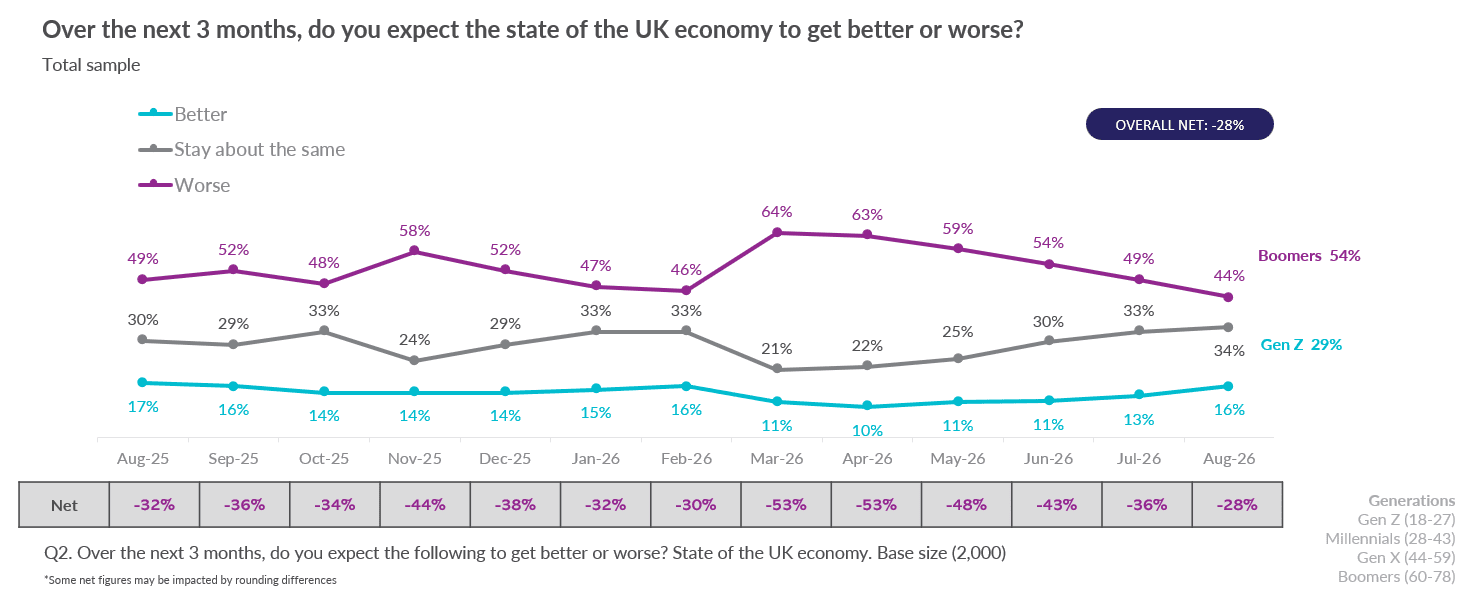
The above chart comes from the British Retail Consortium (BRC) and confirms the younger generations are leading a sentiment revival.
"The Burnham administration is enjoying a honeymoon boost driven by less pessimism about the outlook, but maintaining that momentum will depend on whether the Government can ease the pressure on household budgets," says Helen Dickinson, Chief Executive of the BRC.
The BRC published its own confidence survey on Thursday and showed consumer expectations about the state of the economy improved to -28 in August, up from -36 in July.
Their personal financial situation improved to -9 in August, up from -12 in July.
"Consumer sentiment continued to rise with confidence in the economy hitting its highest level since the historical lows reached at the start of the Iran conflict. Expectations for personal finances saw a small improvement, driven by an optimistic Gen Z," says Dickinson.
The Number Moving the Other Way
One component bucked the positive trend, and it is the one that matters most for the Bank of England.
Households' expectations for unemployment rose two points to 37 from 35 in July, which Pantheon describes as consistent with joblessness continuing to rise gradually.
Optimism about the country's direction coexisting with growing fear about job security is exactly the pattern a political bounce produces. It is not what a genuine improvement in household circumstances looks like.
The confidence data comes on the day retail sales fell 0.5% in July. Taken at face value, Pantheon notes, the confidence reading is consistent with retail spending growing 4% year-on-year, with the major purchases sub-index pointing to 2.5%. The tills are not reflecting the mood.