
Image © Adobe Images
Key Takeaways
- Pound Sterling is particularly exposed to the global surge in bond yields because UK gilts carry a high beta to global moves, with the 30-year gilt at 5.83% and approaching the 6% barrier last seen in 1998, reports Pound Sterling Live.
- Britain's structural vulnerabilities include public debt near 95% of GDP, annual debt interest above £100 billion, and the largest share of inflation-linked debt of any major economy, which raises the government's interest bill automatically when oil shocks hit, says deVere Group CEO Nigel Green.
- Currency markets remain calm for now, with the Pound-to-Euro rate at 1.1684 and Pound-to-Dollar near its August high at 1.3540, but a disorderly rise in yields would significantly benefit the Dollar and Euro against the Pound, according to Pound Sterling Live analysis.
Rising bond yields are catching mainstream attention, a signal that the issue is growing in importance.
A rapid rise in global government lending costs threatens to tighten financial conditions in the UK and across the world, posing significant risks for markets.
We find that the UK and pound sterling are particularly exposed to this global updraft in bond yields and think it is another key risk event those with outgoing sterling payments should monitor.
"There’s a global spike in long-term bond yields. Are years of fiscal profligacy by governments on both sides of the Atlantic now catching up? If so there could be a terrible reckoning," warns veteran British broadcaster, Andrew Neil.
The rise in bond yields are most acute in the long-term bracket, i.e. on the ten to 30-year deonominations, which implies entrenched inflation expectations while reflecting a notable increase in supply as governments borrow ever more and AI hyperscalers issue bonds to invest in the AI boom.
"The move higher in bond yields continues, and it is becoming increasingly hard to figure out at what point we should become scared. Japanese yields have been going up in a straight line and have made a new 10-year high ninety-nine times since the first one printed on September 23, 2023," says Brent Donnelly, strategist at Spectra Markets.
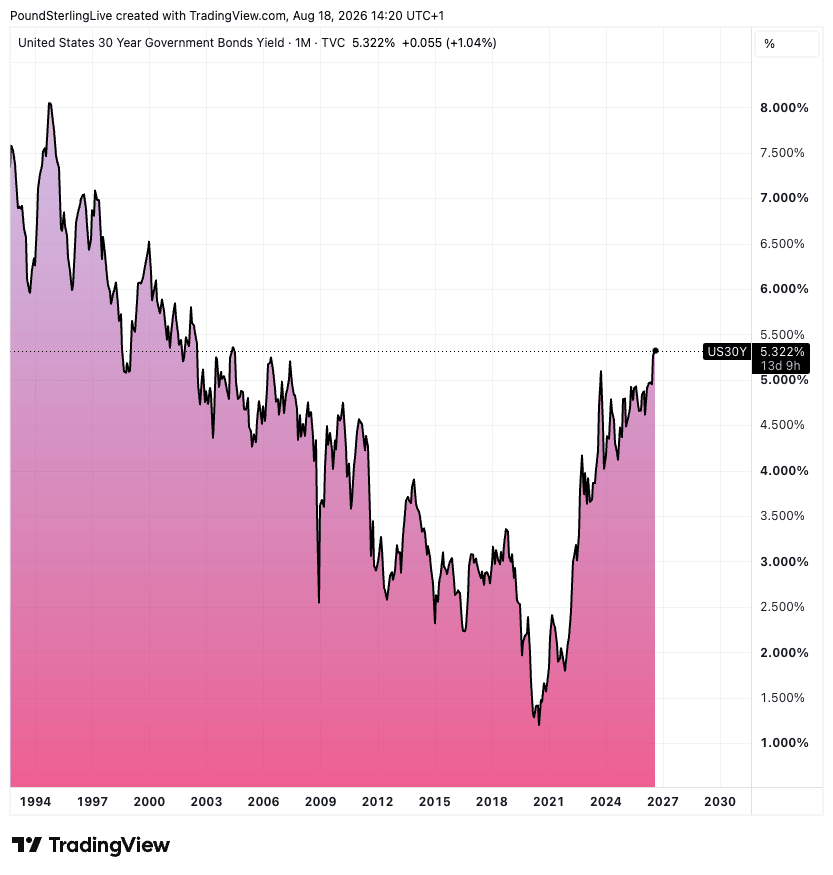
The U.S. 30-year bond yield recorded another 'highest since' 2007 on a closing basis on Tuesday.
"In the UK, that same 30-yr maturity (5.83%) is drawing attention for grinding closer towards the psychologically important 6% barrier, a level last seen in 1998," says a note from KBC Bank.
The same note warns stock markets are increasingly looking vulnerable in the face of this relentless core bond yield increase, particularly because it’s at least as much driven by the real component as by the inflation expectations part."
The Panic Trigger
The dollar and euro would probably benefit versus the pound, significantly, if bond buyers were to go on strike and yields exploded higher in a seemingly unruly manner.
For now though, there is no panic and foreign exchange markets are thus far relatively sanguine about the developments:
The pound-to-euro exchange rate eases to 1.1684, the pound-to-dollar holds near the August high at 1.3540.
Why UK Assets Are Particularly Vulnerable
Britain's government therefore faces a deteriorating budget outlook thanks to the rising cost of borrowing, that isn't necessarily down to domestic triggers.
But, the UK is nevertheless exposed due to years of outsized government spending that means UK bonds have a high beta to global moves, i.e. when global bonds rise, the UK equivalent rises by more.
deVere Group, an independent financial adviser, says UK gilts could become the weakest link in an intensifying global bond sell-off.
"Every government bond market is exposed to this shock, but Britain is exposed twice over,” says Nigel Green, CEO of deVere Group .
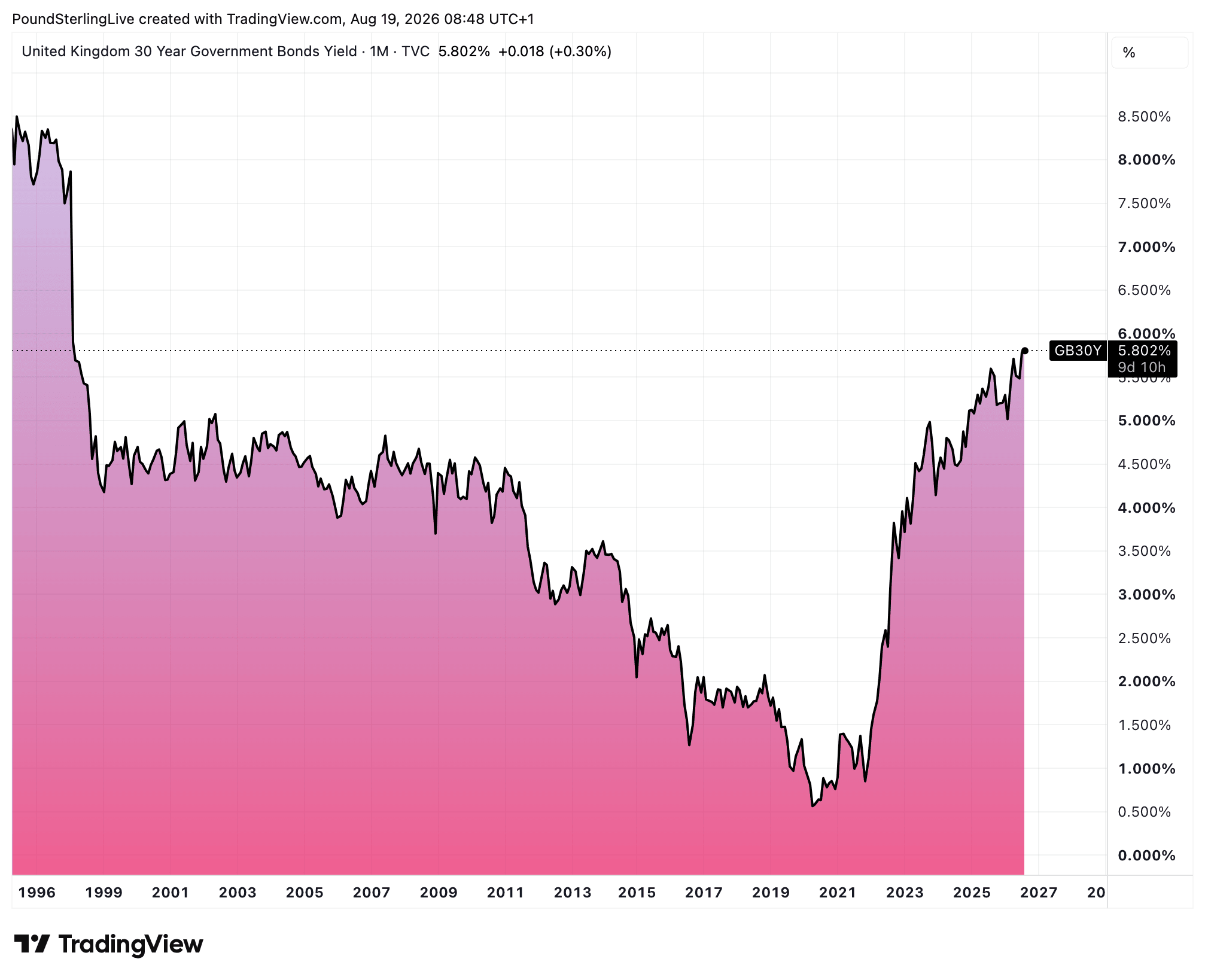
Above: UK 30-year bonds are yielding at multi-decade highs.
He adds that UK bonds, known as gilts, "do not sit this one out... today’s moves look set to extend that pattern, not break it."
The deVere CEO argues the UK carries structural weaknesses that most of its peers do not.
"Public sector debt sits close to 95% of GDP, nearly triple where it stood before the financial crisis, and debt interest alone now swallows more than 100 billion pounds a year, one of the heaviest debt-servicing burdens Britain has carried in half a century,” he explains.
What's more, close to a quarter of the gilt market is inflation-linked, the largest share of any major developed economy.
"When an oil shock like this one hits, that index-linked debt raises the government’s own interest bill automatically, in real time, without a single new bond being issued," says Green. "We estimate roughly two-thirds of the jump in 10-year gilt yields after an inflation shock comes from investors simply demanding more compensation to hold UK debt, a structural penalty Washington and Frankfurt do not pay in the same way."
If the rise in yields continue we would expect foreign currencies to increasingly reflect growing anxieties, and for the pound that's a particular risk to the outlook.