
Image © Adobe Images
Dollar setback provides an underpinning for the euro's recovery.
The euro-to-dollar exchange rate rose to 1.1560 in the wake of a consensus-meeting U.S. inflation print that puts paid to the prospect of a rate cut next month.
Stock markets rose while the dollar and U.S. bond yields fell after news CPI inflation managed a 3.4% y/y read in July, down from 3.5% in June. Core inflation fell by a similar margin, landing at 2.5%.
For the Federal Reserve, these above-target prints will prove tolerable in the context of a labour market that is starting to show some real signs of fatigue; recall, the Fed has a dual mandate that targets both a 2.0% inflation target and maximum employment.
The initial post-release FX reaction was nevertheless clear: the dollar fell across the board, and that tilted euro-dollar higher as the prospect of an imminent rate move receded:
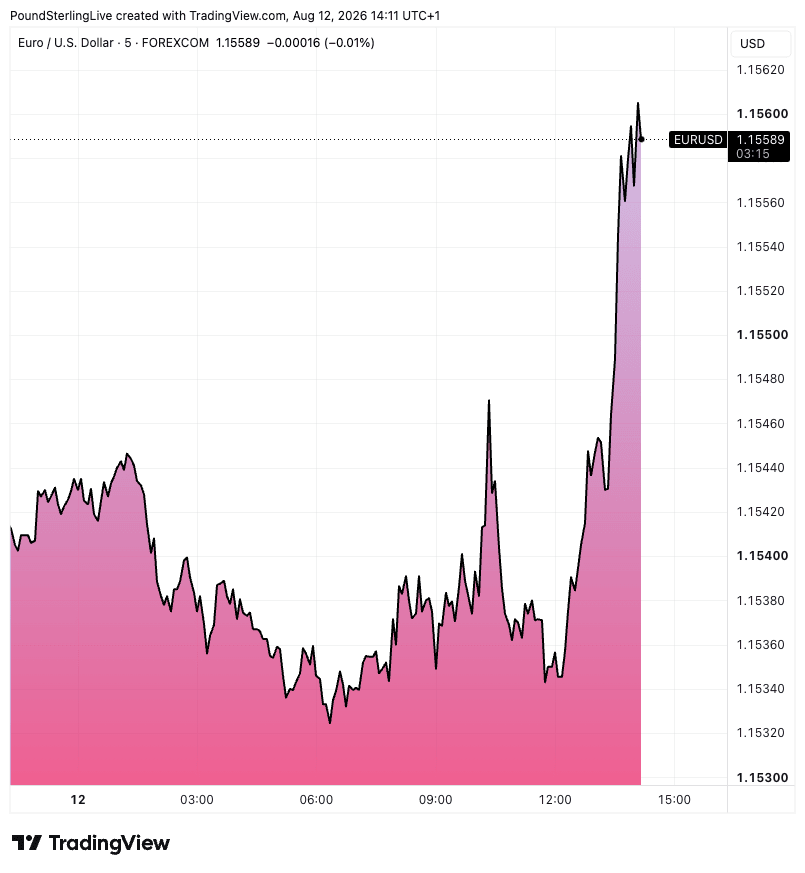
Above: EUR/USD at 5-minute intervals.
The market will nevertheless need to see more progress before the prospect of a 2026 rate hike is erased completely.
"It will certainly be too early to declare inflation tamed and rate cuts start to feed into the narrative just now. Digging into the data, there is clearly still sticky energy and shelter prices," says Richard Carter, head of fixed interest research at Quilter Cheviot.
That should offer enough latent friction to limit the euro-dollar's advance and maintain a cautious reading of the pair's chart.
Taking a step back from the micro-movements and looking at the daily chart we see the exchange rate still has its work cut out if it wants to realise further gains.
Price pushed through the trendline, ran to 1.1580, then stalled beneath the 100-day moving average and has spent the sessions since drifting back towards the line it broke.
Had we drawn the line a little higher, we might argue there was never a breakout, confirming the oftentimes random nature of technical analysis.
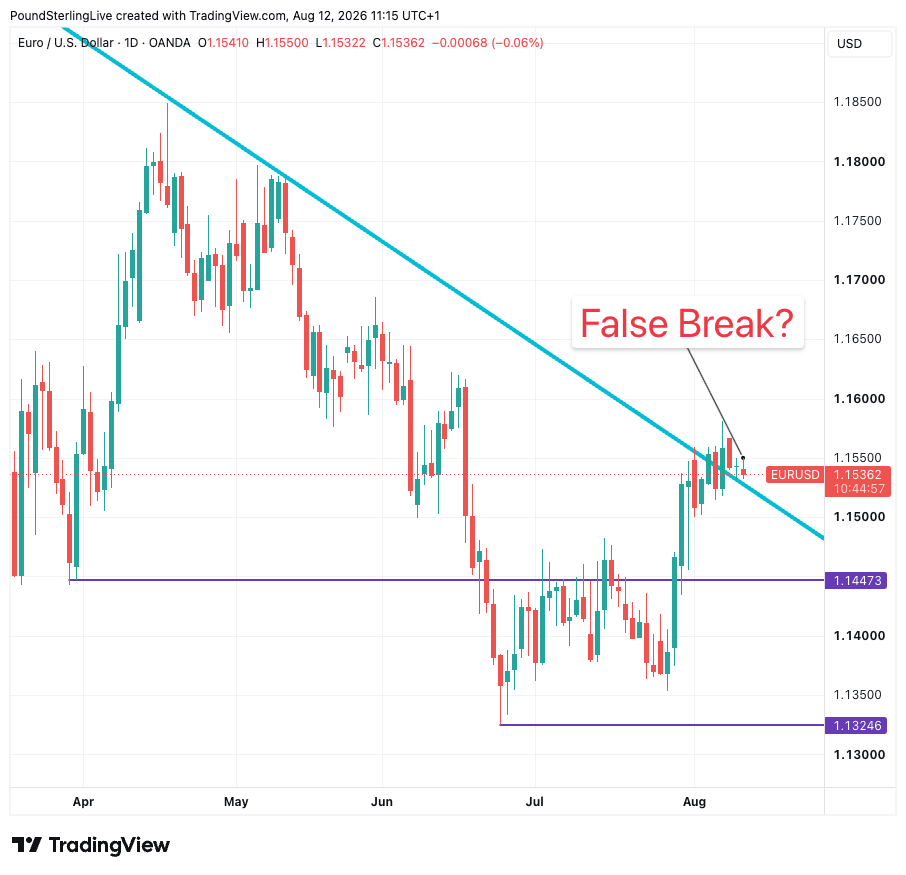
Regardless of where the line was scribbled, the chart is still communicating the same message, namely that the euro really needs an injection of impetus or it will pull back.
Of course, this really isn't a euro story, but a dollar one and the nature of the looming CPI inflation release could be instrumental in determining how a clear technical junction in navigated.
Pound Sterling Live flagged on Monday that the trendline break faced its first test, with the 100-day moving average the obstacle overhead and a close above it required to turn a rally into a reversal.
Three sessions on, that close has arrived, but it couldn't have done so in a more insipid fashion.
The pair traded as high as 1.15808 on Friday before closing back below the average, tested it again this week, and has now rolled over into the trendline from above.
A break that cannot extend is a break that invites a retest, and a retest that fails turns the old resistance back into resistance; the distinction matters because the two readings point in opposite directions.

The Bank Consensus, Without the Terminal
The median, mean, highest and lowest from the October survey update, plus named point forecasts out to 2027.
Free information pack, issued by World Wide Currencies.
If the move above the trendline holds, the six-month downtrend is over and the July low becomes a base.
If it does not, the pair has simply made a lower high beneath a falling ceiling, and the path of least resistance points back down towards the levels that contained this market through June and July.
Rania Gule, senior market analyst at XS.com explains the pair is caught between a Dollar still supported by inflation risk and a Dollar losing its rate advantage as hike expectations fade, and in her framing the 100-day average is the gateway that decides which force wins.
"What we are seeing may simply be the calm before a much larger move," she says.
That would concur with the observation that the pair is hunkered down on the trendline waiting for confirmation in either direction.