File image of Jones. Picture by Simon Walker / HM Treasury.
We've received the strongest hint yet that a Burnham government intends to borrow more.
The next Prime Minister of the UK, Andy Burnham, has discussed routes to borrowing more money to fund his policy goals, according to Chief Secretary to the Treasury, Darren Jones.
Jones met Burnham on Tuesday, and the matters of spending, investment, and borrowing were discussed.
Sky's Beth Rigby put to Jones that "there have been suggestions that Andy Burnham might borrow more to invest," to which he answered: "I think there's room to borrow a little bit more."
Jones says the government can adjust the current borrowing rules in order to allow itself the ability to borrow more money: "I think there's room to borrow a little bit more, and there's room to do things in a different way."
The revelations come as markets, investors and economists express a nervous caution that Burnham might test the appetite of borrowers by issuing more debt.
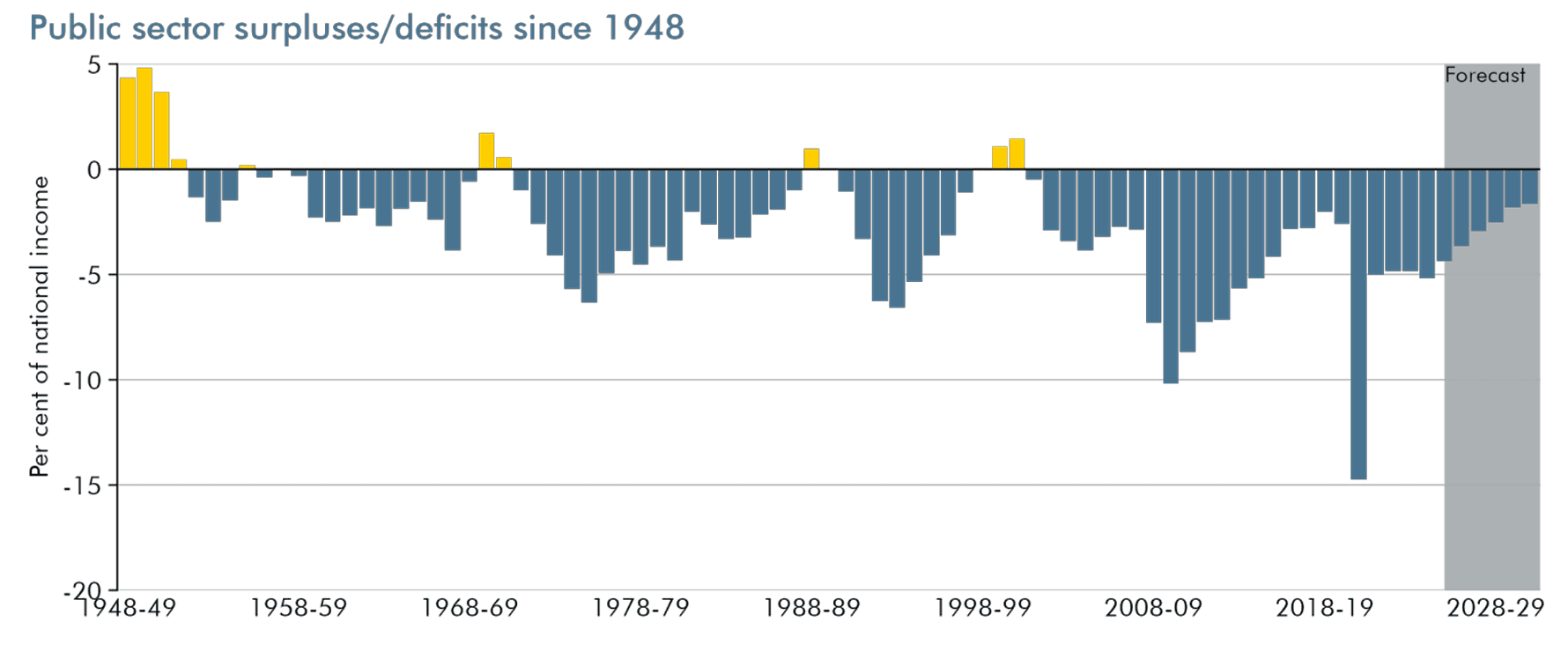
A key test of credibility will be Burnham's approach to the existing fiscal rules that are designed to ensure governments are committed to a sustainable debt trajectory. Broadly, debt as a percentage of GDP must be forecast to fall in the medium-term. Currently, that means that debt must start falling as a percentage of GDP by the end of the decade.
The chart below shows recent deficits and the official forecast for the deficit. The decline in the grey forecast zone is the fiscal rule in action:
But Burnham needs more money now. In particular, he wants to borrow to fund the building of council houses.
He'll argue that such a move would be accepted by markets that see this as an infrastructure investment.
However, the market might argue that it's just another social spending pledge.
"Burnham’s plans for the public finances will bear the most scrutiny, in particular whether he retains the current fiscal targets and whether he meets the inevitable increase in state intervention with higher taxes or higher borrowing," says a note from investment bank Nomura following Starmer's resignation on Monday.
Asked by Rigby, "you would be happy for him to borrow more, to invest in specific projects?" Jones replied:
"I think that's what the market and the trade unions and the parliamentary Labour Party wants. Because if you've got a credible plan for how investment can stimulate economic output, then that is something we'll do well."
When pressed if that's explicitly what Burnham intended to do, Jones responded: "Yeah, we talked about a lot of these details."
Pressed again by Rigby: "To be clear... he was looking to borrow more to invest in certain infrastructure investment projects," Jones replied:
"There is a route to doing that."
The context of Burnham's desire to borrow more is a government that has already, in the current fiscal year, borrowed more money than was forecast:
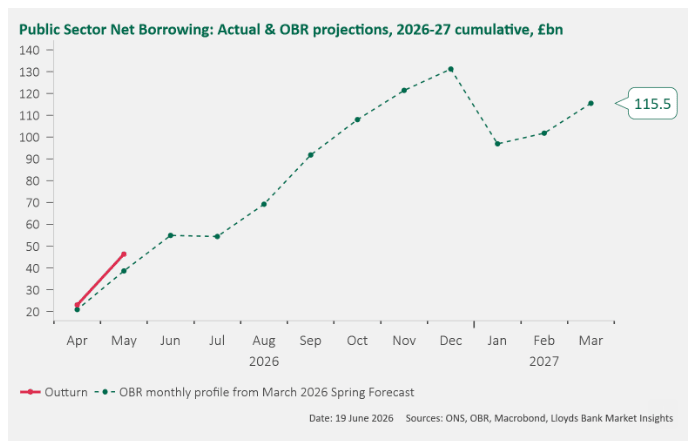
Borrowing costs have come down from the highs triggered by the Middle East war but are elevated on a multi-year basis as the UK competes in an increasingly crowded global market awash with corporate and sovereign bond issuance.
For the pound and British financial assets, the market's appetite for more British debt will prove crucial: any strike by lenders and another Liz Truss-style crisis could emerge.
Miliband Could be Set for Chancellor
Something we've picked up in the analyst community over the past day is that the Burnham era will be better than expected, because he's about to pick a credible Chancellor to replace Rachel Reeves.
The assessment runs along the lines that either Wes Streeting or Shabana Mahmood will take the role, meaning two of the better-performing ministers of Starmer's cabinet are being lined up.
In short, there's a sense of relief that Ed Miliband isn't getting the job.
But Thursday's Times newspaper reports: "Ed Miliband is playing an integral role in developing economic policies for Andy Burnham’s government."
Indeed, he's firmly in the running for the role.
The concern is that Miliband, who is the current energy secretary, has an ideological disposition for policies that are anti-growth.
George Buckley, economist at Nomura, describes Miliband as "someone who is more widely considered to be spendthrift from the party’s left."
"Burnham’s choice of Chancellor could be seen as a case of ‘revealed preference’, in economist parlance, i.e. a reflection of the fiscal route that Mr Burnham is thinking of taking," says Buckley.