
Image © Adobe Images
Currency markets react to the month's most important data print..
CPI inflation landed on expectations: the main headline is that year-on-year inflation read at 3.4% in July, down from 3.5% in June, while core inflation dropped by the same margin, coming in at 2.5%.
Probabilities of an interest rate hike next month have now fallen further to 44% from a peak of 60%.
"Following the difficult employment numbers that came out at the end of last week, this latest data print should help remove the possibility of a rate hike in September," says Richard Carter, head of fixed interest research at Quilter Cheviot.
The data maps across the FX sphere via a weaker dollar into the crosses: while the dollar drops across the board, EUR/USD's rise outpaces that of GBP/USD, pressuring GBP/EUR lower.
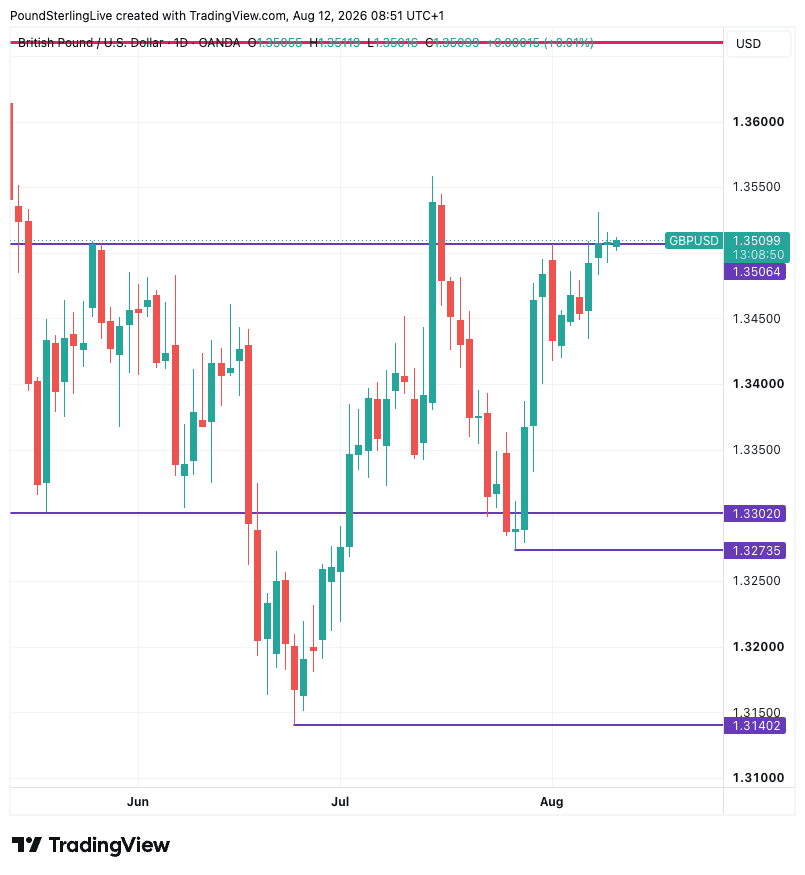
Pound-to-dollar spikes to 1.3540, a one-month high, EUR/USD goes to 1.1556, and GBP/EUR pares the day's advance to 1.17.
The inflation data comes as the GBP/USD tests the upper limits of a multi-week range that has anchored the pair since the Spring:
A weaker dollar was predictably accompanied by a spike in global equity markets, a sign of that investors are cheering the prospect of rates staying put for an extended period.
The resultant decline in market volatility is typically supportive of the pound against the euro and dollar, although it will prove a headwind against the Australian and New Zealand dollars, as well as emerging market and commodity currencies.
Nevertheless, the headline inflation rate is well above the Fed's 2.0% target and the data won't be enough to signal an all-clear from the prospect of a rate rise before the year is out.
A daily market note from Lloyds Bank flags comments from the Fed's Susan Collins as being relevant, as the San Francisco Fed President poins to conditions potentially requiring tighter policy in the coming months.
"I do see the possibility that economic conditions in the coming months will require tighter policy, and I would be prepared to raise rates in that context," she said.
That is a hawkish marker that can anchor the scope of the post-CPI rally.

The Bank Consensus, Without the Terminal
The median, mean, highest and lowest from the October survey update, plus named point forecasts out to 2027.
Free information pack, issued by World Wide Currencies.
What UK Factors Will Drive the Pound This Week?
Looking ahead, this week's key driver for the British pound comes on Thursday, when the Office for National Statistics publishes the preliminary reading of second-quarter GDP.
The economy is expected to have grown 1.1% year-on-year, which is a decent clip, and underscores the pound's recent solid run against most peers.
That release is the test Pound Sterling Live flagged on Monday for the Pound to Euro forecast, where the pullback from July's advance had held its support without breaking anything structural.
The question Thursday answers is whether the UK's 2026 outperformance against the eurozone is still running.
Until then, sterling has no independent catalyst, and the Pound to Dollar forecast for the session rests entirely on how the American number lands.
Oil and the Gulf Remain a Risk for EUR
Brent is trading near $89 a barrel after a volatile session between $88 and $90, according to a morning note from KBC.
The move lower came on reports that Pakistan's defence minister described the U.S. and Iran as close to an agreement, which pulled crude back from its highs.
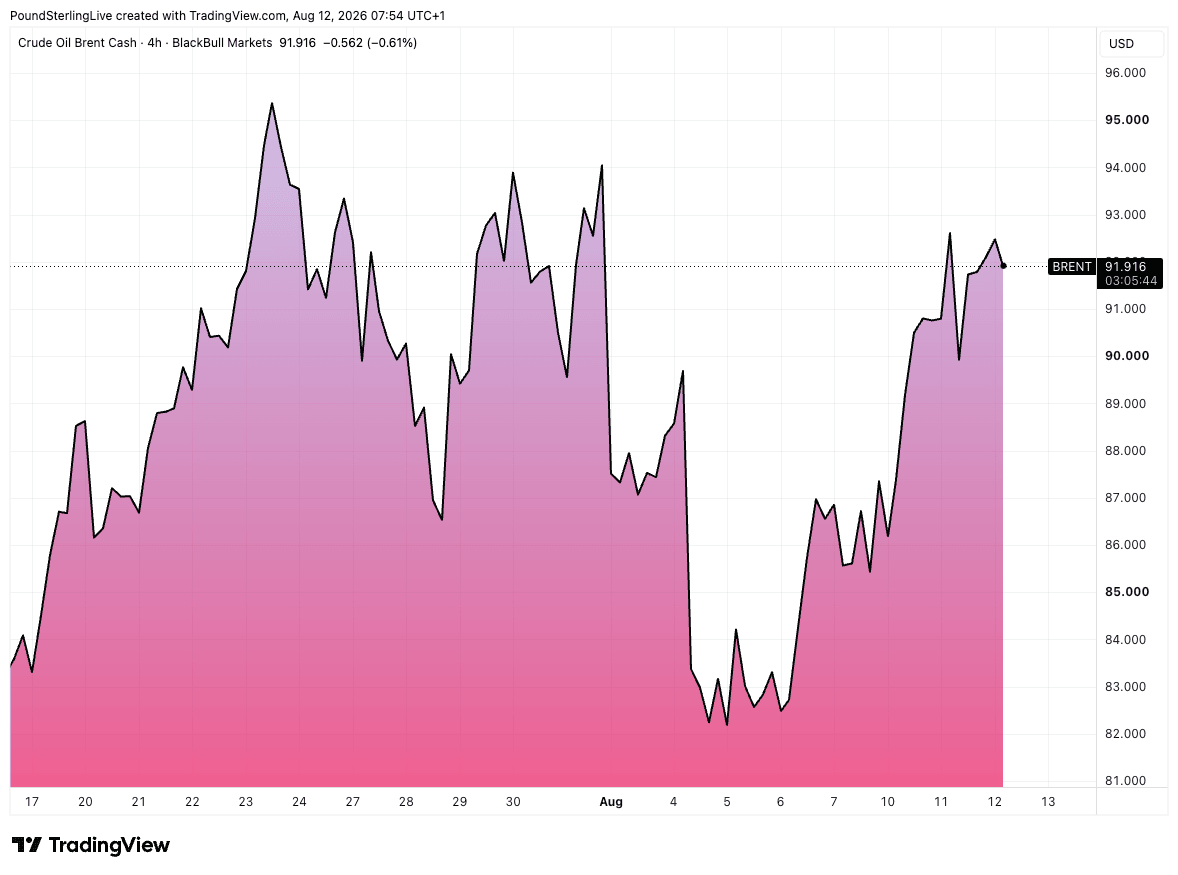
Energy is doing some real work in the FX market: ING makes the European transmission explicit, arguing that unresolved Gulf tension is holding European natural gas above EUR 60 per megawatt hour and preventing better eurozone activity data from lifting the Euro.
That matters for GBP/EUR, if it turns out that the exchange rate is being supported by euro weakness rather than sterling strength.
Oxford Economics has raised its oil price forecast and now expects Brent to average $85 a barrel over the remainder of this year before easing back, arguing the world economy can withstand a prolonged disruption.
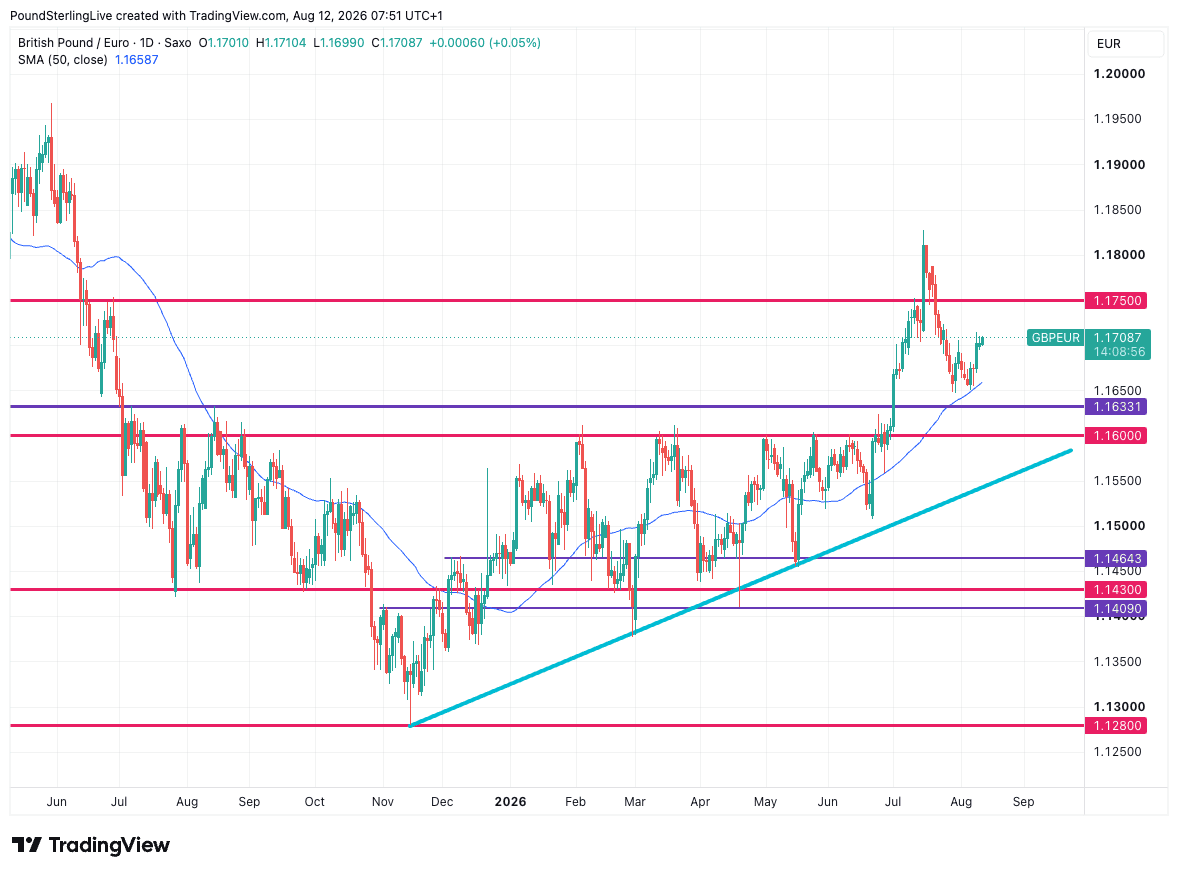
Where the Levels Sit
For the Pound to Dollar exchange rate, Monday's analysis put the week's task at 1.35064, the ceiling that has capped every advance since May.
Spot is now sitting on it, but there's a gravitational pull.
A soft inflation print can help the pair lift and ING's read is that a corresponding move in EUR/USD would take the pair toward last week's high at 1.1580, which is approximately what one-day straddle options are pricing.
That is a limited move by the standards of a CPI day, and it reflects thin August liquidity as much as conviction.
There is a further round of inflation and jobs data, plus the Jackson Hole symposium, before the Federal Reserve decides in mid-September.