
Image © Adobe Images
Odds of a Fed rate hike recede further, more USD underperformance likely from here.
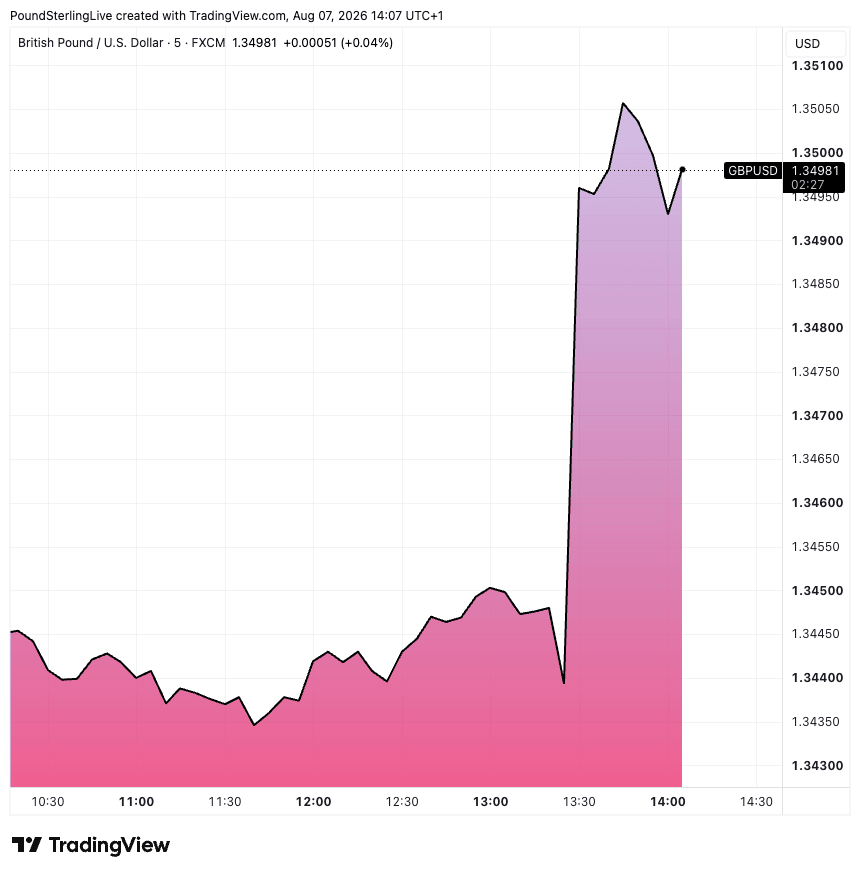
The pound-to-dollar exchange rate rose to its highest level since mid-July in the aftermath of a surprisingly weak U.S. labour market report that casts doubt on the Federal Reserve raising interest rates in the coming months.
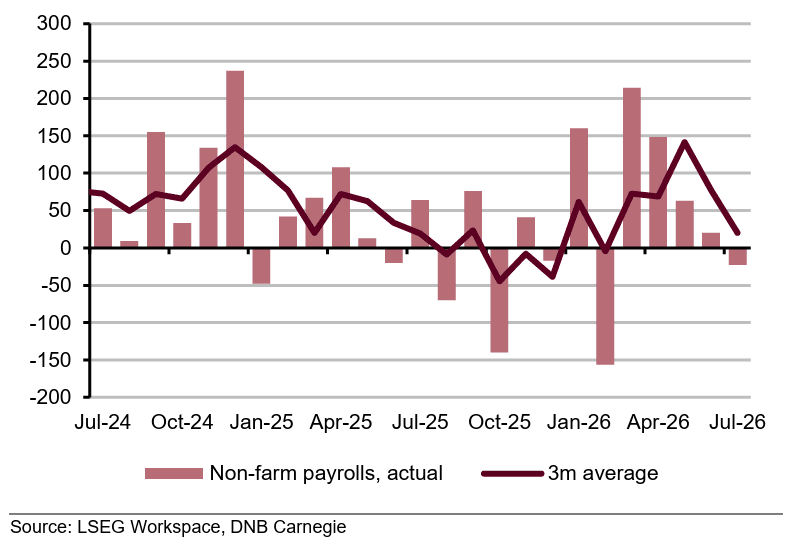
The Bureau of Labor Statistics said 23K jobs were lost in July, a massive undershoot relative to the +80K consensus forecast.
Conversely, the unemployment rate ticked down to 4.1% from 4.2% in June, a result of more people exiting the labour market.
Another important reading - the average hourly earnings measure - climbed 0.1% month-over-month, slowing from the 0.3% in the prior month, rising 3.2% year-over-year, which is below expectations for a 3.5% print.
The job losses and softer wage print will tell the Federal Reserve that the economy has limited capacity to add impetus to the country's inflation rate trajectory, nullifying the prospect of a rate cut.
That assumption was reflected in the fall in the U.S. two-year bond yield from 4.249% to 4.17%, translating in a slide in the dollar.
"The dollar is staging a full-scale retreat and Treasury yields are down across the front of the curve as traders anticipate less tightening from the Fed in the months ahead," says Karl Schamotta, a strategist at Corpay.
Analysts at Bank of America observe that the dollar's weakness of the past two weeks has been linked to fading rate hike bets, meaning that these latest data will likely deliver further losses for the Greenback.
"The recent USD sell-off can almost entirely be attributed to front-end rate differentials," says Bank of America in a weekly currency analysis.
The labour market picture was made considerably worse by substantial revisions to prior months as the May payroll number was cut to 63K from an initially reported 129K, June’s figure was lowered to 20K from 57K.
"Taken together, the revisions removed a further 103,000 jobs from previously published estimates. This is reinforcing signs that hiring momentum has been fading for several months," says Fawad Razaqzada, Market Analyst at FOREX.com.
The 3-month average gain in employment now sits at just +20K.
"The data support our view that some of the strength in payrolls in the last few months was flattered by transitory factors," says Nick Kounis, Chief Economist at ABN AMRO.