Image © Adobe Images
Sterling's rally against the euro has resumed, and the summer calm leaves room for further gains before September's tensions.
The pound-to-euro exchange rate has recovered the ground it lost in the pullback from July's high, clearing the first level of resistance and pulling clear of a rising 50-day moving average and keeping alive a multi-month rally.
Buying interest has been evident since the start of the week, and the pair now trades at its highest since the initial retreat began, leaving the correction looking complete rather than ongoing.
From a tactical perspective, the setup has improved since last Friday, and the more constructive read is reinforced by conditions outside the chart: equity markets at record highs, oil prices firming again yet volatility is suppressed, all the while the domestic political calendar stays empty until Parliament returns.
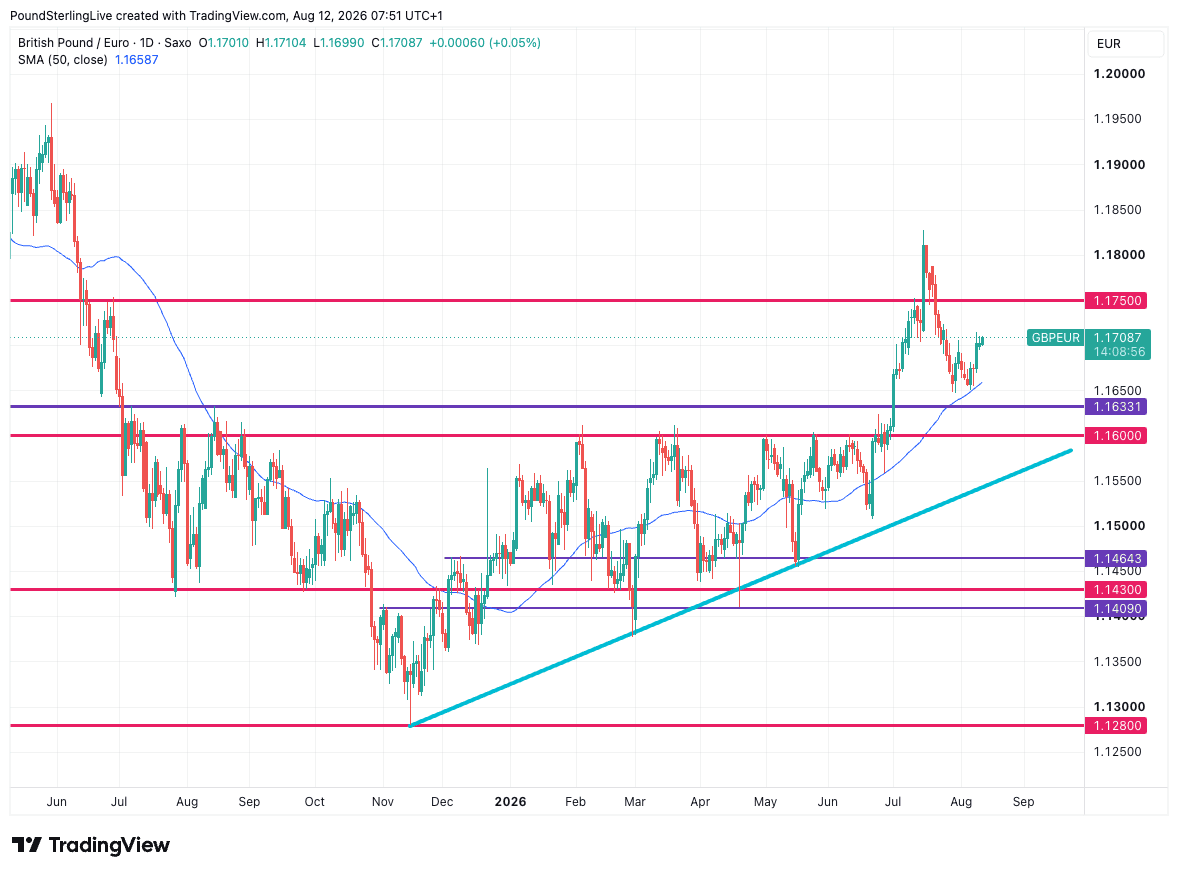
Above: GBP/EUR daily chart showing a rally that's been underway since November. Image © Pound Sterling Live, chart created with TradingView.
Spot at 1.17087 looks to be avoiding the rising 50-day moving average at 1.16587, and the distance between the two has widened since Friday rather than narrowed, which is consistent with the uptrend remaining intact.
This is the behaviour of a correction inside an uptrend rather than the start of a reversal.
The recovery has taken price back through 1.1700, the level that capped the first bounce attempt, and momentum has turned back in Sterling's favour after the neutral reading that accompanied last week's low.
The obstacle now is 1.17500, and above it the late July high at 1.1810. Support has trailed spot to move higher: 1.16587 at the moving average, then 1.16331, and beneath both the more consequential 1.16000, which capped this pair repeatedly between February and June before July's breakout cleared it.
The rising trendline drawn from November's 1.12800 low now runs through the 1.1580 region, and it has climbed steeply enough that it sits close behind the horizontal support rather than far below it.
Our short-term Pound to Euro forecast is for a test of 1.17500 while the moving average holds, with a break above there opening the way back towards 1.1810.
Why is the Pound Stronger Against the Euro?
We think there are some important themes arching over the technical picture that explain ongoing strength by the pound against the euro, one being energy. Oil and gas prices have been an important driver of GBP/EUR since the U.S. attacked Iran in March, with the rise in energy prices tending to support the pair.
Looking at this week's price action, Brent crude has climbed from just above 82 dollars in the first week of August to trade around 92 now, recovering the bulk of the decline that followed the brief de-escalation in the Gulf.
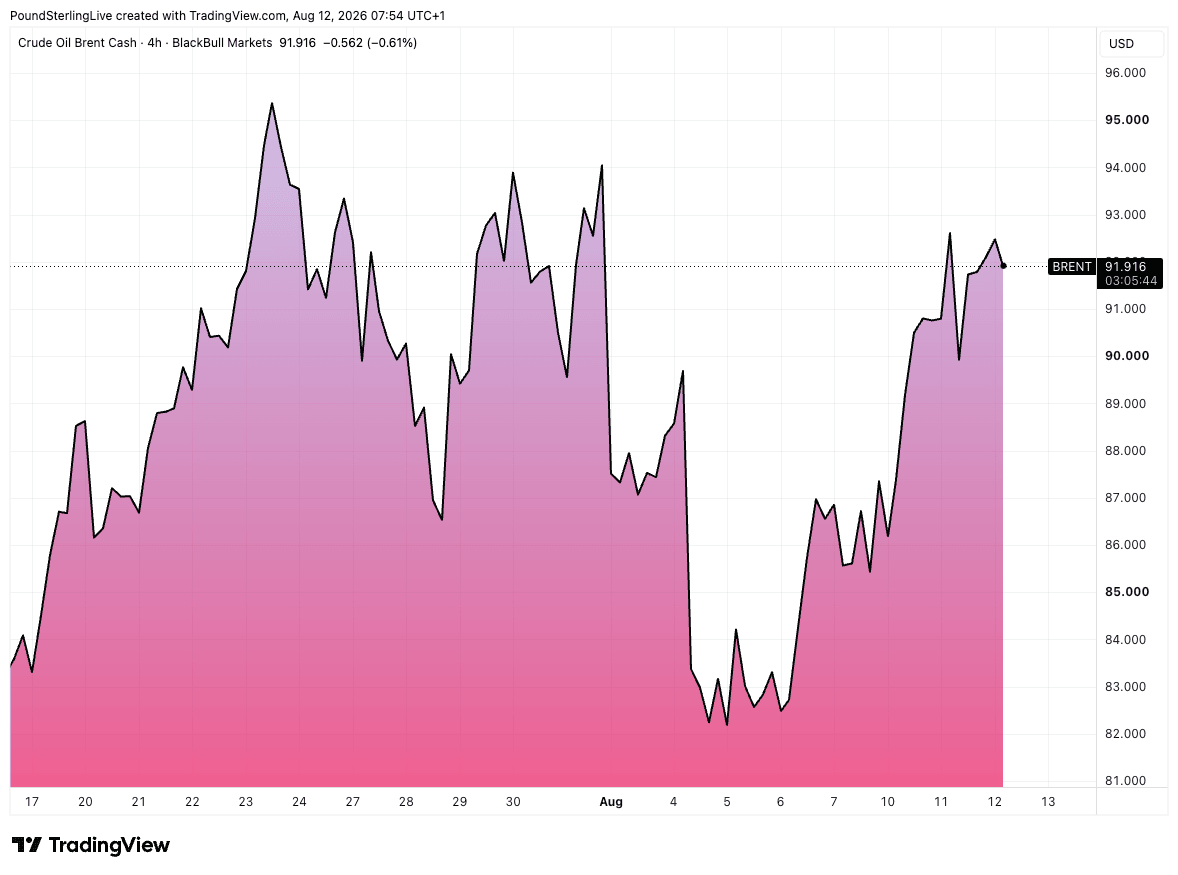
Above: Brent crude, four-hour chart. Image © Pound Sterling Live, chart created with TradingView.
Higher energy prices have historically favoured the Pound against the Euro, and the mechanism runs through relative interest rate expectations: higher energy prices drive bond yields (a form of interest rate) higher.
But because the UK's natural interest rate level sits above that of the Eurozone, any global increases tend to be reflected in a more rapid rise in UK levels.
In an environment where interest rates are driving currencies, this is proving supportive for the pound relative to the euro.
The complication is that the spread between Germany and UK rates - a reliable indicator of GBP/EUR performance - has not moved this week.
In fact, the gap between two-year gilt and Bund yields remains close to the lows of the year despite the recovery in crude, which means the channel that would normally transmit higher oil into a stronger Pound is not currently firing.
Nevertheless, higher oil is still translating into a higher GBP/EUR, so there is still a transmission, somewhere.
Risk Appetite Could Be Doing the Heavy Lifting
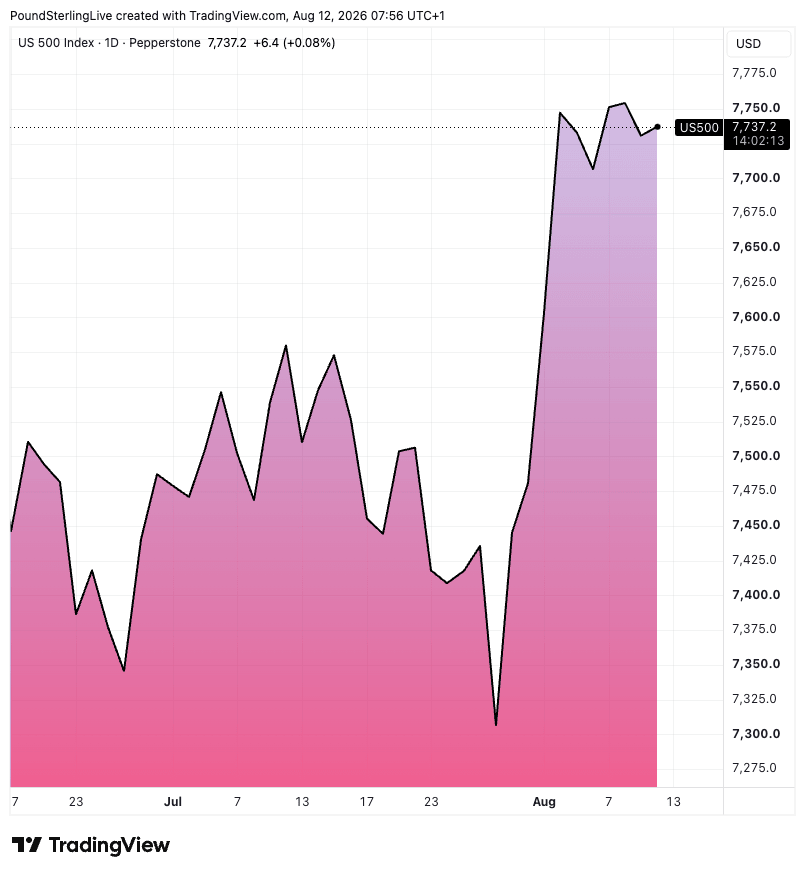
Above: The US S&P 500 hits new records this week.
What has moved decisively in Pound Sterling's favour is the tone of global markets; the S&P 500 has pushed to fresh record highs this week and implied volatility has compressed, arresting and reversing the risk-off episode that accompanied the pound's early August selloff.
This matters more to the Pound-Euro rate than it might appear, because the pair carries a high beta to global risk conditions.
The Pound is a pro-cyclical, higher-yielding currency that attracts flows when investors are willing to take risk. The Euro is the opposite, functioning as a funding currency that strengthens when positions are being closed and money comes home.
The consequence is that calm markets are a Pound-Euro tailwind independently of anything either economy produces, and that is precisely the condition prevailing now.

The Bank Consensus, Without the Terminal
The median, mean, highest and lowest from the October survey update, plus named point forecasts out to 2027.
Free information pack, issued by World Wide Currencies.
For Euro buyers, the Window Will Close
The tactical bullish stance on GBP/EUR does have a strict limit.
August liquidity is thin, the UK political calendar is uneventful with Parliament in recess, and global risk appetite is firm. That combination has removed the two things that reliably weigh on Sterling, namely domestic political noise and volatility spikes, and it leaves the technical setup free to express itself.
Thursday's second-quarter UK GDP release is the near-term test, with consensus looking for growth of 0.4% against the 0.3% the Monetary Policy Committee assumed. A print in line with that would confirm the economy is running hotter than the Bank of England expected and add to the case for the spread to widen.
Beyond the immediate horizon, the picture changes, and the date to mark is the return of Parliament next month.
Attention will turn immediately to the Budget, and fiscal risk is the channel through which Sterling has been repeatedly damaged over the past two years.
Rabobank forecasts a multi-quarter decline in the Pound to Euro rate on precisely this reasoning, arguing that domestic politics will reassert itself as a Sterling negative.
For euro buyers, horizons are therefore important: the window is open now and is likely to close in September.
That argues for treating any move towards the late July high as an opportunity to be acted on rather than a level to be waited out, particularly given that the institutional consensus forecast continues to see this pair materially lower over the coming year.