Image © Adobe Images
The Pound underperforms most G10 peers as bond yield spreads move against it.
Pound Sterling underperforms most G10 peers at the start of the new week, and with domestic news and scheduled data releases absent, global events and bond yields remain the important drivers of FX.
The Pound-to-Euro exchange rate falls to 1.1660, having been as high as 1.17 on Friday.
The Pound-to-Dollar rate falls to 1.3422, retreating from Monday's high at 1.35.
UK yields remain elevated when compared to the past two decades, but they have nevertheless fallen over recent hours, and it is the relative move that matters for the currency.
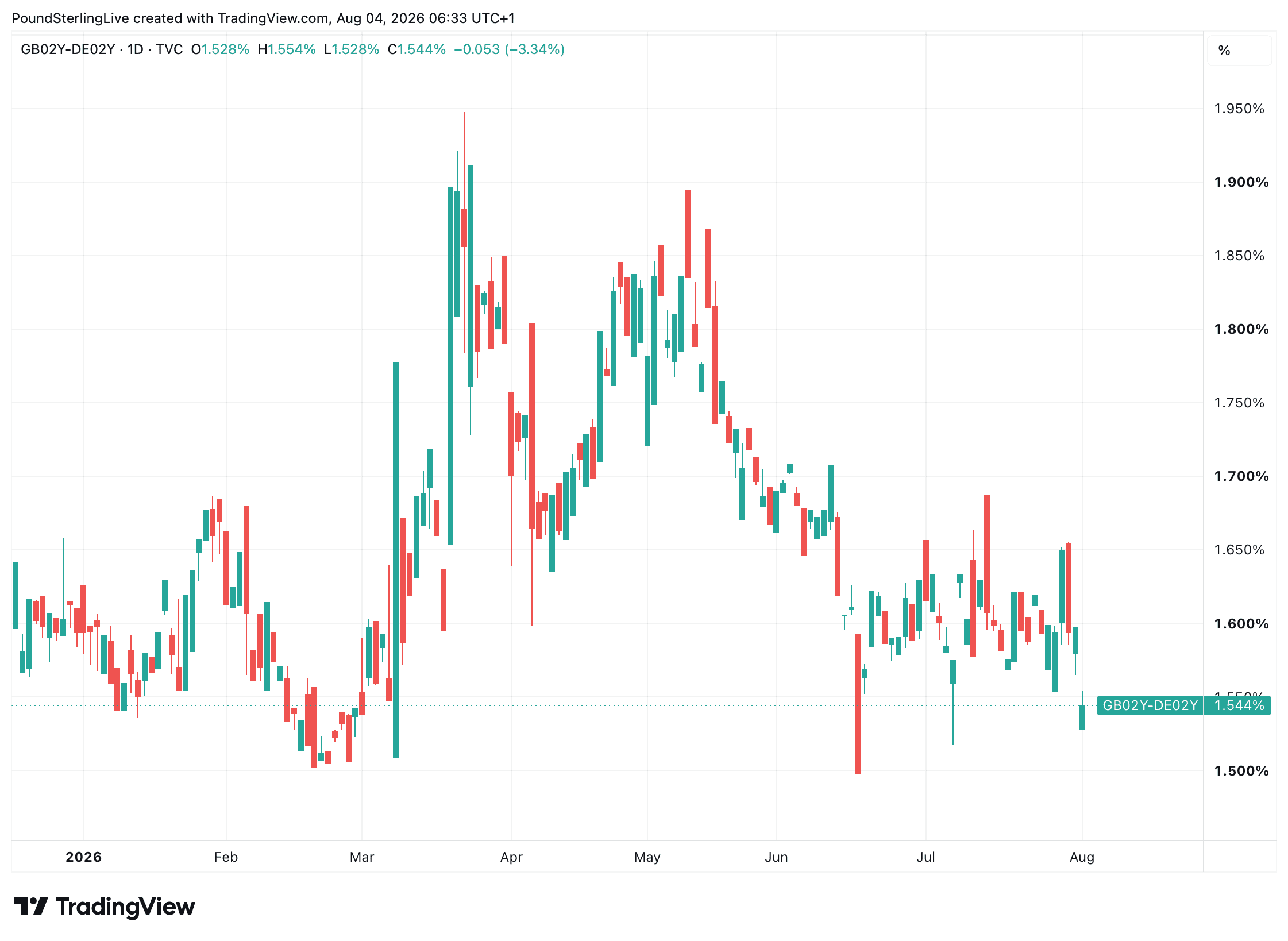
We're watching a couple of key spreads: for Pound-Euro, the gap between UK and German two-year bond yields has fallen back to 2026 lows at 1.544% - see the chart above.
The story is similar against the Dollar, where the UK-US two-year spread has fallen to 0.05%, having been as high as 0.2% last week.
Why do relative spreads matter?
Exchange rates are ultimately a relative price, and capital flows towards the currency offering the better risk-adjusted return; the two-year yield gap is the cleanest shorthand for that comparison because short-dated bonds respond directly to central bank interest rate expectations.
When the spread narrows, the extra yield an investor earns for holding Sterling over Euros shrinks, the incentive to hold the Pound fades, and spot tends to follow the spread lower; when it widens, the reverse applies.
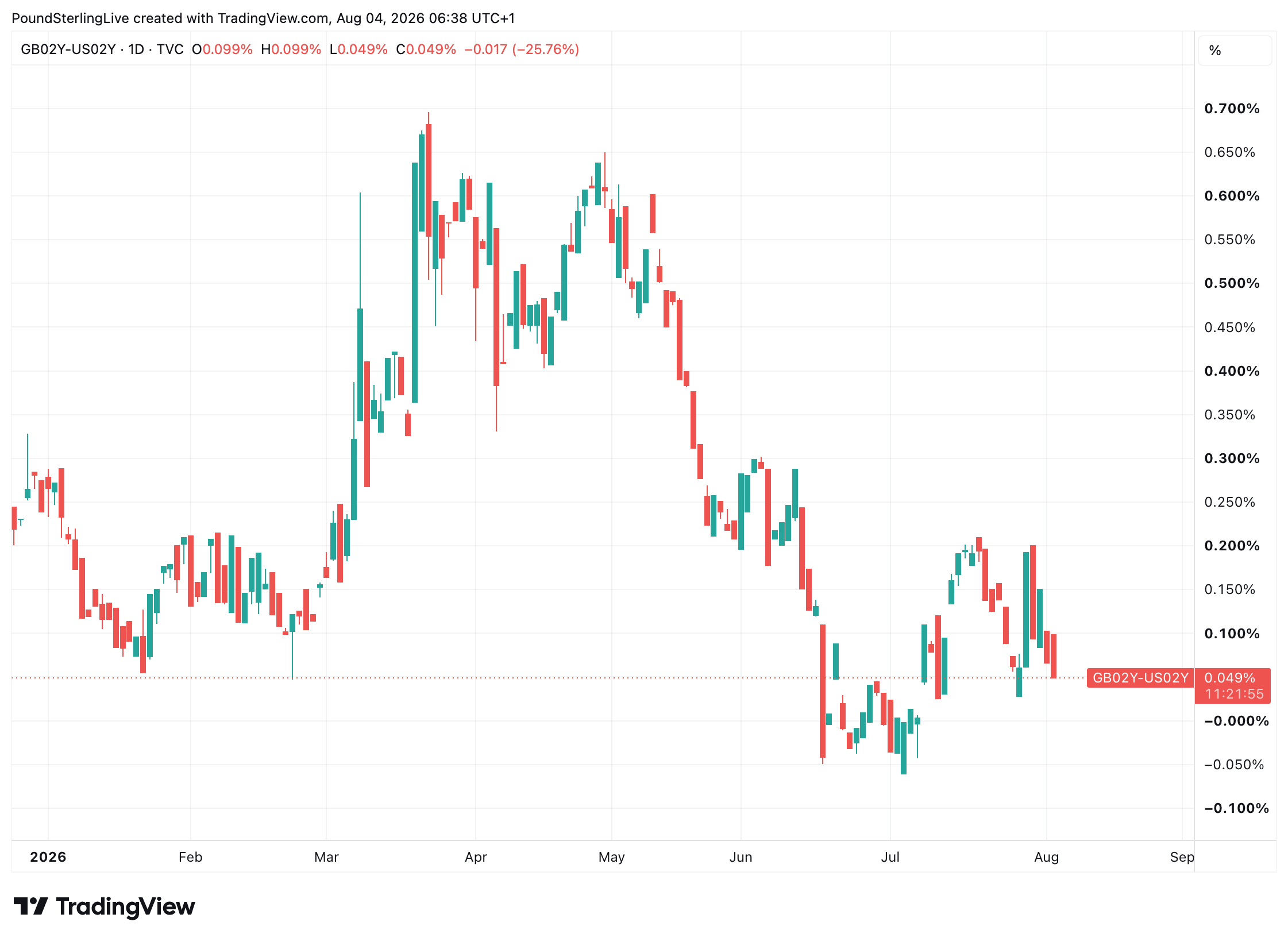
Above: GB 2-year minus U.S. 2-year.
This year's Pound-Euro rally was built on a widening spread, which is why its compression to the lows of the year demands attention.
The current compression owes much to the other side of the pair: with short-dated bonds highly responsive to rate expectations, the fall in the spread has European Central Bank rate hike bets to thank, as markets now price an almost 90% chance of a 25 basis point ECB hike in September.

The Bank Consensus, Without the Terminal
The median, mean, highest and lowest from the October survey update, plus named point forecasts out to 2027.
Free information pack, issued by World Wide Currencies.
The Reason Bond Yields are Falling
The pullback in yields is a question of domestic politics as well as global drivers, but it is the global side delivering the fresher impulse.
A retreat in oil prices has helped: Brent crude fell sharply on Monday to settle at $83.8 per barrel, before edging higher in early trade today.
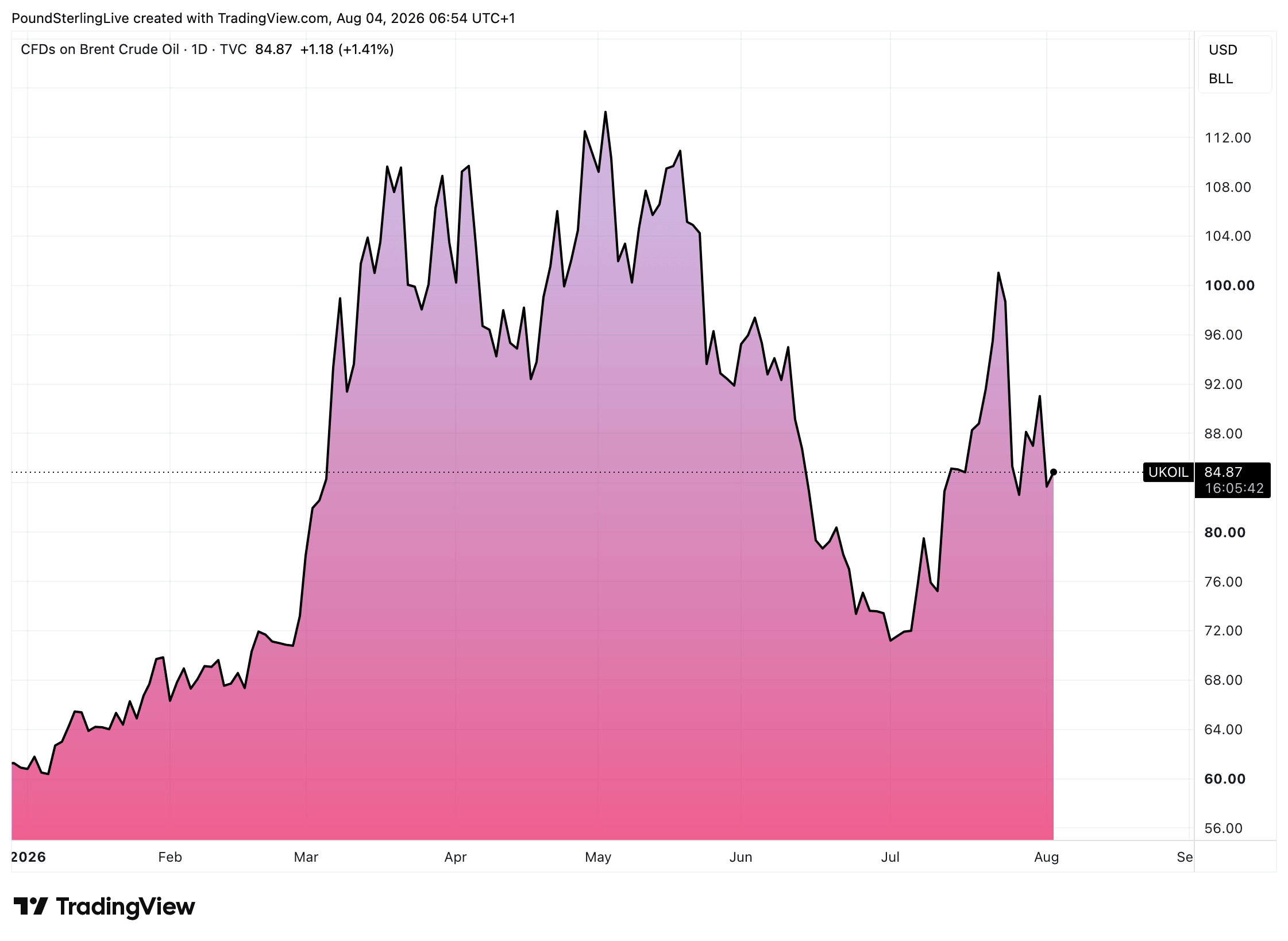
Above: Brent crude has fallen over recent days as hope rebuilds re. U.S. versus Iran.
Treasury yields declined as oil-led inflation fears eased, while the S&P 500 rose 1.5%, helped by hopes of progress in US-Iran talks and AI-related earnings optimism.
"Oil prices continued to fall yesterday with hopes that negotiations between the US and Iran will continue, but there seemed to be disagreement over whether talks are actually underway, while Trump said it was Iran's 'last chance' to reach a deal," says Marcus Widén, economist at SEB.
Pound Sterling's High Beta Bond Play
Here is where the UK's particular sensitivity bites: UK bonds carry a 'high beta' to global yield moves, meaning that when global bond yields fall, gilt yields tend to fall quicker.
The oil pullback therefore weighs more acutely on UK yields than on peers, compressing the very spreads that had been supporting the currency.
It is the mirror image of July, when rising inflation expectations lifted UK yields fastest and carried the Pound to its highs; the same amplifier now works in reverse.
When FX is responding to bonds, as it is this week, that dynamic can disadvantage the Pound, and until oil stabilises or the ECB repricing runs its course, rallies in Sterling are likely to remain hard work.