
Image © Adobe Images
The British Pound is vulnerable to further losses after the Bank of England declined to endorse the tightening cycle markets had priced.
The Pound was the weakest of the major currencies on Thursday and into Friday after the Bank of England left Bank Rate unchanged at 3.75% and gave no firm signal on whether it would raise rates in November.
The Monetary Policy Committee voted 6-3 to hold, with Pill, Greene and Mann again backing a 25 basis point increase.
The minutes said inflation risks are tilted further to the upside than in July, but that there has been little evidence so far of material second-round effects in price and wage setting.
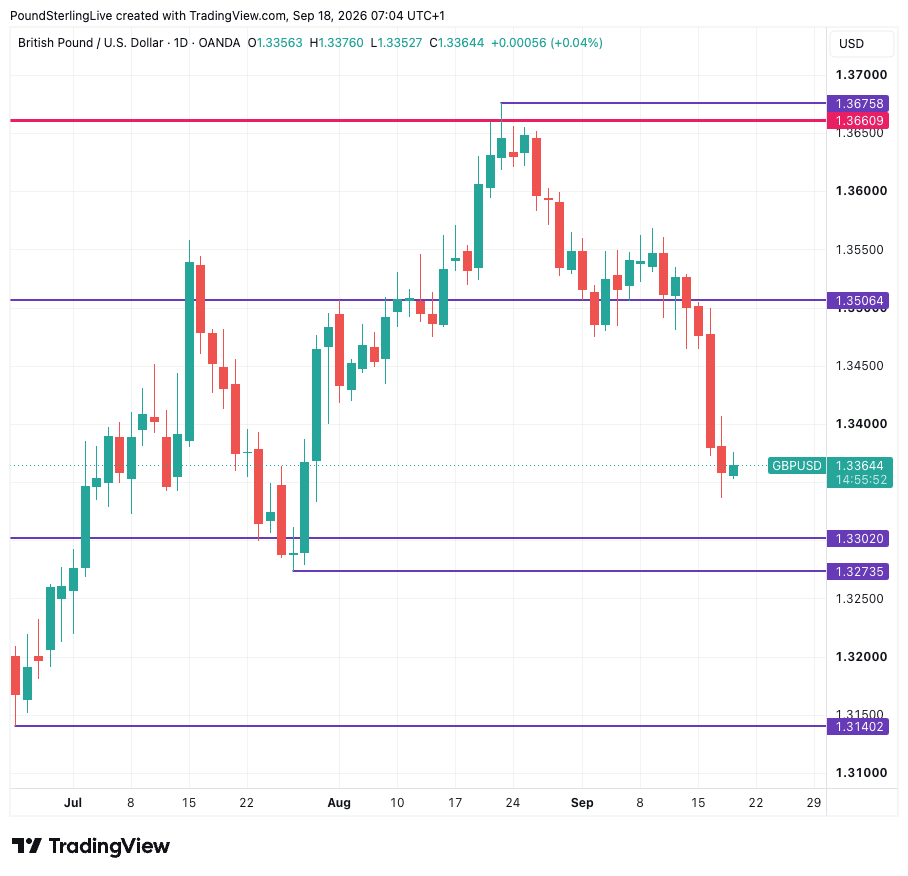
The pound-to-dollar exchange rate fell to around 1.3350 on the day and has since steadied near 1.3370 in Asian trade.
"This meeting has put to bed the prospect of 5 rate hikes from the BOE in the next year, and GBP/USD is lower on the day," says Kathleen Brooks, Research Director at XTB.
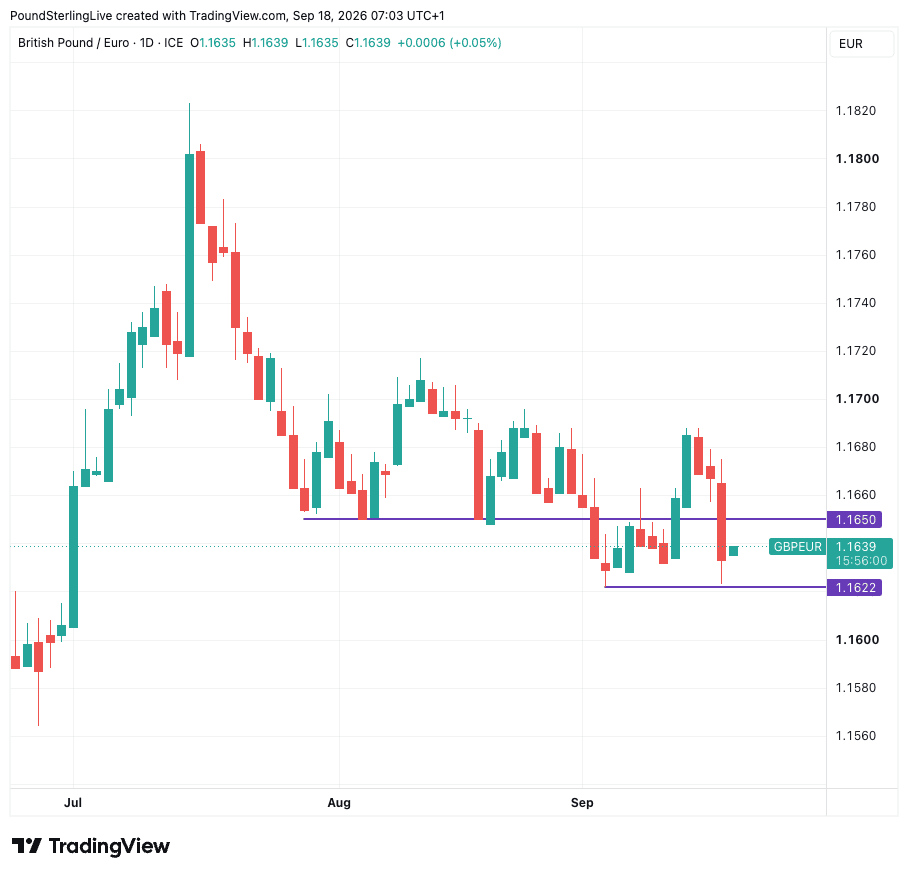
The pound-to-euro fell 0.30% to reach a low of 1.1623, recovering to 1.1640 by the time of writing.
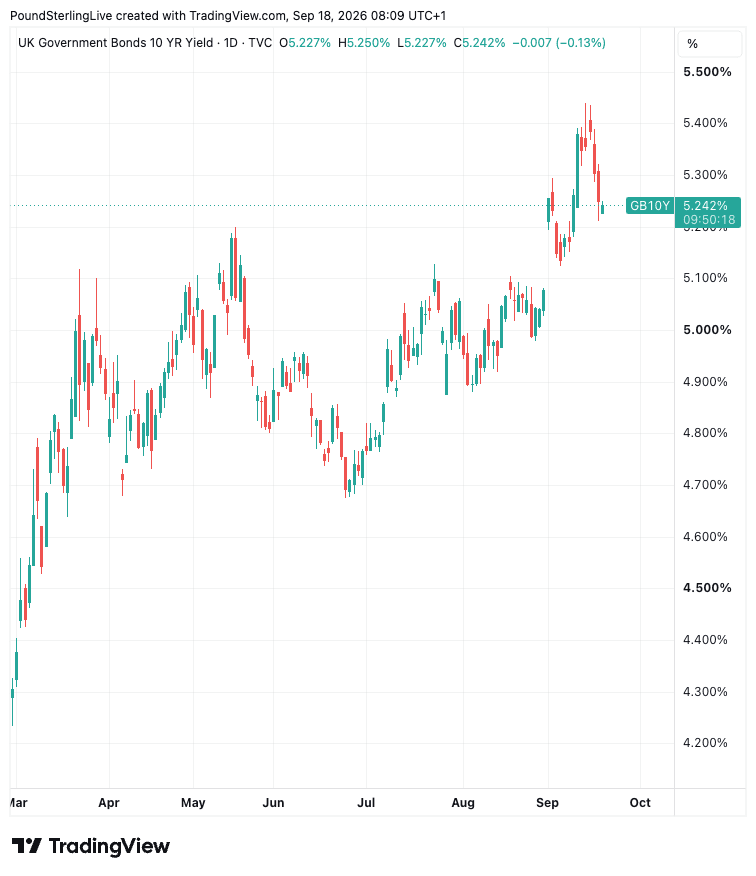
UK bond yields dropped, with the ten-year gilt yield down five basis points and the 30-year yield down ten basis points after the announcement.
"The BoE's policy update proved less hawkish than some investors had feared, triggering a pullback in both GBP and gilt yields as the MPC stopped short of signalling a November rate hike and continued to stress that tighter financial conditions are already helping to contain inflation," says MUFG in a review of the decision.
The market had been leaning the other way into the meeting.
"GBP weakened on the decision and gilt yields traded lower, as markets were priced for more hawkish central bank rhetoric after listening in to both Fed and ECB hawks recently," says Danske Bank.
Bond Market Pressures Eased by Decision to Quit Gilt Sales
The Bank also set out a multi-year plan to run its gilt holdings to zero by 2034, at an average annual pace of £46bn, with active sales of £20bn and no sales until April.
Deutsche Bank notes the Bank will now sell only gilts maturing between 2035 and 2049, and will sell directly to the Debt Management Office.
The QT overhaul removed a source of pressure at the long end of the curve and took some of the risk premium out of UK debt yields:
Hikes are Still Coming Warn Some Analysts
"If the conflict in the Middle East persists for an extended period, as appears to be the case, and the risk of second-round effects emerging increases, it is likely that policy may have to tighten," said Governor Andrew Bailey.
The Bank has revised its inflation profile up to around 3.75% in the fourth quarter of this year and slightly above 4% in the first quarter of 2027.
Several investment banks moved their calls on the back of it.
"We now expect the MPC to raise Bank Rate 25bp in November and by a further 25bp in February 2027, subject to a continuation of the conflict in the Middle East," says Jack Meaning, Chief UK Economist at Barclays.
Brooks says the prospect of a November hike remains live, but that a prolonged tightening cycle is now less likely, and sees $1.31 as the next major support zone for the GBP/USD, suggesting further sterling weakness is in store.
"While rates may be restrictive, policy may not be restrictive enough," says Sanjay Raja, Chief UK Economist at Deutsche Bank, who expects hikes in November and February to take Bank Rate to 4.25%.
Oxford Economics has also shifted to two hikes.
"We think greater and more persistent threats to supply will keep energy prices elevated in the short term, so the MPC's criteria for hiking will likely be met," says Andrew Goodwin, Chief UK Economist at Oxford Economics.
Others Say the Next Move Will be a Cut
Dissenting views rest on a belief that the energy shock fades before the Bank acts.
Nomura maintains its call for no change in Bank Rate this year, against market pricing of around 38 basis points of tightening by year-end and 89 basis points by the middle of 2027.
"If energy prices fall and evidence of second-round effects does not emerge, we think the majority of the committee would likely still prefer unchanged rates for the rest of the year," says Josie Anderson, Economist at Nomura.
Danske Bank keeps its base case of an unchanged Bank Rate until a cut in June 2027, while acknowledging the risk is increasingly skewed towards a hike in the fourth quarter.
Brent crude has fallen 5% over the past five days and trades above $104 per barrel after Saudi Arabia moved to restore capacity on its damaged East-West pipeline, which weakens the case the hawks are making.
Commonwealth Bank of Australia now looks for a 25bp hike in November, but says it would not mark the start of a tightening cycle given a soft labour market and a Bank Rate already judged restrictive.
"By contrast, the market continues to price about four 25bp rate hikes by mid-2027, pointing to GBP/USD downside," says Carol Kong, Economist and Currency Strategist at CBA.