
Image © Adobe Images
These inflation data make the market's rich bet on Bank of England rate hikes look ridiculous.
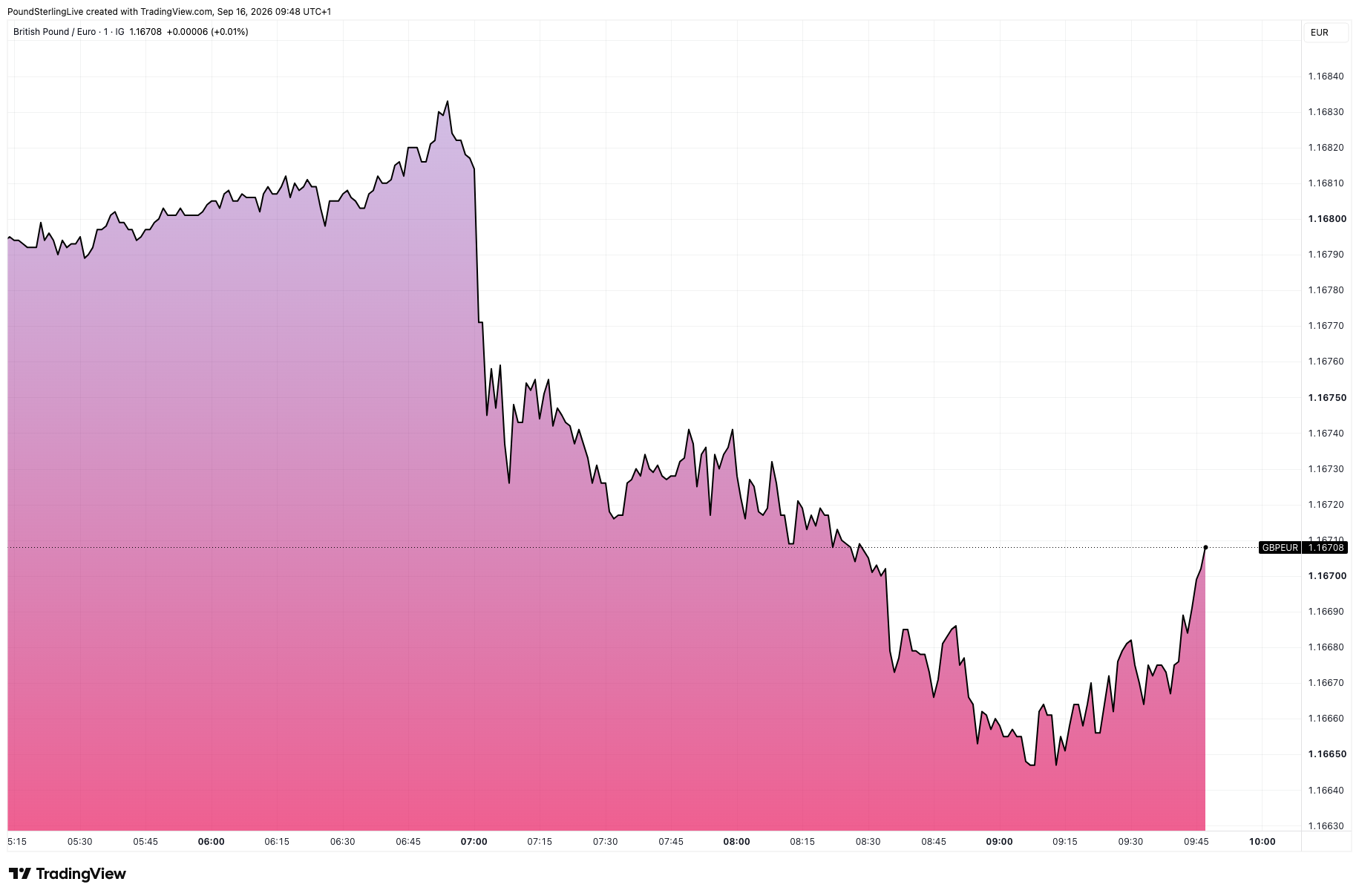
The British pound is falling: a signal that the market is reading the midweek CPI inflation release as being dovish for interest rate policy, i.e. it pushes back against the need for Bank of England to raise rates tomorrow and in the coming months.
Headline CPI landed 3.1% y/y in August, well above the Bank's 2.0% target but in line with expectations.
Looking into the important sub-components - those that the Bank is particularly interest in - there were no concerning developments.
"Service price inflation was unchanged at 3.4%, surprising us and consensus to the downside, in large part due to airfares and accommodation," says Josie Anderson, analyst at Nomura.
The Pound Delivers its Verdict
The FX market is always the most direct and quickest judge of an economic data release, and the response from pound sterling was clear: this was dovish.
The pound-to-euro, a benchmark of UK-specific sentiment, falls steadily through London morning trade, reaching 1.1665, having started the day at 1.1676.
The pound-to-dollar, more exposed to the 'big' dollar, was also softer, reaching 1.3470, having started the day at 1.3477.
Inflation Will Persist: Hawkish Message Can't be Ruled Out
Despite the on-consensus nature of Wednesday's release, there will be some discomfort amongst certain members at the Bank of England that inflation is well above target and the institution risks appearing as if it is sitting on the sidelines and not acting.
Further energy-driven inflation is still coming. Looking ahead, inflationary pressures will remain elevated as Ofgem's energy price cap rises 4% to £1,723 a year on October 1, with gas bills up 8%.
"High international gas prices are continuing to drive energy costs in the UK," says Neil Kenward, Director General for Markets at Ofgem.
E.ON Next forecasts the January cap at £2,131, a rise of nearly 24%.
The Bank's job is to stop that external shock from becoming part of the domestic wage and price setting cycle by raising interest rates.
"The Bank does not need to prove that second-round effects are coming, which unreliable survey data could not show conclusively in any case. It needs to decide whether the data today are sufficient to conclude that the risk of second-round effects becoming embedded is too high to ignore. We judge they most certainly are," says economist Dr. Savvas Savouri at Quantmetriks.
A 'hawkish' message from the Bank on Thursday therefore cannot be ruled out, which would bolster GBP on the day.
"The pipeline doesn’t look particularly encouraging. For example, the services PMI price index points to the risk that the impact of higher energy costs is just still to come," says Sam Hill, Head of Market Insights at Lloyds Bank.
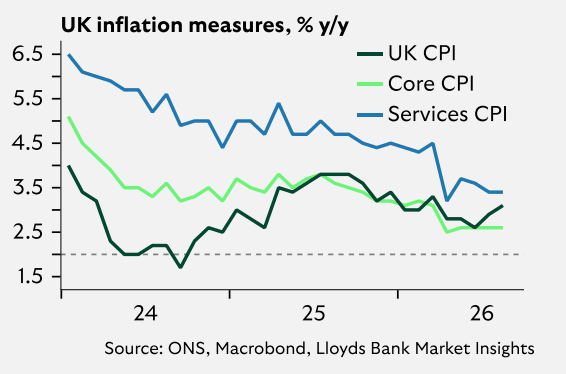
Above: "Core and services inflation continue to point to soft underlying trends" - Lloyds Bank.
Investors Are Wildly Off Course
The CPI release and Bank of England decisions will land in a marketplace that is highly expectant of central bank action: money markets show up to four rate hikes are to be delivered by the Bank.
That won't be met as that scale of hiking would almost certainly deliver a destructive recession.
"Swap markets continue to fully price in a hike from the BoE in November, which we still maintain is excessive," says Matthew Eyan, Head of Market Strategy at Ebury.
Indeed, high energy prices and high bond yields are already creating the squeeze that the Bank would typically try to evoke by raising interest rates.
That means rate hike bets must come down, and a normal rule of thumb is that would play negative for sterling.
But it probably wouldn't pay to sell the pound aggressively as the same setup exists for most developed market central banks: a lot of hikes expected, but in reality they won't be delivered.
That insulates the GBP.
What This Means for the Pound
The CPI inflation release has proven to be a negative development for near-term price action in pound sterling as it deflates rate hike bets.
Thursday's Bank of England could nevertheless land on the 'hawkish' side as the Bank tries to avoid looking complacent when inflation is so obviously above target.
That could ilicit a buy-the-fact moment for sterling.
Beyond Thursday, tensions ahead of the budget should start to build, and that will cap GBP upside.