
Image © Adobe Images
The pound looks to be struggling to hold onto its recent positive momentum against the Australian dollar.
The pound-to-Australian dollar exchange rate rose from May through to early July, but the pair has definitely lost impetus through the course of the past week and looks prone to a deeper setback.
The key question for the week ahead is whether GBP/AUD is simply consolidating before another push higher in line with the recent multi-week rally, or whether the rally is running out of steam beneath resistance, in sympathy with the longer-term selloff.
Our hunch is that the latter is the case.
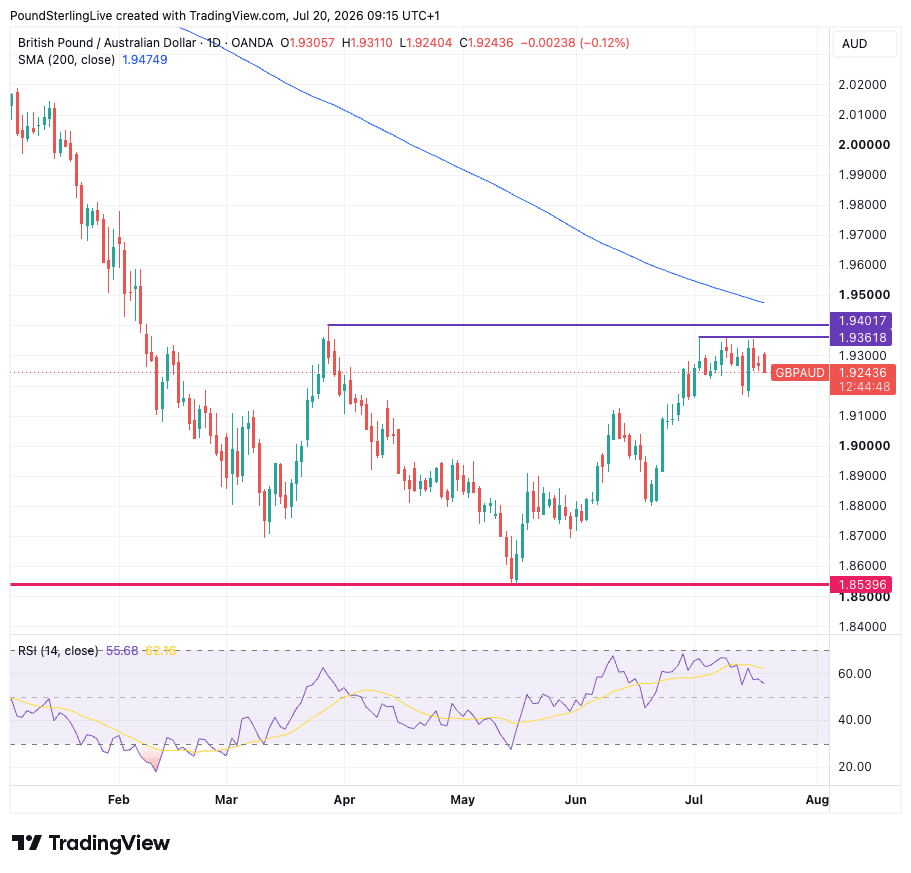
GBP/AUD looks to have risen into a zone of significant layered resistance on the daily chart that runs from 1.9360 and the falling 200-day moving average at 1.9475.
A decisive break through this cluster would represent a significant technical victory for bulls, clearing both horizontal resistance from the March highs and the long-term trend filter represented by the 200-day moving average.
However, rejection anywhere within that band - or ahead of it - would not be surprising because multiple technical sellers are likely to be active there.
Taken together, the chart suggests to us that GBP/AUD is liable for a fall to 1.91 in the coming week.
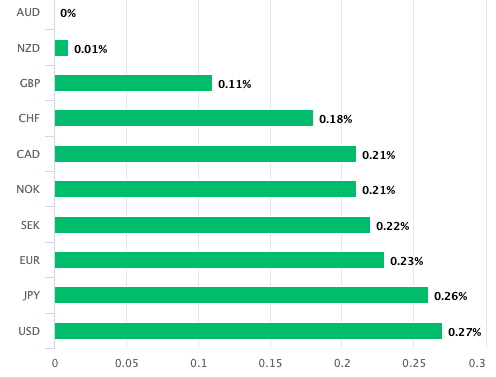
Interestingly, the AUD is the best performing G10 currency at the start of the new week (see above), a performance that flies in the face of geopolitical headlines.
It's been a weekend of negative news out of the Middle East, and that should weigh on sentiment in the coming hours and days, which typically hurts the high beta currencies such as AUD, CAD and NZD.
However, digging a little deeper shows that the USD is one of the worst-performing majors on Monday, despite rising oil and gas prices and the deterioration in sentiment.
We think that offers a clue as to why the AUD is doing well: the AUD tends to outperform in a weak-USD environment, and that's what it gets this Monday.
Should the USD continue to struggle, the AUD could outperform further, pressuring GBP/AUD lower.
The reason the U.S. currency is struggling owes itself to the interplay between higher oil and gas prices, inflation and interest rate expectations.
June's U.S. inflation data undershot expectations and suggest that the U.S. economy might be more immune to Middle East-inspired oil and gas rises than previously thought.
That takes the pressure off the Fed to raise interest rates later in the year, weighing on U.S. bond yields and the dollar.
At the same time, rising oil and gas prices could pass through Australia's inflationary chain more noticeably, which puts the RBA on rate hike alert, something that will bolster the AUD.
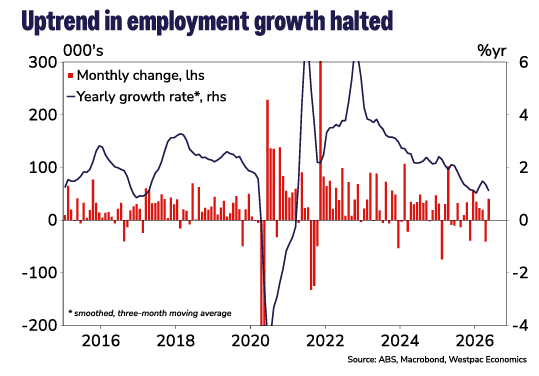
The calendar highlight for the coming week is the release of Australia's employment numbers for June. Here, 15K jobs are anticipated to have been added, meaning anything stronger could boost the Aussie dollar.
However, a downside surprise would weigh on the AUD, and according to Westpac, the market is showing cooling.
The bank's economists note that on a three-month average basis, employment is growing well below the pace of the working-age population, leaving the employment-to-population ratio 0.7ppts below its recent historical high.
"The brief recovery around the start of the year has well and truly faded," says Westpac. "Higher inflation and recent interest rate rises will still take time to fully work its way through to the labour market, but for now, it is looking weaker than earlier in the year."
Forward-looking business surveys, meanwhile, point to sluggish employment growth ahead.
Risks are therefore tilted to the downside, which could set the Aussie dollar back on the day.

The Bank Consensus, Without the Terminal
The median, mean, highest and lowest from the October survey update, plus named point forecasts out to 2027.
Free information pack, issued by World Wide Currencies.