Image © Adobe Images
It's a busy week for pound sterling: Andy Burnham becomes the new Prime Minister on Monday, labour market indicators are out Tuesday and June inflation figures are out on Wednesday.
For the euro, the highlight is Thursday's ECB interest rate decision.
Yet, it's the global backdrop of renewed hostilities in the Middle East and rising oil and gas prices that could prove to be the most relevant for both the euro and pound sterling.
This confluence of fundamental drivers could undermine or accelerate the pound-to-euro rate's strong uptrend that delivered a new one-year high at 1.18 last week.
At the start of the week, the pair trades close to that peak at 1.1770, up from Friday's close of 1.1761. The pullback from the 13-month high is shallow and appears more consistent with profit-taking than a change in trend:
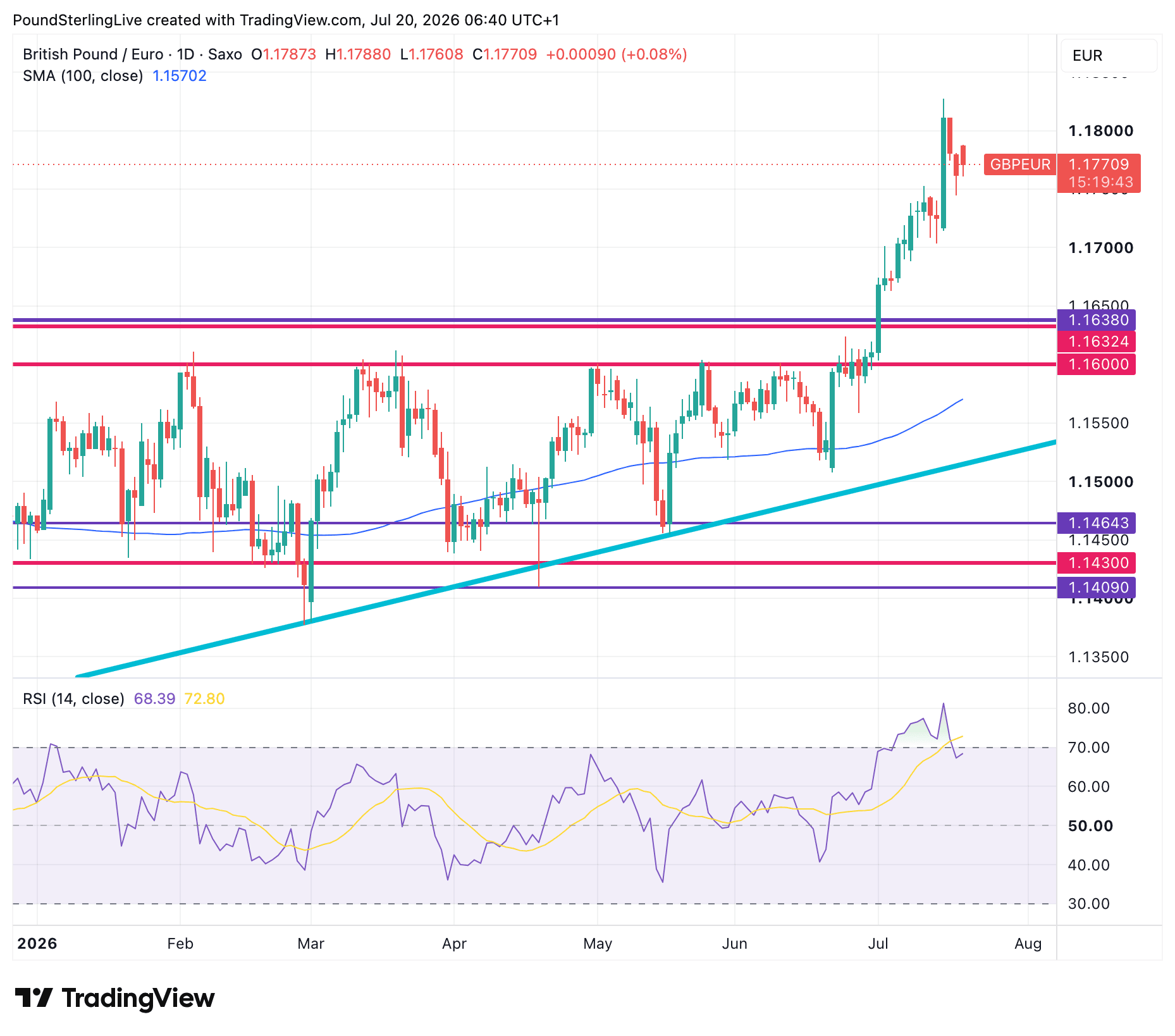
GBP/EUR remains in a well-established uptrend after breaking decisively above the 1.1600 and 1.1632 resistance zone earlier this month. The key question for the week ahead is whether GBP/EUR can hold above the July breakout zone.
Although the RSI momentum indicator has retreated from overbought territory, see lower panel, it remains elevated, suggesting bullish momentum has cooled but not broken.
The recent pullback has relieved some of the overbought conditions, increasing the likelihood that buyers will attempt to reassert control if support levels hold.
The broader technical picture remains constructive while the pair continues to trade comfortably above the rising 100-day moving average (1.1570) and the former resistance area.
The balance of probabilities continues to favour further gains, although the pace of the advance is likely to moderate after the sharp July rally.
Why the Middle East War is Supporting GBP/EUR
The weekend saw an escalation in the Middle East conflict with the U.S. broadening strikes on Iran following the killing of two servicemen in the region last week.
That's helped oil rise to the cusp of $90 / barrel, which should in turn raise expectations for lingering inflationary pressures in the global economy. What we should see during Monday's trade is global bonds falling in value, and their yields rising.
British bond yields are already higher than comparable G7 bonds, and developments in the Middle East will mean that premium grows.
GBP/EUR has tended to advance when this happens, and the bid we're seeing under the exchange rate as the week gets underway is testament to that.
ECB: War Watching
Thursday's European Central Bank decision will prove the main focus for the euro.
"Following the interest rate hike in June, the central bankers are likely to maintain a wait-and-see approach for the time being. However, should the escalation in the Middle East observed over the past two weeks continue and energy prices be driven further upwards, serious consequences for inflation prospects must be considered. In this case, the ECB would probably be forced to act later in the year," says a note from Germany's Helaba Bank.
Money market participants already assign a probability of around 90% to an interest rate hike in September, and one is fully priced in by October.
That means hikes are already richly priced, leaving limited room for a 'hawkish' repricing on the day. For the euro, that's a headwind, and the ECB will therefore be unlikely to turn the currency's fortunes.
Burnham: First Potential Slip-up

File image of Andy Burnham. Copyright by World Economic Forum / Faruk Pinjo.
By early afternoon London time we should get news on who will be the new UK chancellor, the second-most important position in government and the most important office for fiscal affairs.
The appointment is therefore an important one from the perspective of the country's financial and economic outlook and comes at a time of severely constrained space to manoeuvre: taxes are at record highs, and spending is surging.
Shabana Mahmood is widely tipped for the post, and the GBP rallied when news broke that she was the favourite to succeed Rachel Reeves.
The move is therefore in the price and won't bother sterling.
However, the big risk we see is Burnham initiating a fiscal giveaway as one of his first policy moves. For instance, there's talk about cutting energy bills.
That's expensive and comes in the context of rising borrowing costs. Do too much, and the cart falls over.
The pound can be extremely reactive to mini market panics about the finances, and it's a risk for the remainder of the year.
Economy: Jobs, Inflation and PMIs
As if that's not enough, we have a tranche of important data out of the UK this week.
Tuesday's labour market statistics will be of interest: Consensus looks for average weekly earnings to have risen 3.4% and the unemployment rate to have remained at 4.9%. Higher wages could boost the pound, while a higher unemployment rate could weigh on it.
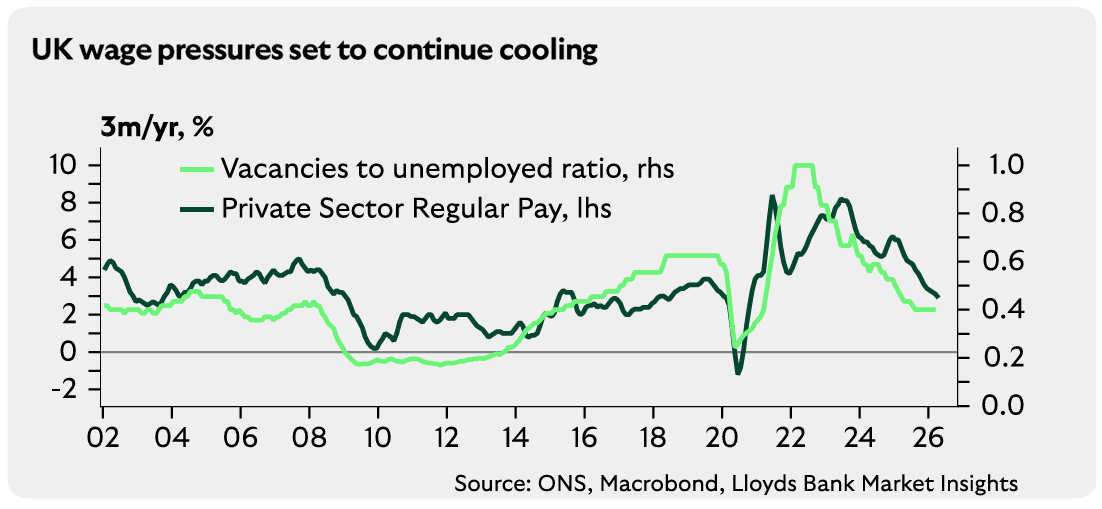
Wednesday's inflation numbers will nevertheless be the calendar highlight of the week. Here, inflation is forecast to have dropped to 2.7% y/y in June from 2.8% in May. Core is forecast at 2.5%.
Of course this is well above the Bank of England's 2.0% target and is therefore consistent with a need to raise interest rates. But the sense is that only a meaningful beat of expectations would encourage that kind of expectation to build.
Following a run of inflation undershooting expectations, could this be the week when it beats? The rulebook says the pound should go higher if it does.
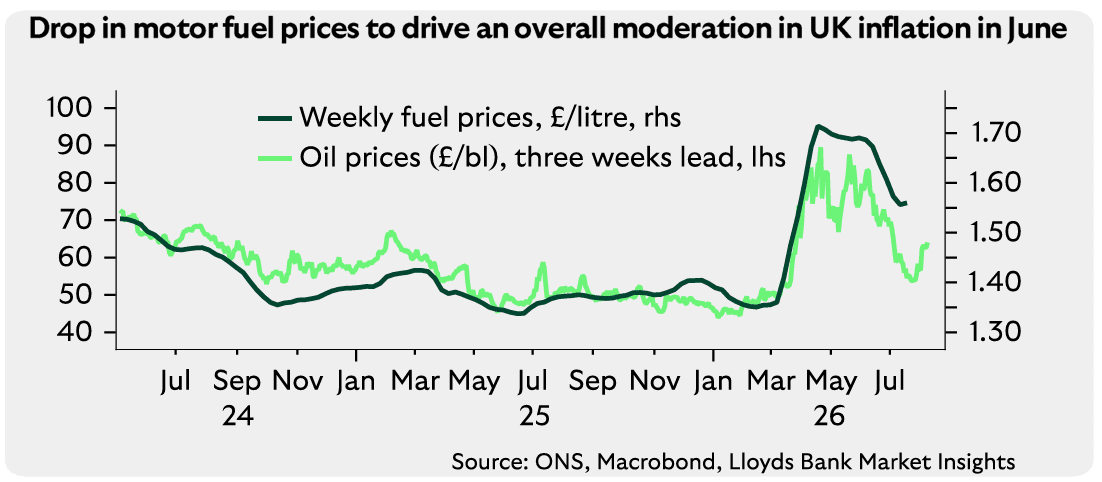
The week rounds off with flash PMI data for July, offering the first glimpse of how businesses reacted to renewed Middle East tensions and the UK political transfer.
"The index is expected to remain below the 50 threshold, suggesting demand conditions remain weak," says Lloyds Bank in a week ahead preview.
England getting to the semi-finals will have meanwhile boosted the services sector component, but does this merely bode for a retracement in activity over the coming months?
Disappointment in the data could weigh on sterling into the weekend, although it's worth remembering the Eurozone's PMI data is published on the same day. We've seen the Eurozone's data tend to underwhelm relative to the UK's this year, and that's helped GBP/EUR trend higher. More of the same could see GBP/EUR close the week higher than where it opened.