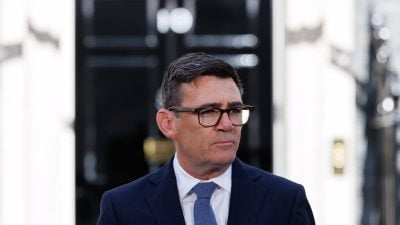
Above: Burnham's summer tour of the country has the whiff of a campaign. Picture by Lauren Hurley / No 10 Downing Street.
The British pound could be subject to fresh political intrigue on chatter that Andy Burnham will call an early election.
Pound sterling rarely does well when political uncertainty is high, and a potential election cycle in early 2027 must therefore now enter the foreign currency market's calculus.
It Makes Sense for Burnham to Call an Election
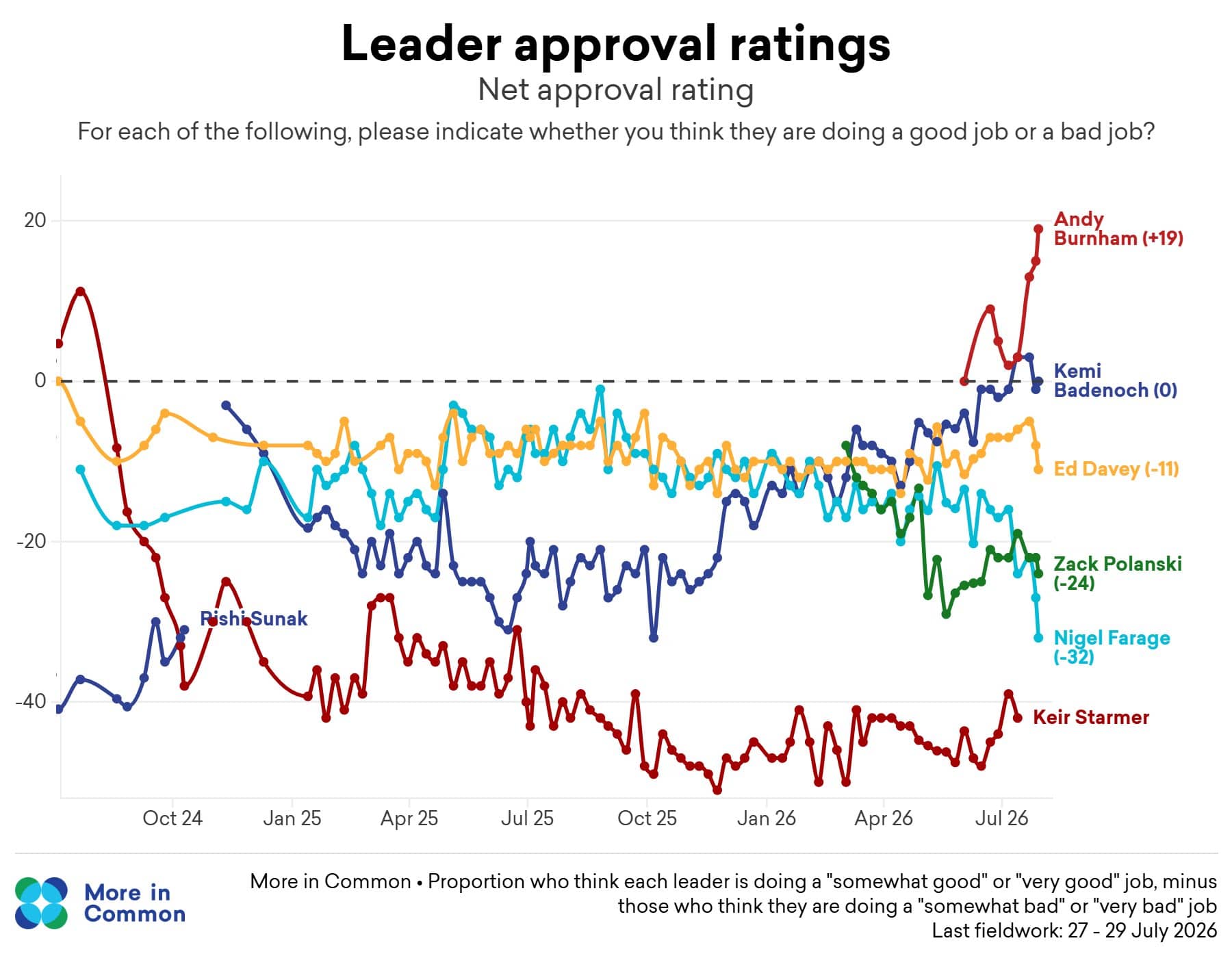
I have been firmly of the view that Burnham will call an early election, as everything he has done since taking power has been done through the lens of a campaigner: it's been a series of little giveaways that attract glowing headlines but are too small to shift the fiscal calculus.
That's playing it safe with the finances while maximising political dividends.
Only a campaigner with a short-term scope does this, and it makes sense: Burnham was not elected on the current Labour Party manifesto, and his personal manifesto of 'Manchesterism' is hemmed in by the constraints of Keir Starmer's promises.
To be sure, Burnham wants to get things done as Prime Minister, but he knows he lacks the mandate to do so.
What the Hacks are Saying
Josh Glancy in the Times and Dan Hodges at the Mail have both written articles today that predict Burnham calling a General Election next spring.
Both are close to Burnham and the read across is that the PM's team are briefing or dropping hints to the press to gauge response.
"Clacton guarantees Andy Burnham will call an election in 2027," writes Hodges, writing in the wake of last week's Clacton by-election where Nigel Farage was returned as the constituency's MP.
"If the prime minister really wants to set the agenda, he needs to break out of the straitjacket of Labour’s 2024 manifesto," says Josh Glancy, Associate Editor at The Times.
"Radical changes tend to cost money. Burnham’s ability to raise revenue is constrained by promises made in the 2024 Labour manifesto, which he has said he’ll stick to. He can only break this tax straitjacket via an election," he adds.
What Does an Early Election Mean for the Pound?
An early election implies a spell of underperformance for pound sterling, I believe.
That's because elections naturally imply a rise in political uncertainty as significant changes in tax policy, spending, debt and economic growth rest on the result.
For the pound, history clearly shows that it tends to underperform when political uncertainty is high: businesses and households sit on their hands in anticipation of the new regime, delaying spending outlays and for an economy that relies heavily on spending, that's a drag.
That's not to say an early election is necessarily a red card against the pound's relative resilience, but it sure does make it difficult to argue for outperformance.
Financial markets must consider the scenarios that a 2027 election imposes: an outright Reform majority, a Reform-Conservative style coalition, a Labour-Lib Dem-Green coalition.
All are possible in an electorate where the two-party system has comprehensively broken down and where the top three parties are polling within touching distance of each other.
We're not going into the details of what each outcome implies for markets, but UK readers will know there is a massive philosophical divergence between the right-wing coalitions in the frame and a three-way coalition on the left.
That's uncertainty aplenty for GBP.