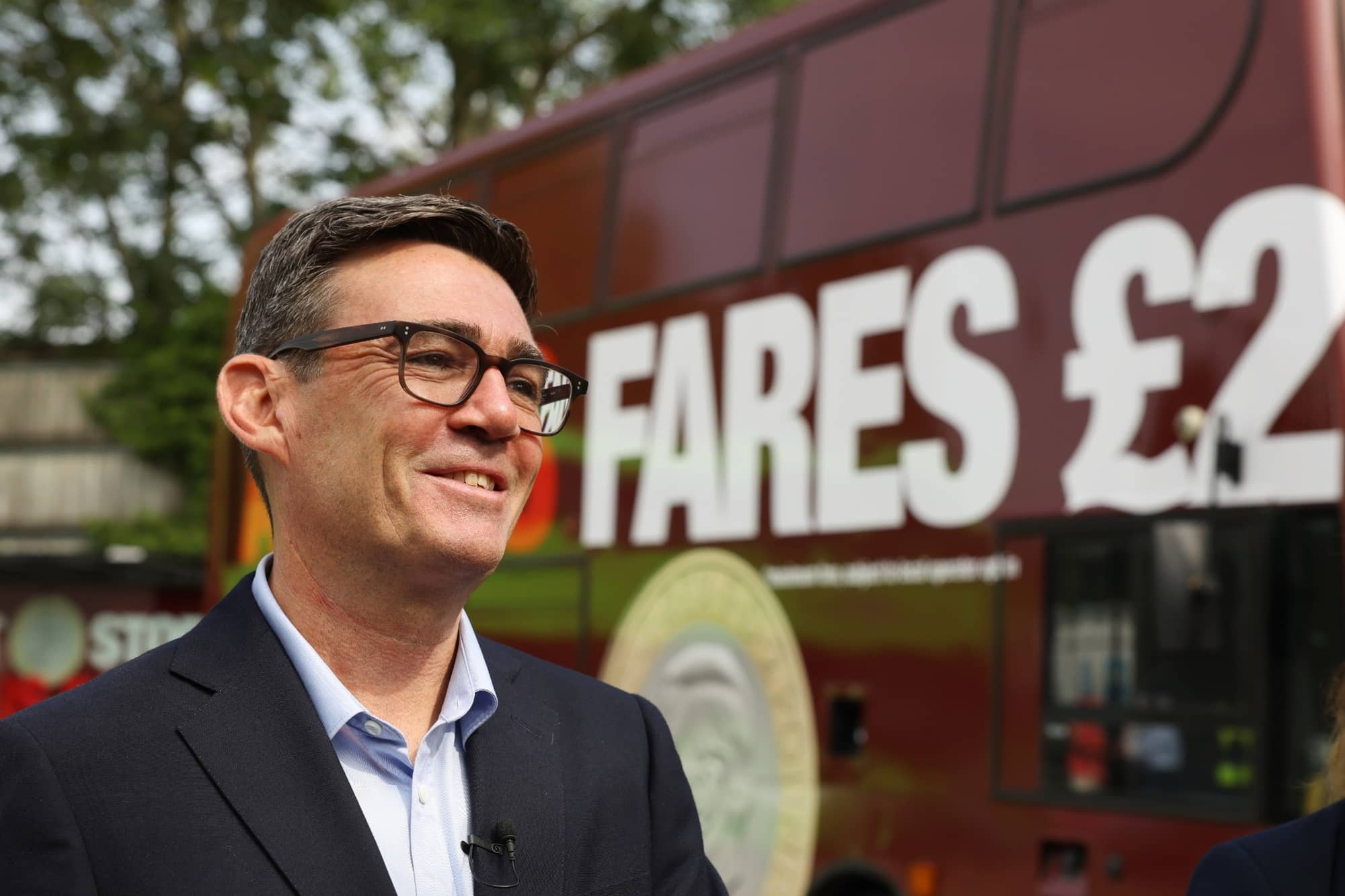
Andy Burnham speaks in Bath on July 22. Image: Gov.uk
Will he or won't he raise the personal allowance? That's the billion-pound question journalists have put to Andy Burnham on numerous occasions since he came to office this week.
And the answer from the newly-minted Prime Minister has been yes, no and maybe.
For the pound, there are two issues with the substance of the question and how it's being handled: 1) it's another signpost to an expansionary budget later this year and 2) a deliberate air of uncertainty is likely to hang around policy for the next few weeks and maybe months.
Neither is particularly helpful for those wanting a stronger currency and raises the prospect of the pound's Burnham honeymoon period being particularly short.
Tax Cut is Back On
In an afternoon appearance in the English city of Bath, the Prime Minister once again said he would look at the issue of raising the personal tax allowance, in what would amount to a notable tax cut for later in the year.
That was the latest instalment to a running Q&A session that the PM wants to keep alive.
Burnham said during a weekend interview ahead of his installation as PM he was considering the tax cut and then raised the idea again while talking to reporters on Monday.
But then on Tuesday his representatives suggested he wouldn’t proceed with what would be a multi-billion pound policy, stressing he'd made no commitment
Earlier on Wednesday, Burnham did a pool clip in which he revived the policy, saying he'll still look at increasing the personal tax allowance from £12,570.
"We'll have to look at it at the budget alongside everything else. So no commitment, no unfunded promise. There is no commitment at this point to change, but we will look at that at the budget," he said.
The communication ambiguity is interesting but risky, says Alex Wickham, UK political correspondent at Bloomberg. "Andy Burnham's approach to his idea of raising the personal tax allowance perhaps demonstrates the risks of his more empathetic and conversational style."
The Danger for Markets
Wickham says this shows Burnham is more willing to discuss fiscal policy ideas publicly before they are fully formed.
"The danger is that sends a confusing signal to markets at a time when he’s also trying to convince investors of his commitment to fiscal discipline," he explains.
How does Burnham justify his ambiguity? "It's perhaps the way politics is these days and the way people report things, but that was an honest answer."
The shape-shifting appears to be part of his "man of the people" schtick.
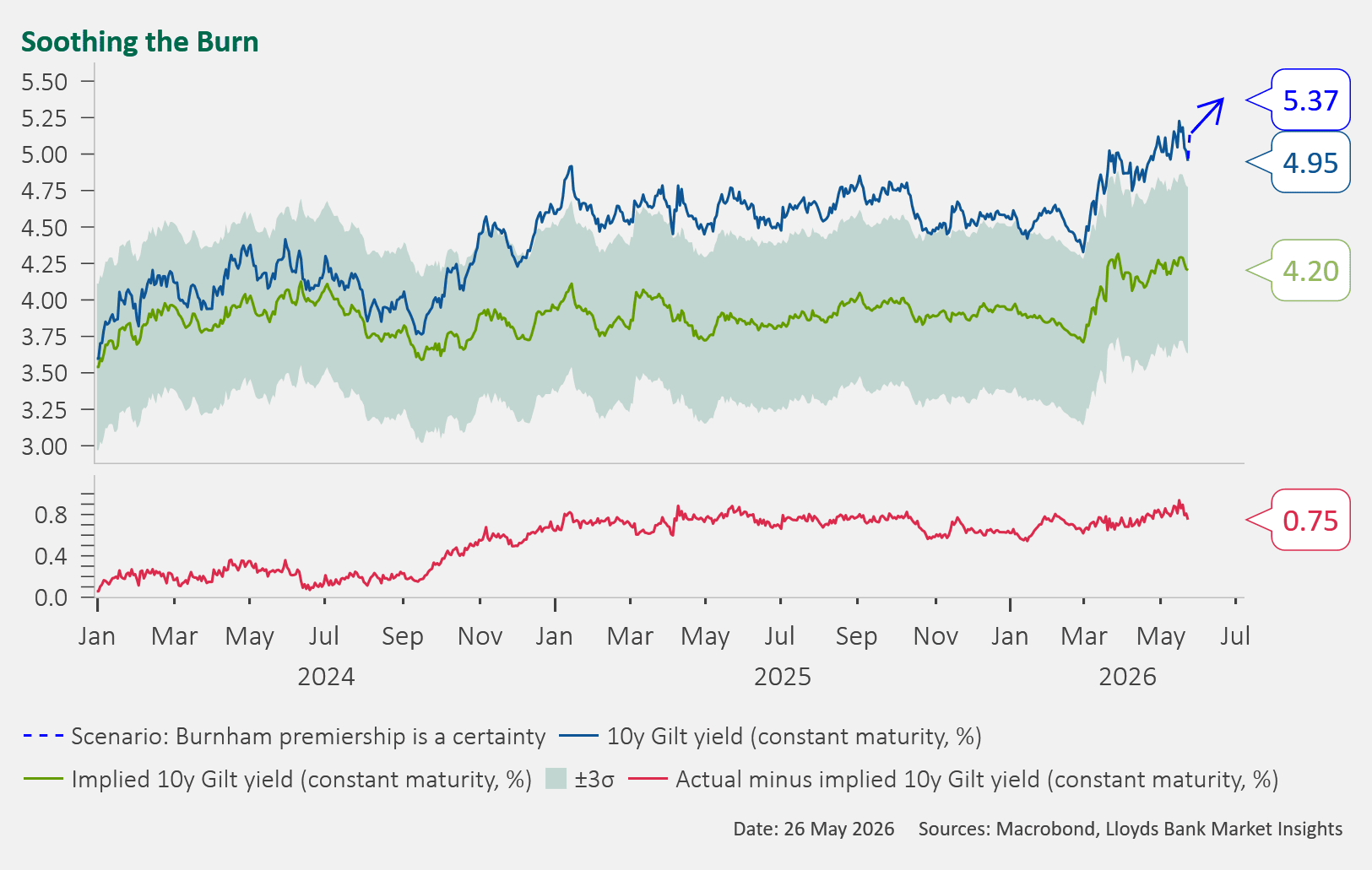
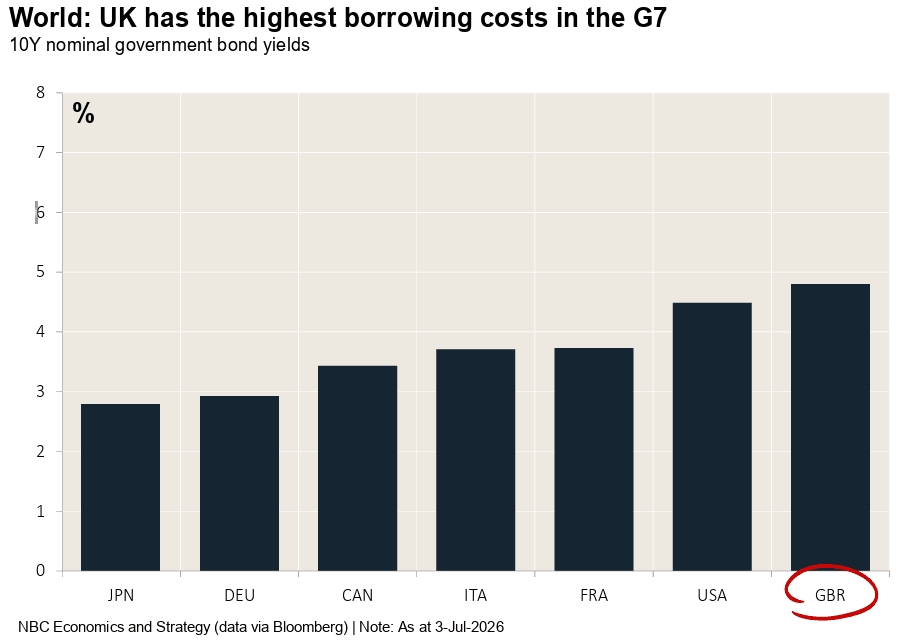
Above: UK political uncertainty has tended to anchor the cost of UK government borrowing higher.
Bigger Spending, More Borrowing
For markets, everything that the new PM has done thus far has leaned towards an easier fiscal stance, i.e. more spending: so far we have a cut to electricity bills and a cap on bus fares.
Neither measure has been meaningful and doesn't shift the dial of the fiscus, but any meaningful tax cut via raising the personal allowance would be meaningful. For markets that are very sensitive to Britain's finances in a world increasingly awash in debt issuance, that's a risk.
"At the very least, Burnham’s promise of a new economic model for the UK does not suggest that he will shy away from major measures. This, in turn, entails considerable risks for an already fragile market sentiment. Pound investors may face a volatile period," says Thu Lan Nguyen, Head of FX and Commodity Research at Commerzbank.
George Buckley, economist at Nomura, says Burnham has talked about his premiership being a "circuit breaker" for the UK economy, and that he plans to make bold policy decisions.
"This is unlikely to be possible by simply tinkering at the edges," he warns. "Markets will be on high alert for any shifts in economic policy (he spoke of a “new economic model”) that could ultimately compromise the UK’s fiscal and monetary policy framework."
Short-Lived Honeymoon for the Pound
The Burnham ascent comes at the back of a solid stretch of gains for sterling: the pound-to-euro reached its highest level in more than a year at 1.1824 last Wednesday, while rallies were observed against all major non-USD sterling crosses during July.Analysts have said the rally was in part due to the market reducing political risk premiums due to the sanguine handover of power from Starmer to Burnham, helped by fading fears that Burnham would be radical and challenge bond markets by opting to borrow more to fund his spending programmes.
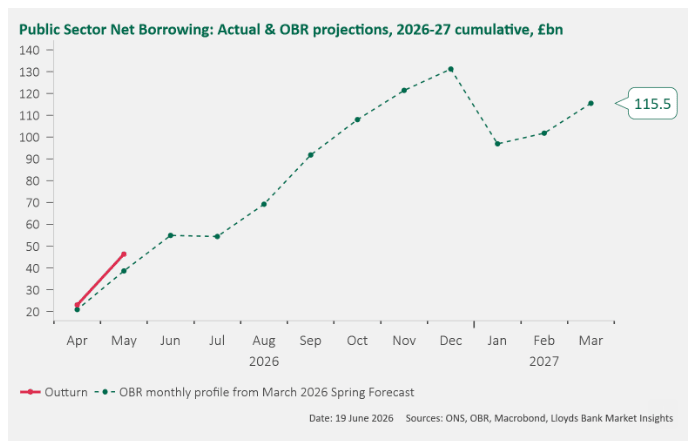
Above: UK borrowing for this fiscal year is already running above expectations.
However, on Monday there was a slight wobble in markets when pound sterling and gilts fell after Burnham suggested he would look for some flexibility in testing the current fiscal rules that govern UK borrowing and spending.
"The U.K. is testing fiscal protection. Burnham’s removal of VAT on household electricity bills offers relief to consumers, with business-rates relief also under discussion. But gilt and sterling weakness underline the trade-off: household protection can quickly become a credibility problem if investors question whether fiscal easing is fully funded," says Geoffrey Yu, a strategist at Bank of New York.
When bonds and the pound fall in tandem, it is usually a sign that idiosyncratic risks are brewing. We saw its brutal power when Liz Truss tried to pass her mini budget and saw it again in 2025 when Rachel Reeves and Keir Starmer's attempts to limit benefit spending were torpedoed by Labour MPs in Parliament
"Given the jittery reaction in gilts and the pound to Burnham’s early announcements, his honeymoon period could be short-lived," says Jane Foley, senior FX strategist at Rabobank.
Rabobank looks for EUR/GBP to push higher to 0.8650 on a 3-month view and for GBP/USD to fall back to 1.32 on a 3-month view. (EUR/GBP at 0.8650 gives GBP/EUR at 1.1560).
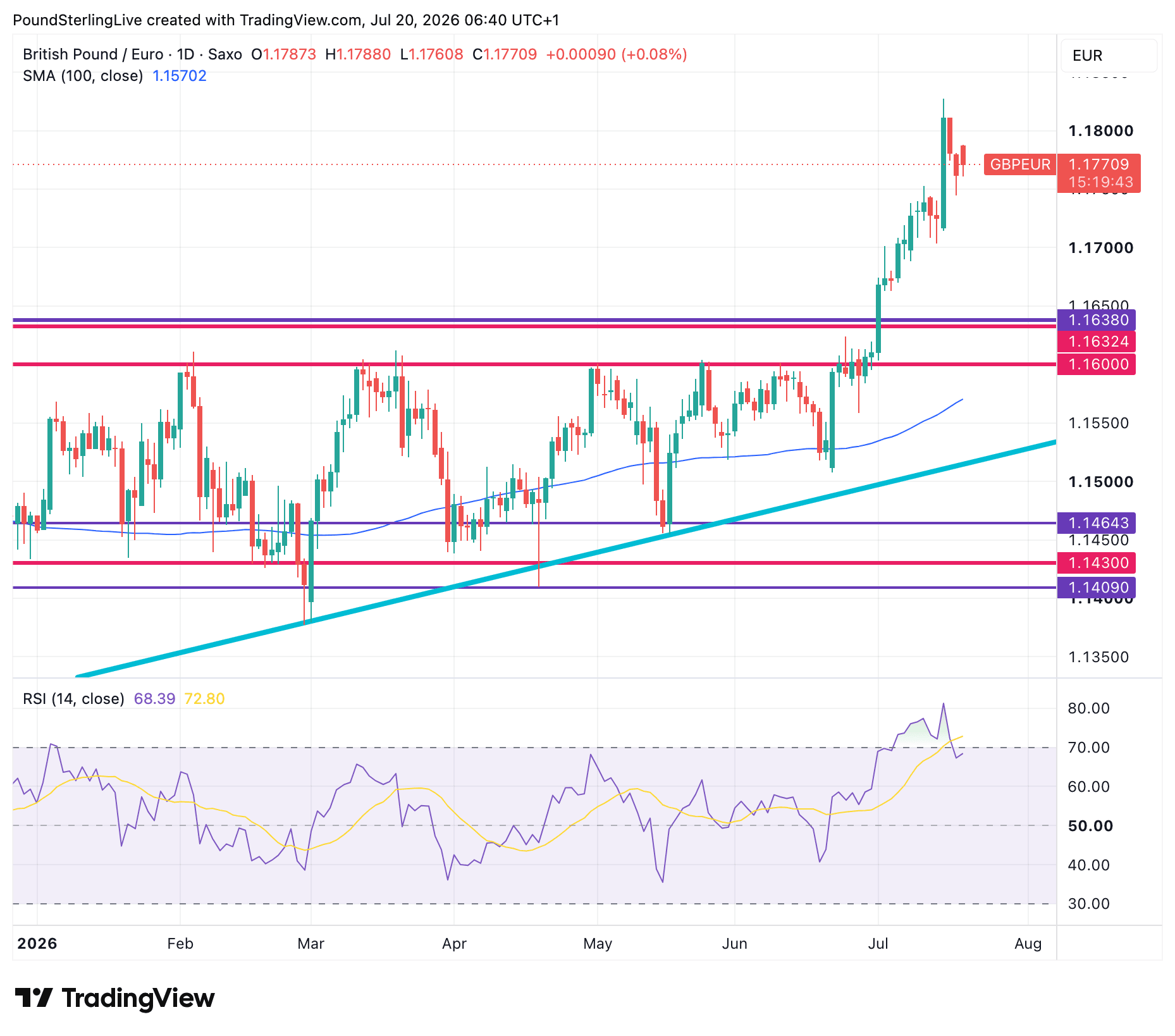
Above: GBP/EUR has had a solid run into the start of the Burnham era.
Chris Turner, lead FX analyst at ING, also looks for sterling's recent hot run to cool.
"We think a larger part of sterling's strength owes to stale short sterling positioning, and we suspect some large M&A flows going through, where cheaper valuations have made UK equities an attractive proposition this year," he says in a recent note.
"While we do not rule out a little further sterling strength during the Burnham honeymoon period, the UK's tight fiscal situation suggests a new cabinet will have to turn to tax increases if it wants to build out its plans to improve areas such as social care," he adds.
Burnham is happy to discuss the good stuff - namely the giveaways - but not how they will be funded. That can only be done through tax hikes and more borrowing.
Neither is constructive for UK assets.