
Image © Adobe Images
The Australian dollar is primed to retest recent highs on an improving global investor sentiment.
Risk-on means AUD-on: the Aussie dollar is amongst the outperformers as investors welcome a respite in long-term bond market anxieties and falling oil prices linked to the Iran conflict.
"Among G10 FX, the AUD and NZD outperformed overnight amid the rebound in risk sentiment," says Luis Hurtado, FX Strategist at CIBC Capital Markets. "Global equities are broadly risk-on."
Hurtado cites a sharp fall in the price of Brent crude, down 3%, reflecting the status quo in the Middle East bypassing the "Operation Economic Outcast" sanction regime launched by the U.S. against Iran.
"The initial list of sanctions, which targeted businesses in China and Hong Kong, spared major Chinese financial institutions," says Hurtado.
He also cites a New York Times article detailing that the U.S. is returning diplomats to embassies in the Middle East, suggesting Washington does not anticipate a renewal of full-scale conflict with Iran.
The pound-Australian dollar exchange rate fades recent gains to retreat to 1.9051, which puts the 1.8999 support floor back into the reckoning.
The Australian dollar-U.S. dollar pair rises to 0.7150, in doing so keeps alive a clean uptrend that's been in place since the end of June and keeps last week's high at 0.7180 into focus.
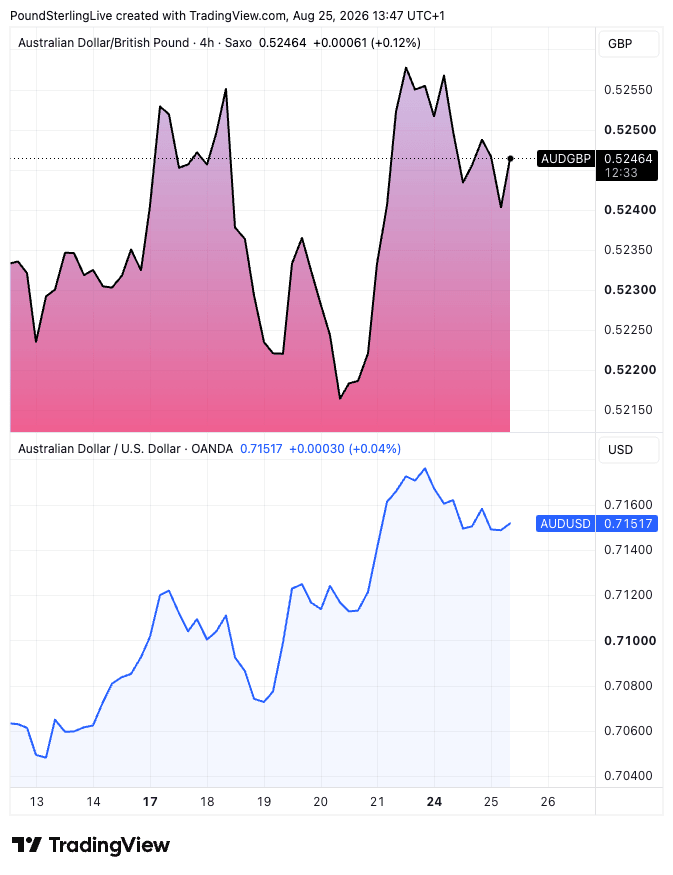
Above: AUD vs. GBP (top) and AUD vs. USD.
Also shoring up sentiment are long-dated bond markets where yields are down for a second day in succession.
This market was the focus of much hand-wringing amongst investors last week when the U.S. Treasury intervened in the market in an order to provide support.
The doubling in purchases of long-dated bonds was unexpected and signalled that authorities were becoming increasingly uncomfortable with developments.
But, there have been no obvious second-round effects of the Treasury's actions and bond traders aren't testing its resolve.
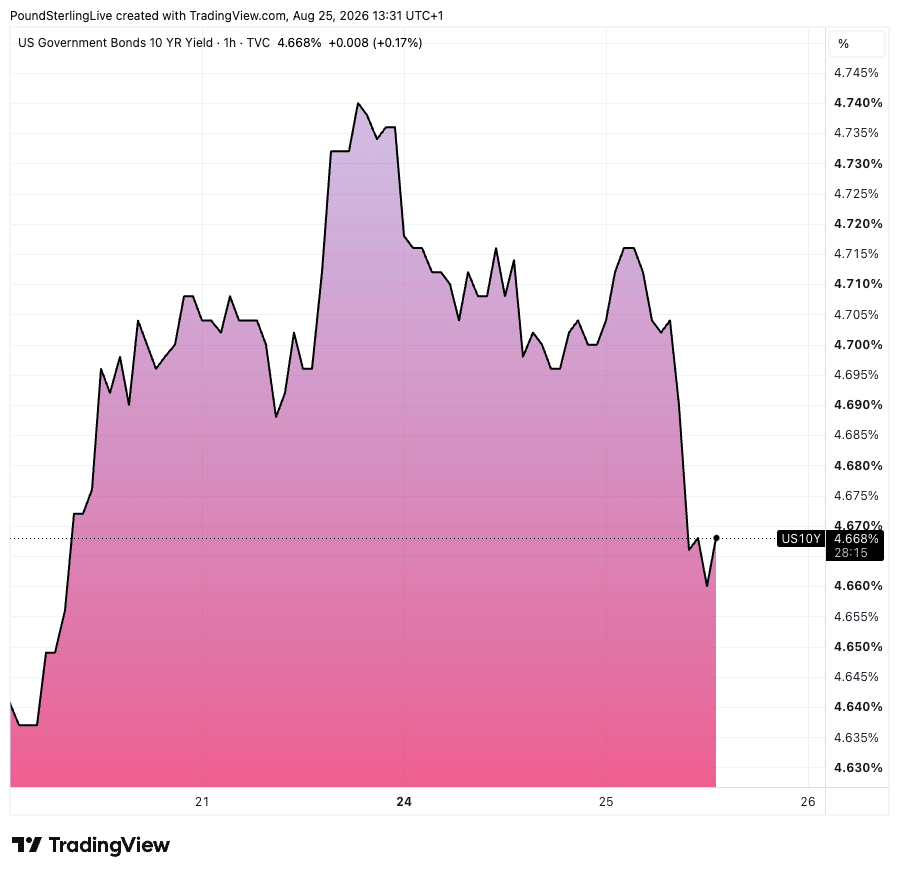
Above: U.S. long-dated yields are off their highs, bolstering investor sentiment.
"Our base case remains that yields should decline as inflation moderates. Such a benign macroeconomic outcome should support a continued broadening of the equity rally," says Mark Haefele, Chief Investment Officer at UBS Global Wealth Management.
He explains that over the longer term, initiatives that result in financial repression and yields being brought down artificially should also be favourable for equities, while gold would be another beneficiary of this scenario.