Image © Pound Sterling Live
Japan appears to have waited until speculative positioning became as one-sided as possible before striking.
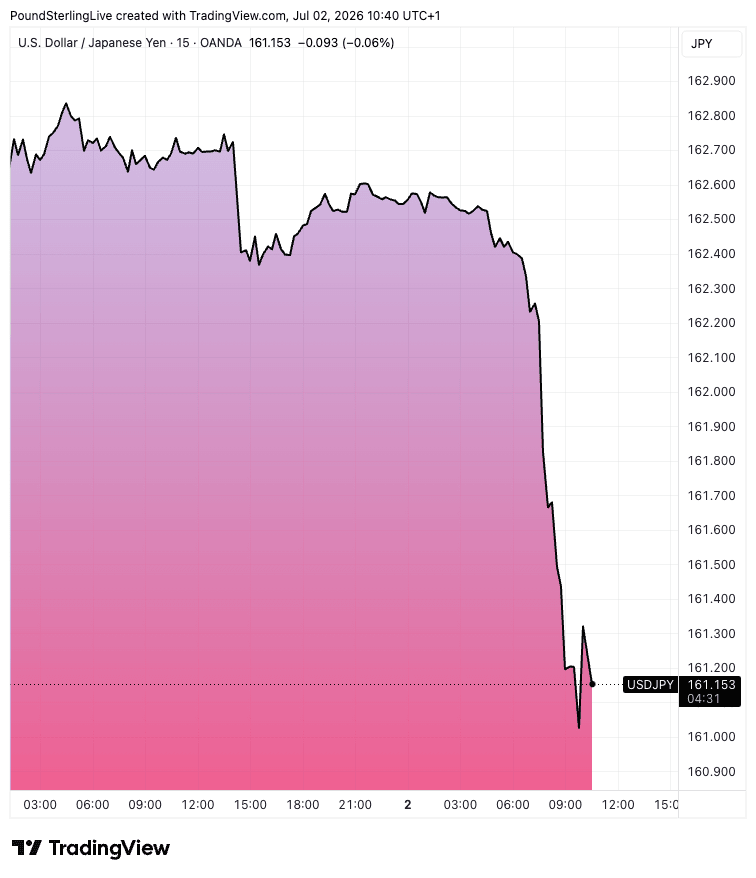
The Japanese yen surged sharply on Thursday after USD/JPY suddenly reversed from a fresh multi-decade high at 162.84, triggering speculation that Japanese authorities had intervened in the foreign exchange market.
Although officials have yet to confirm action, the size and speed of the move were consistent with previous intervention episodes.
Reuters reported earlier Tokyo has adopted a new "ambush" strategy designed to catch speculative yen sellers off guard rather than telegraphing its intentions in advance.
Setting the Bear Trap
Analysts at UniCredit said earlier today that policymakers in Japan delayed action until today in a likely attempt to recreate a 'bear trap' and conditions for a short squeeze, similar to the one implemented two years ago.
Data on positioning shows that investors are net-long USD/JPY close to a record high again, which hinted the time to strike was approaching. And so it came to pass: crowded positioning meant the BoJ had caught as many traders in its net as possible.
Rather than defending a widely advertised exchange-rate level, Japanese officials appear to have allowed USD/JPY to push into fresh highs, encouraging momentum traders and systematic funds to add to already crowded short-yen positions.
Only once that positioning had become sufficiently extended did the market suddenly reverse.
The result is exactly how a successful intervention is supposed to work.
Short sellers are forced to cover positions simultaneously, accelerating the move lower in USD/JPY and amplifying yen gains.
Why Waiting Made Sense
Markets had spent weeks debating where Japan’s line in the sand might be.
Many assumed intervention would arrive around 160 and then 162. The authorities have already this year acted in its defence, buying the yen on the open market and selling dollars, but with those moves being telegraphed.
When authorities failed to defend that level, traders naturally concluded Tokyo had effectively surrendered, encouraging another wave of speculative selling that pushed USD/JPY beyond 162.
That complacency may have been exactly what officials wanted.
Allowing the market to overextend before acting maximises the number of vulnerable short positions that can be squeezed once intervention begins.
Reuters reports officials have intentionally moved away from giving repeated verbal warnings before intervening, preferring instead to preserve uncertainty and make speculative positioning significantly more dangerous.
A Crowded Trade
The setup had become increasingly favourable for precisely this type of reversal.
Speculative positioning against the yen had climbed back towards levels seen before previous intervention episodes, while USD/JPY was trading at its highest levels since the 1980s.
That combination left the market highly vulnerable to a sudden air pocket once official buying emerged.
Whether Thursday ultimately marks the beginning of a sustained yen recovery is another question.
Japan’s structural problem remains unchanged: a wide interest-rate differential with the United States continues to make borrowing yen and buying higher-yielding dollar assets an attractive carry trade.
Without a lasting narrowing of that policy gap, history suggests intervention can slow the trend but not necessarily reverse it permanently.
Even so, today’s move serves as an important reminder that when positioning becomes overwhelmingly one-sided, authorities often achieve their greatest impact by waiting for the market to become most complacent before pulling the trigger.