
Image © Adobe Images
The euro will struggle to hold gains against the dollar if, as Citi argues, its post-election rise reflected a routine fall in Treasury yields rather than a lasting turn against the dollar.
The euro is tipped to struggle against the dollar in the wake of the US midterm elections, with Citi's foreign exchange strategists recommending a bet against the single currency's post-election rebound.
"We ultimately want to fade post-midterms USD weakness, especially against EUR," says Citi, the U.S. investment bank, in a note on Wednesday.
Democrats took control of both chambers of Congress in Tuesday's vote, and US Treasury yields fell on expectations of less government spending, taking the dollar lower with them.
"We would be cautious in trying to take signal from these moves," says Citi, which describes the dollar's fall as the typical historical response to an election that lowers expectations for spending.
Citi also says expectations that the new Congress will curb President Trump's trade agenda "could be overstated", as the administration now relies on Section 232 and 301 tariff powers that do not need Congressional approval.
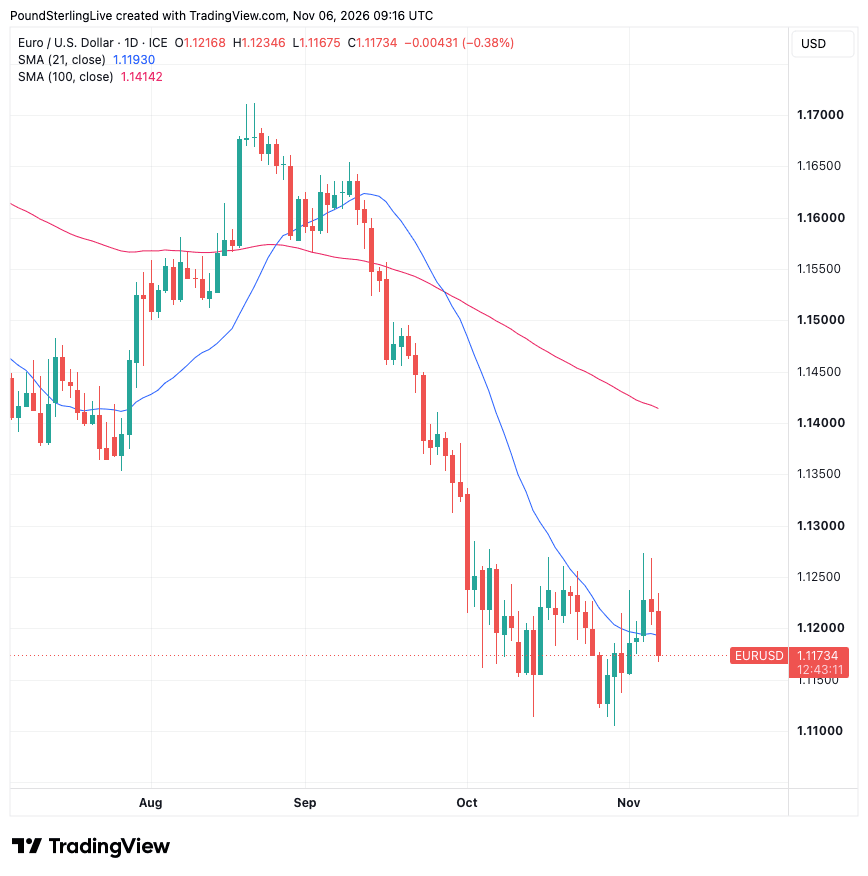
The euro has since given back all of its post-election rise: the euro-to-dollar exchange rate is 0.31% lower at 1.1184 on Friday, down from Wednesday's high of 1.1273.
The dollar regained ground on Thursday as a rout in US technology stocks, which took the Nasdaq 100 down 6.4% in its worst session since March 2020, sent investors into safe-haven currencies and short-dated Treasuries.
Citi's London traders are long the pound against the dollar, so a weaker euro against the dollar would leave GBP/EUR with support.
ING says the dollar's post-election decline lacks the interest rate support it needs to extend, as falling oil prices pulled European two-year swap rates down by more than US rates.
"Poorer US data and/or a more dovish Fed remain the necessary conditions for front-end USD rates to fall more than peers, and by extension for a broader USD downturn," says ING, the Dutch bank.
UniCredit says political tension across the eurozone is weighing on the euro by "around two to three big figures at least", with Spain's general election on 29 November and France's presidential election in spring 2027 likely to cap its upside.
However, CIBC sees the Democratic sweep as the start of a regime shift against the dollar, as Congressional oversight trims tariff risks and the US fiscal deficit comes under closer scrutiny.
Forecasts Point to Limited Euro Upside
Looking at recent forecasting developments, UOB has cut its EUR/USD forecasts below spot, arguing the Federal Reserve will deliver two more rate hikes while the European Central Bank nears the end of its own cycle:
1) 1.11 in the fourth quarter of 2026, 0.75% below spot
2) 1.10 in the first quarter of 2027
3) 1.09 in the second and third quarters of 2027, 2.5% below spot
ING sees "little upside potential beyond 1.130, our year-end target", around 1% above spot, citing rate differentials and lingering French risk.
CIBC forecasts EUR/USD at 1.18 by the end of 2027, around 5.5% above spot, on a gradual fading of the geopolitical risk premium in oil.
Pound Sterling Live expects a December ECB rate hike to limit the euro's downside, keeping EUR/USD above its 2026 low of 1.1105.
For the euro to rebuild its post-election gains, US data must start to disappoint, beginning with Friday's payrolls report, where economists expect 65,000 new jobs, before the pair can clear 1.1325, the level UniCredit says would ease selling pressure.