
Image © Adobe Images
Goldman Sachs lowers its euro-to-pound forecasts, crediting Eurozone risks while warning sterling's valuation remains a challenge.
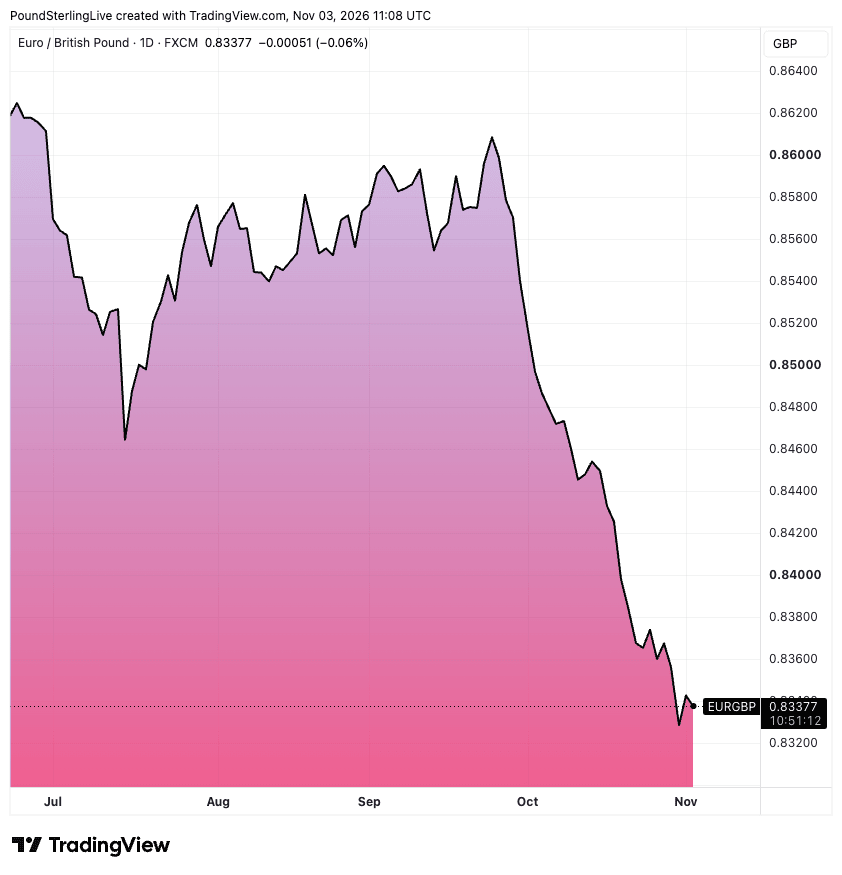
Goldman Sachs has cut its euro forecasts against pound sterling across every horizon following a month in which the EUR/GBP pair fell close to 2%, putting it within touching distance of the new three-month target.
In a weekly FX research note, the U.S.-headquartered investment bank is clear that the forecast shift is more of a reflection of euro weakness than sterling excellence.
"The limited read-across to Sterling on the week has allowed EUR/GBP to continue its trend lower. We think Euro area rather than UK developments are at the heart of this move though, with our trade-weighted measure of Sterling (when stripping out EUR) close to flat in October," says a note from Goldman Sachs.
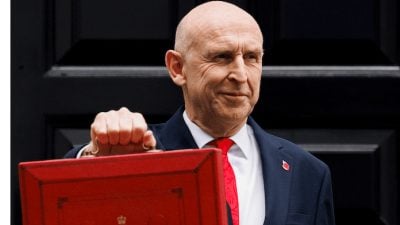
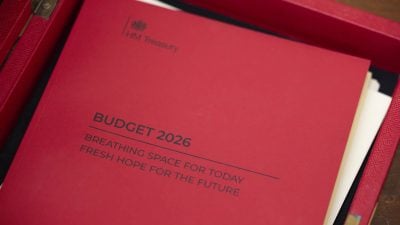
The Autumn Budget delivered a well-telegraphed set of measures with limited read-across to sterling, and the bank sees the euro's sell-off against energy importers and exporters alike as evidence that fiscal, activity and policy risks are driving the single currency rather than energy terms of trade.
The Revised Forecasts Still Suggest GBP Downside
Despite the euro downgrades, the trajectory implied by the updated forecast profile maintains that pound will eventually give back recent gains. The new forecast profile reads:
- Three months: 0.83, from 0.86, equivalent to 1.2048 in pound-to-euro terms.
- Six months: 0.84, from 0.87, equivalent to 1.1905
- Twelve months: 0.86, from 0.88, equivalent to 1.1628
Measured against spot, the three-month target sits marginally above the current level of GBP/EUR, but the six-month target is 0.7% below it and the twelve-month target is 3% below it, which means Goldman still forecasts a weaker pound from here, only at a slower pace.
The forecast change reflects "more gradual GBP depreciation over time," says Goldman Sachs.
Warnings Over the Pound's Valuations Sounded
The British pound has stormed higher against the euro over recent weeks, thanks in a large part to concerns about France's debt and political dynamics which have prompted investors to readjust their exposure to the Eurozone's second-largest economy.
However, as Pound Sterling Live has reported over recent weeks, pound sterling looks heavily overbought on key technical measures.
Goldman Sachs says its own short-term measure of currency valuations - its GSDEER model - shows sterling as the most overvalued currency in the G10.
"Even with hikes in November and February, BoE hike pricing continues to look stretched relative to G10 peers, and valuation remains a clear challenge for Sterling," says the note.
The Bank of England is widely expected to raise Bank Rate on Thursday and again in February.
Elsehwere, Crédit Agricole's fair value model reaches a similar conclusion by a different route, putting the euro-to-pound rate more than 1.5 standard deviations cheap against a fair value of 0.8469, equivalent to 1.1808, and the bank's systematic model is long the euro against the pound this week.
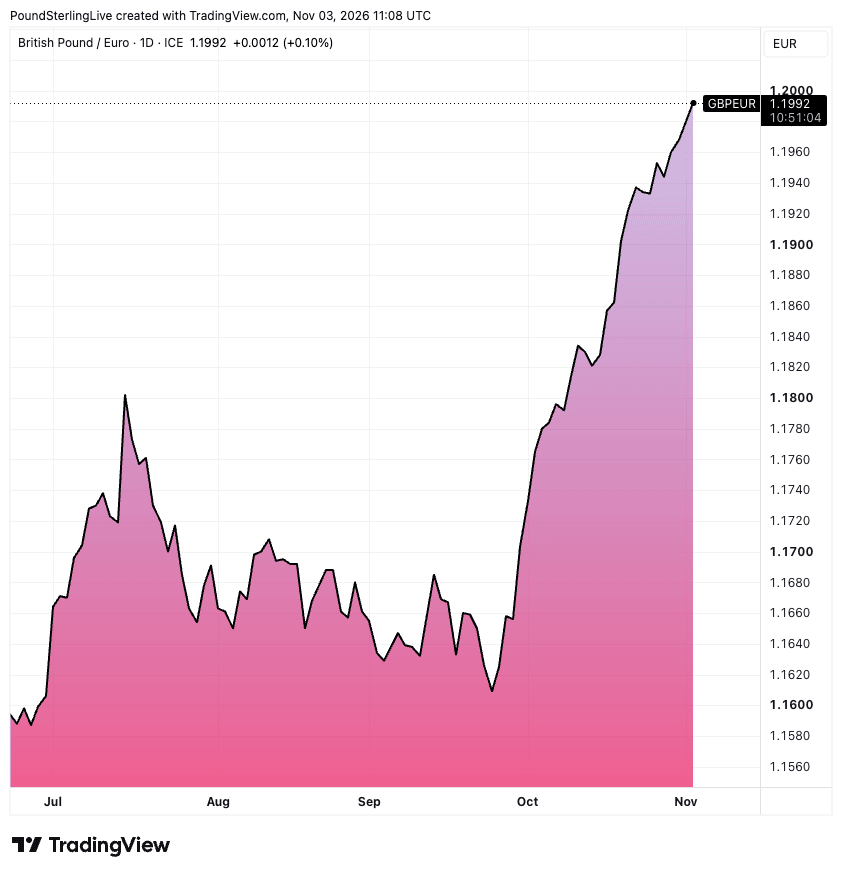
OCBC has moved the other way, revising its euro-to-pound forecast to 0.83 through mid-2027 (GBP/EUR to 1.2050) on continued sterling resilience, though it adds that with markets pricing an aggressive Bank of England cycle, "the bar for the next leg higher in GBP is therefore getting increasingly high."
Pound Sterling Live's House View modelling differs from Goldman on the source of the pound's strength, holding that the AI investment cycle has the UK economy outrunning forecasts and that the risk premium on UK assets is still eroding after the Budget.
Where the two views agree is the near term: Goldman's three-month target of 1.2048 sits at the level our modelling has looked for since the summer, and Thursday's Bank of England decision is the next test of whether the pound-to-euro rate can hold above 1.20.