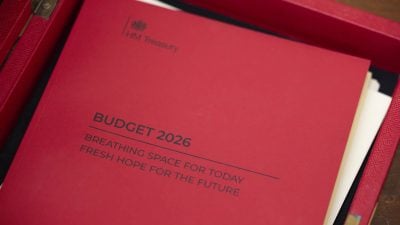
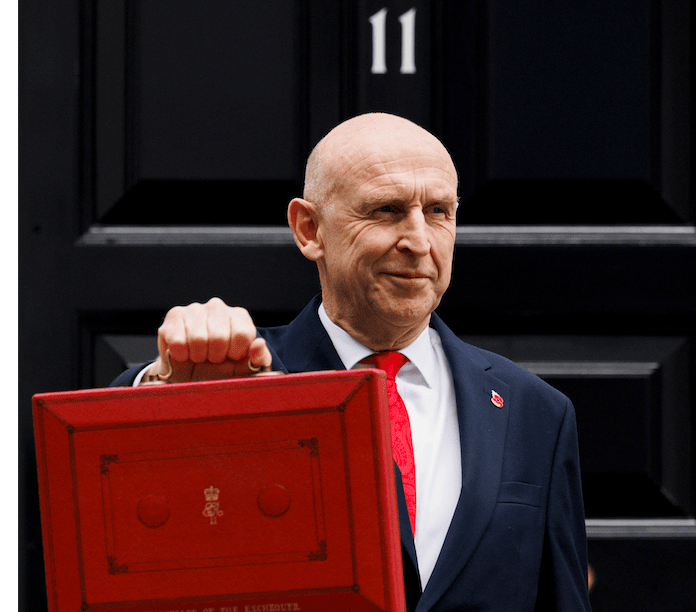
Image: HM Treasury.
The British pound was overvalued heading into a budget that offered no major surprises.
Chancellor John Healey has opted to eat into the fiscal buffer he inherited from Rachel Reeves in order to avoid any damaging tax hikes or spending increases.
The market looks unfazed by the new announcements: UK gilt yields remain historically elevated, but they are not misbehaving, and the pound is softer across the board. Given the excitement of previous budgets, including infamous mini-budgets, the Chancellor will be relieved by the market reaction.
Healey avoided major tax rises by deciding to lower the fiscal headroom from about £24BN to £15BN in 2029-30; he hopes that it will rebuild to £22BN in 2030-31.
"The markets will probably tolerate this as a sensible way to avoid more growth-damaging tax increases to fill an arbitrary gap caused by what might only be a temporary external shock. After all, what is the point of an emergency buffer if you never intend to use it?" notes Julian Jessop, independent economist and IEA Fellow.
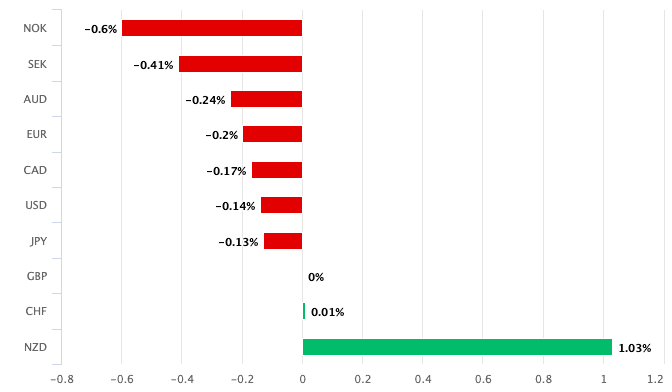
Above: GBP performance against G10 peers in the wake of the 2026 budget.
The pound is broadly softer following the budget, suggesting a GBP-specific idiosyncrasy at play, falling against all G10 currencies, save for the RBNZ-hammered New Zealand dollar.
"What remains more challenging for the currency is that a lot of this better news already appears priced," says a note from Goldman Sachs, detailing research that shows GBP is now overvalued against the EUR, according to fair value modelling.
"... which we think limits Sterling’s upside potential on a market-friendly budget delivery," says Goldmans. That valuation question is easily the most comfortable explainer for post-budget GBP underperformance, as opposed to any market distaste for what was announced.
The pound-to-euro exchange rate fades to 1.1940, a limited loss given the currency looks particularly rich at current levels.
The pound-to-dollar exchange rate is at 1.3302, putting it back to where it was mid-month.
What has been delivered today by the Chancellor is consistent with Pound Sterling Live's House View that the pound should remain well supported going forward, as the passing of the budget removes one of the year's most important risk events for British assets.
What will be welcomed is that the 2026 budget will ensure fiscal rules are being met, i.e. the day-to-day deficit will be eliminated in the forecast horizon.
That still means a significant fiscal squeeze - spending restraint and increased tax take - will characterise the coming years. Whether that's likely to happen is, of course, up for debate.
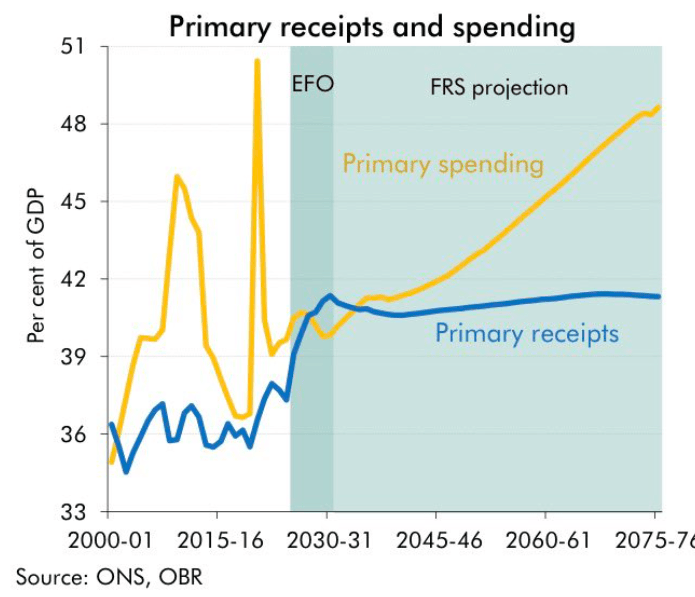
Indeed, as the new debt forecast from the OBR shows, beyond the forecast horizon (through to 2030) debt stays stable and starts falling in line with the fiscal rules, but then it shoots higher:
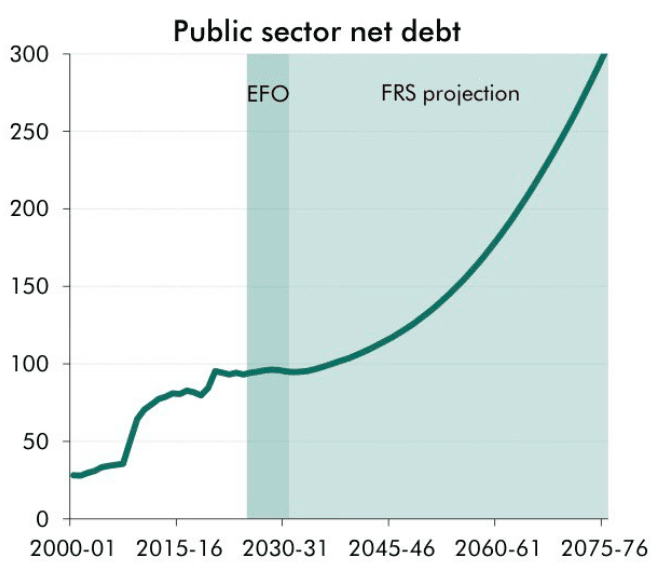
The fiscal rule is therefore just not credible, but it is a useful tool to force governments to exercise some restraint. And for markets, that's all that matters.
"We expect John Healey to borrow a bit more, tax a bit more and spend a bit less than he would like. The result would be a smaller fiscal event than the 2024 and 2025 Budgets, with only limited implications for the economy and gilt markets. But that just delays the difficult decisions, and it probably sets up another round of tax and spending rises at next year’s Budget," says Capital Economics.
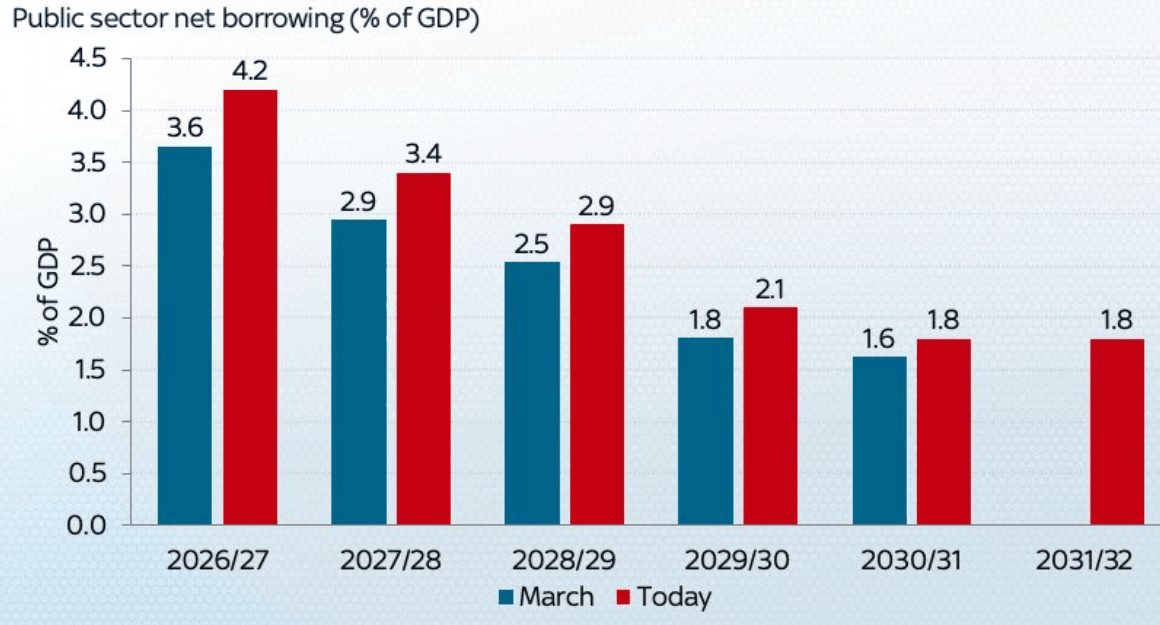
Pressures are nevertheless elevated as the Chancellor says the government will need to borrow more than expected in each of the next five years than was previously planned.
The Chancellor says the OBR is forecasting debt interest will rise £14bn more this year than it expected in the spring, largely the result of the Middle East conflict.
Elsewhere, there was a big downgrade in the GDP growth forecast for the next year from OBR, but further out the picture was largely stable.
- 2026: 1.2% (was 1.1 in spring forecast)
- 2027: 1% (1.6)
- 2028: 1.6% (1.6)
- 2029: 1.8% (1.5)
- 2030: 1.7% (1.5)
- 2031: 1.6%
The main giveaway was granted to anyone living in a house that falls into a council tax band A-D; they will get a £100 payment this winter "to deal with rising energy bills", costing the Exchequer £2.6bn.
The spending review will meanwhile set out how the UK will meet the commitment of spending 3.5% of GDP on defence by 2035, with a "target date" of 3% by 2030.
That, and the rising benefits bill, we ensure spending demands remain elevated in the coming years, begging the question as to how credible the fiscal rule really is.