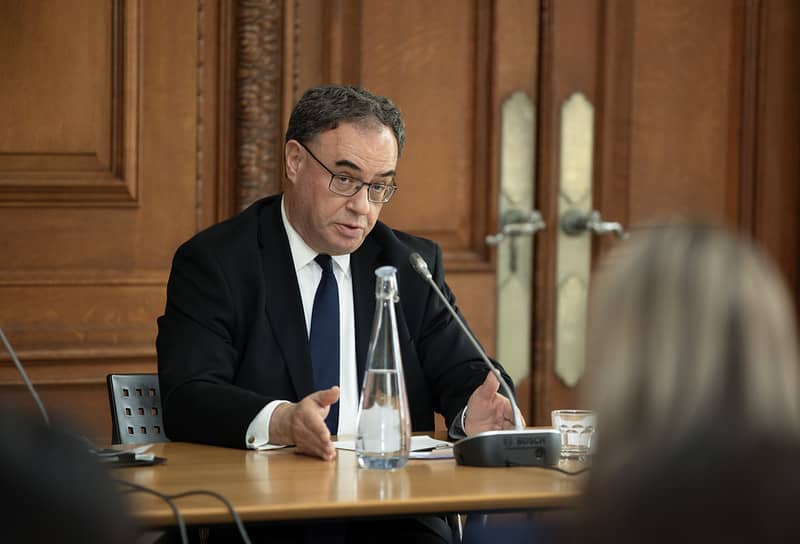
File image of Governor Bailey. Bailey voted against his chief economist and deputy in favour of cutting interest rates amidst rising inflation. Image copyright: Bank of England
The British pound rises into Friday, but that's probably no thanks to the Bank of England's July policy decision and guidance.
The message we take away from July is that the Bank looks no closer to raising interest rates for the simple reason there is ferocious resistance to higher rates on the Bank's Monetary Policy Committee.
It's too divided; with die-hard 'doves' unlikely to see the need to raise interest rates under current circumstances (that includes another energy-led inflation spike), and the swing voter that is the Bank's Governor, Andrew Bailey, also looks determined to avoid a hike.
Yet, the pound ended the day higher than where it started.
That suggests that the market was well positioned for this dovish outcome, that was duly delivered, and global drivers continue to remain in charge.
Pound Sterling Ends the Day Higher
The rule book says a 'dovish' central bank outcome should weigh on the currency, yet, sterling managed to edge higher.
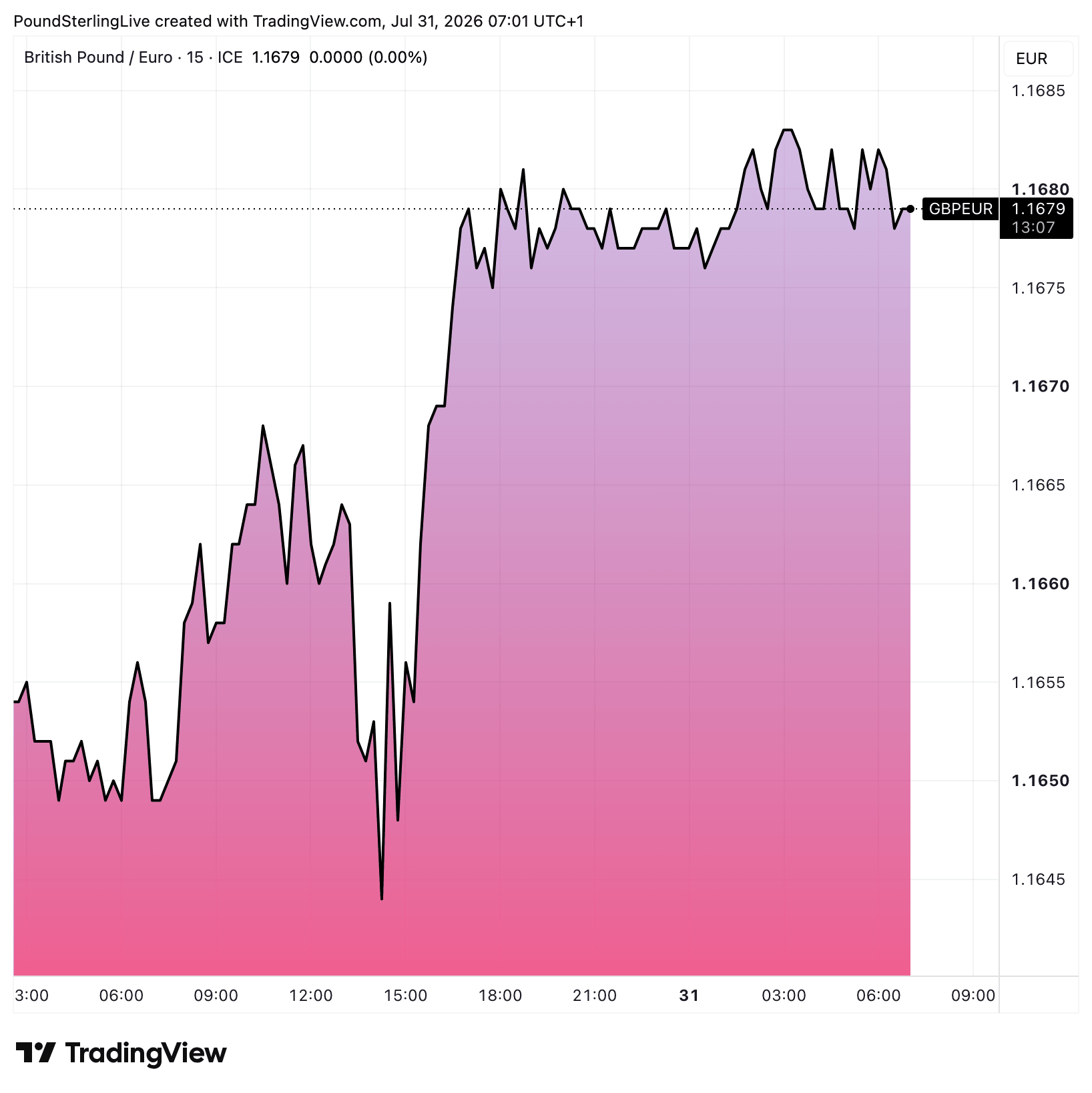
The pound-to-euro exchange rate fell in the minutes following the Bank's initial decision, but rose steadily and achieved 1.1680 by late London afternoon, and holds the advance into Friday.
The pound-to-dollar rose from 1.3372 to 1.3476 by the close of play in New York and eased back slightly to 1.3445 at the time of writing Friday.
The U.S. dollar has come under pressure this week, with a fall in USD/JPY pressuring the broader USD complex. The post-Federal Reserve price action has also been broadly softer.
Buy the Fact
The most likely explainer for pound sterling's robust performance on a dovish central bank day is the market's positioning into the event.
We said in our preview that those watching the currency markets must be aware that the pound had been under sustained pressure in the days and hours ahead of the event.
It is often the case that pre-positioning ahead of a calendar event can be unwound once the event itself has passed. It's a 'sell the rumour, buy the fact' type of market behaviour that is all too common.
And that's simply likely the case here.
The Bank Consensus, Without the Terminal
The median, mean, highest and lowest from the October survey update, plus named point forecasts out to 2027.
Free information pack, issued by World Wide Currencies.
Market Pricing Confirms This Was a Dovish Call
When all is said and done, the market pricing gives the verdict on the Bank's guidance, and the verdict following the July decision was a 'dovish' one in the sense that Bailey & Co. pushed back against bets for further rate hikes.
On balance, that should weigh against the pound, or at least limit upside.
Markets now price less than a 40% probability of a September BoE hike, down from more than 50% before the decision.
Market pricing continues to indicate 32bp of rate hikes over the course of the year.
Who Voted for What
Three members of the MPC voted for a hike, while consensus had expected two dissents. Catherine Mann joined Huw Pill and Megan Greene in voting for a rate hike, highlighting the recent flare-up in the war between the U.S. and Iran in her reasoning.
The vote for a hike by a third MPC member provided an initial 'hawkish' signal on the day.
But the Hawkish Signalling Unravelled....
When Bank of England Governor Andrew Bailey gave a hard 'no' to the notion he would soon lend his vote to the hiking camp.
In the press conference, Governor Andrew Bailey said, "no one should 'leave this room thinking that the BoE is edging towards a hike."
"This essentially confirmed our long-held view that the BoE will wait as long as possible before hiking interest rates, and that should the conflict in the Middle East end, it will swiftly switch back to cutting rates," says Michael Pfister, FX Analyst at Commerzbank.
"In short, anyone banking on monetary policy to support the pound is likely to be disappointed," he adds.
The way we see it: the Bank still commands an elevated interest rate compared to most other G10s, and that should offer lingering yield support to sterling, even if it holds onto rates.
So while the central bank impulse might not be outright bullish, it does not do enough to undermine the currency meaningfully.