
Image © Pound Sterling Live
Pound sterling trades mixed ahead of the Bank of England's July policy update that will see rates left unchanged.
A decision to leave interest rates unchanged will come as no surprise, meaning the currency market reaction will follow a number of additional steers on whether a hike will land at the next meeting.
These steers include the vote breakdown behind the decision, the shape of the new economic forecasts, the tone of guidance, and the pre-meeting market price action and trends.
The All-Important Vote Breakdown
This could well be the clincher, and it comes off the bat as the decision lands at midday London time.
Of late, the Bank's Monetary Policy Committee has been voting 7-2 to keep interest rates unchanged, with Megan Greene and Huw Pill voting to raise rates in order to get ahead of inflation.
Although rates are to be left unchanged, there's a high probability that a third member joins the 'hawks' and votes for a hike, meaning the MPC will be ready to raise rates at the next meeting.
That outcome would probably help the pound rally.
"We expect the vote split to be 7‑2 in favour of leaving interest rates on hold versus an increase. A more hawkish split is possible, supporting pricing of BoE policy and GBP/USD," says Carol Kong, FX strategist at Commonwealth Bank.
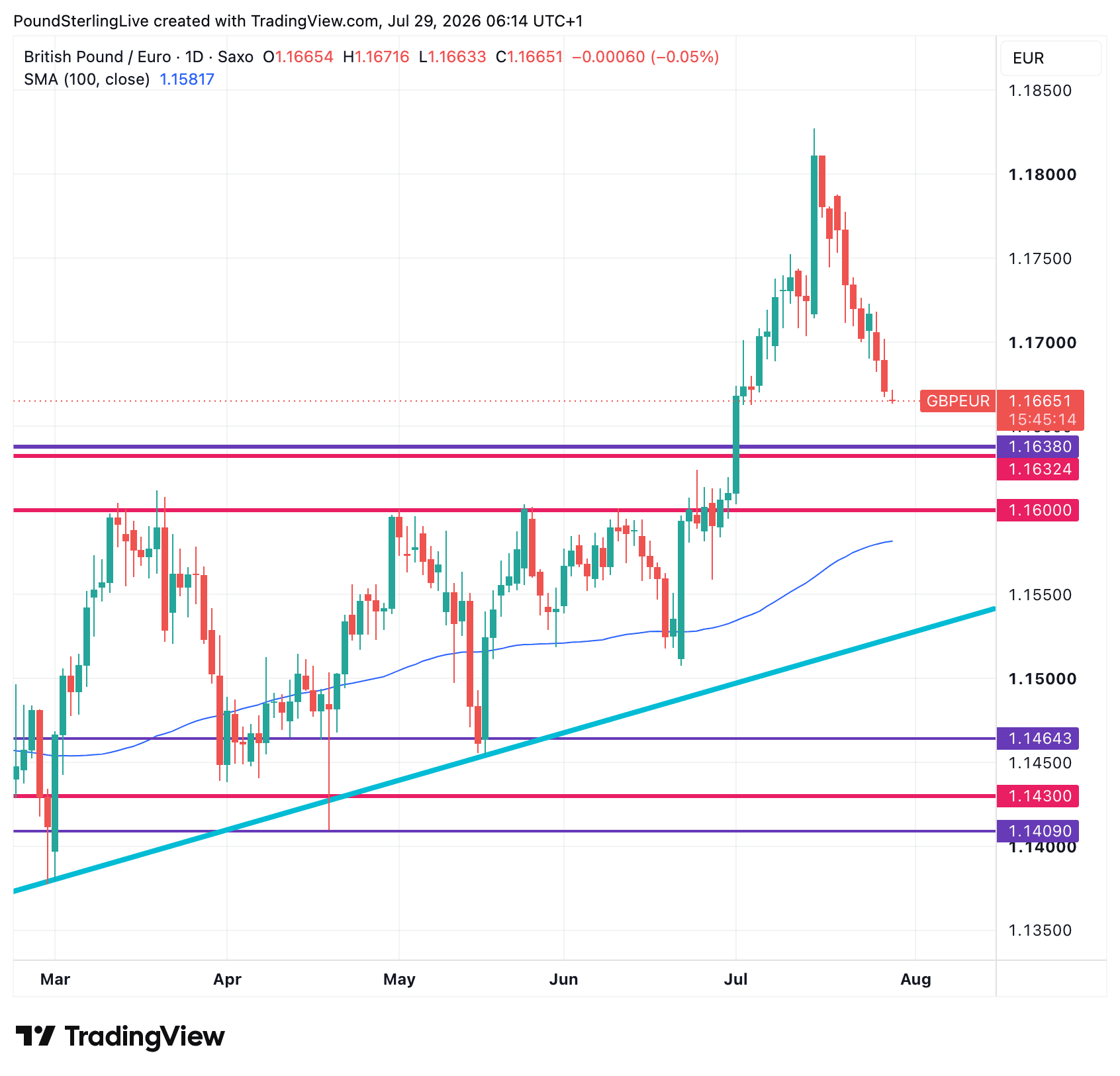
Above: GBP has been sliding against the EUR in the runup to the decision.
Downside Risk: A Dovish Pushback
We see a slightly elevated chance that the Bank delivers a 'dovish' decision that means the pound finds little support on the day.
Here, the vote lands at 7-2 and the GBP suffers the same 'dovish' fate as the USD did in the wake of the Fed decision.
The Fed left rates unchanged and actually sowed seeds of doubt as to whether it will respond to elevated inflation at all.
The Bank of England could send the same message; here the Bank emphasises that it is less concerned about secondary inflation effects in the context of the Middle East energy spike and that the rise in money market rates has already helped push back against inflation.
Bond yields have risen notably since the last Bank decision, tightening conditions in the economy and pushing back against inflation.
The Bank could lean on that as a reason not to raise rates.
The Bank Consensus, Without the Terminal
The median, mean, highest and lowest from the October survey update, plus named point forecasts out to 2027.
Free information pack, issued by World Wide Currencies.
Inflation is Proving Benign
The 'dovish' macroeconomic argument the Bank could lean on is that although energy prices have risen, prices elsewhere in the economy are proving more benign.
When energy prices rise, businesses react by raising their own prices while wages increase as households defend their bank balances.
The evidence, thus far, is that hasn't necessarily been the case, with surveys and official data showing little evidence of a material price hiking cycle emerging (which means this energy shock differs from that of the post-Russia invasion cycle of 2022).
The Bank could lean on that argument to maintain a belief that there's no reason to raise interest rates, effectively pushing back against market expectations for rate hikes in the coming months.
"We expect the BoE to want to wait as long as possible before raising interest rates. Ideally, they would probably prefer to avoid raising rates altogether and switch back to rate cuts soon," says Michael Pfister, FX Analyst at Commerzbank.
And that's the crux of the Bank of England's stance.
It wants to cut and run interest rates as low as possible despite inflation, for all intents and purposes, having now anchored itself above 2.0%.
"So their statements are likely to remain rather vague," says Pfister.
That vagueness would be consistent with the Bank not raising interest rates and ultimately disappointing against market expectations.
That means market pricing must come down again, and when it does, the pound would have to fall too.
Hawkish Outcome Can't Be Ruled Out
However, should the Bank strike a more 'hawkish' tone, then the pound could rise. Here, the Bank would ratify building bets for a rate hike in the coming months, thereby underpinning UK bond yields, which should loop back into a firmer currency.
To be sure, if it intends to maintain credibility, it will need to acknowledge that prices have been above the 2.0% target for far too long now.
Acting for the sake of preserving credibility cannot be ruled out.
Here, the pound could rise on the day.
Buy the Fact
Pre-decision price action is important, as often the currency can swing against the prevailing winds in the wake of a big calendar event like a monthly central bank meeting.
Ahead of the decision, the pound has been under pressure, with the pound-to-euro pair on the slide for nine of the past ten days.
The pound-to-dollar, on the other hand, found some relief from the midweek Federal Reserve decision that ultimately triggered a broader USD pullback.
Should the policy decision meet expectations (2-7 for a hold) and no clear commitment in either direction, the pound could be subject to a 'sell the rumour, buy the fact' market reaction that takes it higher on the day.