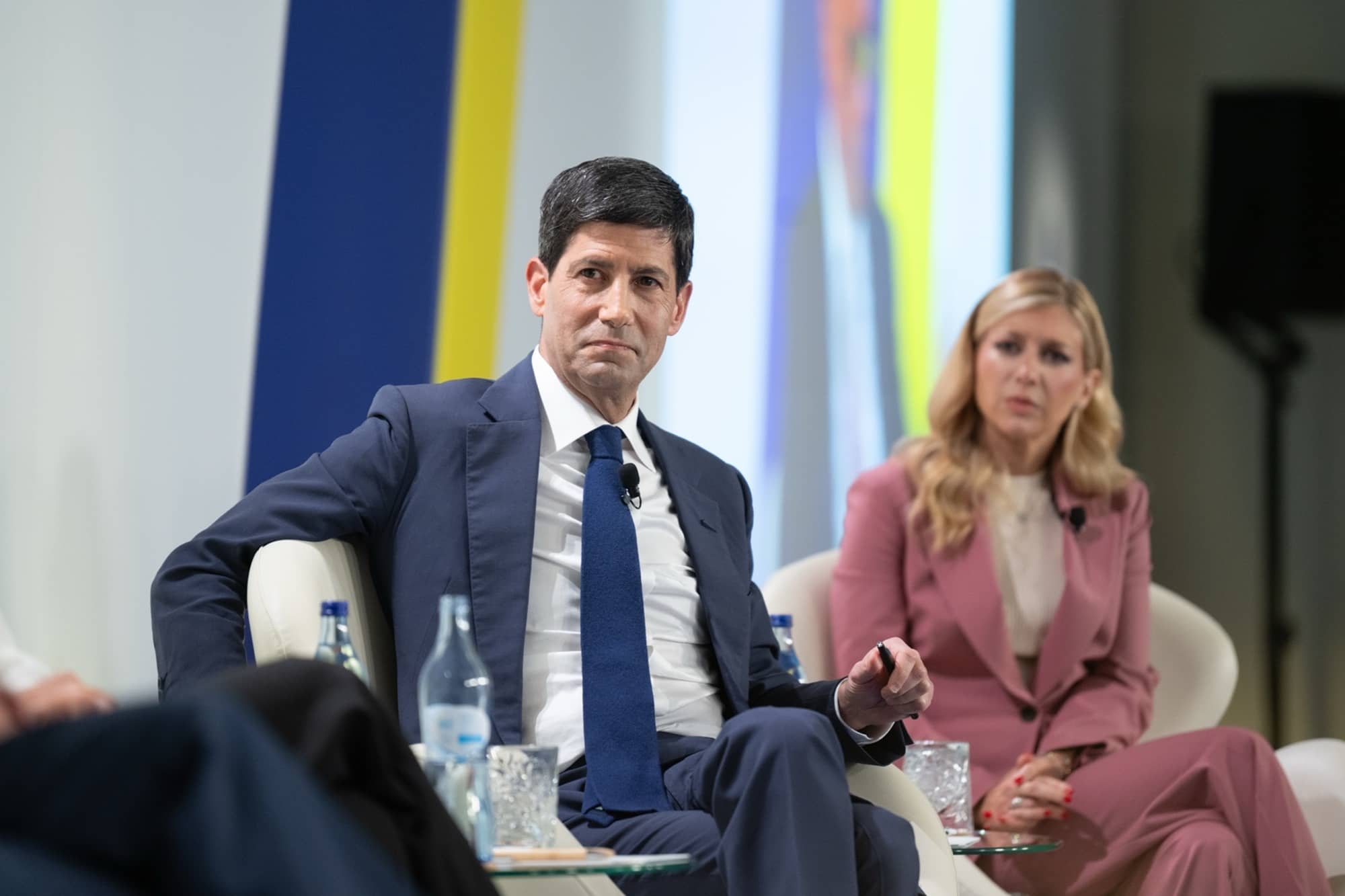
File image of Kevin Warsh. Sérgio Garcia/Your Image for ECB. Copyright: European Central Bank 2026.
The U.S. Dollar Took A Hit Following the Federal Reserve's Inertia in the Face of Rising Inflation.
The dollar came under pressure after traders interpreted the July Federal Reserve decision as being a 'dovish' one that left questions unanswered as to whether or not rates will rise in the coming months.
The headline is that markets have now pushed back the expected timing of a U.S. rate hike to October from September before the meeting.
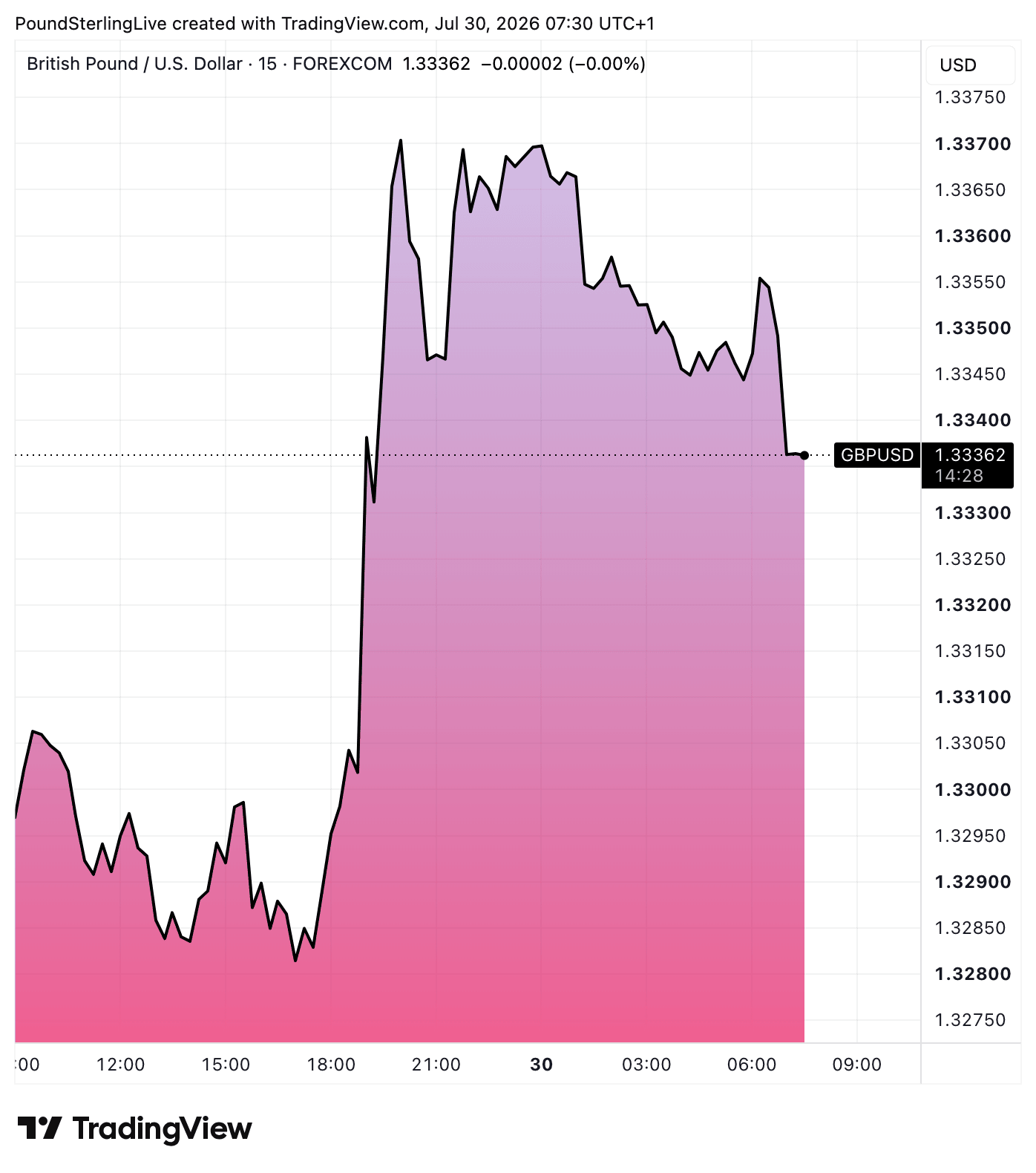
For the dollar, that's a 'dovish' outcome, and the dollar index slid as a result. That translates as a pound-to-dollar rate that jumped 0.60% on the day to close out at 1.3367, euro-dollar rose 0.70% to reach 1.1466.
Having opted to keep interest rates steady, Fed Chairman Kevin Warsh spoke at length but gave little guidance on the likelihood of a hike in the near future while saying he is confident that price stability would be achieved.
"He sidestepped every question about how he intends to achieve this. Given this approach, it should come as no surprise that the US dollar took a hit," says Michael Pfister, FX Analyst at Commerzbank.
"Markets have grown more concerned about FOMC Chair Warsh’s credibility following his post‑meeting press conference," says Carol Kong, FX Strategist at Commonwealth Bank.
Warsh argued that higher longer-term market rates since the June meeting have done some of the Federal Reserve’s work for it by tightening financial conditions.
Is the Fed Chair saying that the market has already done enough and that the Fed will therefore not be required to do anything?
"Warsh seemed to suggest that tighter financial conditions via an increase in nominal and real yields in the inter-meeting period may have done some of the Fed’s work for it. This sentiment sounds a bit less hawkish than many had anticipated," says Nicholas Van Ness, Chief US Economist at Crédit Agricole.
Credibility Risks to the Dollar
By leaning on market price action, the Fed could be sidestepping the difficult decisions that raising interest rates embodies.
"Markets have become more concerned about the Fed’s resolve to bring inflation under control," says Kong.
"We believe Chair Warsh will eventually need to match his hawkish rhetoric with policy action or risk undermining his inflation‑fighting credibility," she adds.
Kong explains that the longer the Fed keeps the Funds rate unchanged while inflation stays elevated, the greater the risk that markets question the Fed’s commitment.
"Under that scenario, financial conditions are likely to tighten further, but without supporting the USD."
The Bank Consensus, Without the Terminal
The median, mean, highest and lowest from the October survey update, plus named point forecasts out to 2027.
Free information pack, issued by World Wide Currencies.