Image © Adobe Images
The pound risks further losses against the dollar as Nvidia's results ease fears over AI stocks and leave rising Federal Reserve hike bets in control.
Nvidia's results beat expectations on revenue, earnings and guidance after the U.S. close on Tuesday, easing fears over AI stocks, analysts say, and helping the dollar maintain its bullish setup.
Revenue rose to $115.8bn in the quarter to 25 October, against a consensus of $109.1bn, and Nvidia guided fourth-quarter revenue to $130bn, plus or minus 3%, ahead of expectations near $125bn, the company's release shows.
Analysts we follow had warned before the release that disappointing results or guidance could push the dollar lower, albeit temporarily, but Nvidia beat on every headline measure and the dollar held firm.
"Commitments for Nvidia going out +40% to $390bn...suggests still massive enthusiasm for the buildout," says Neil Wilson at Saxo.
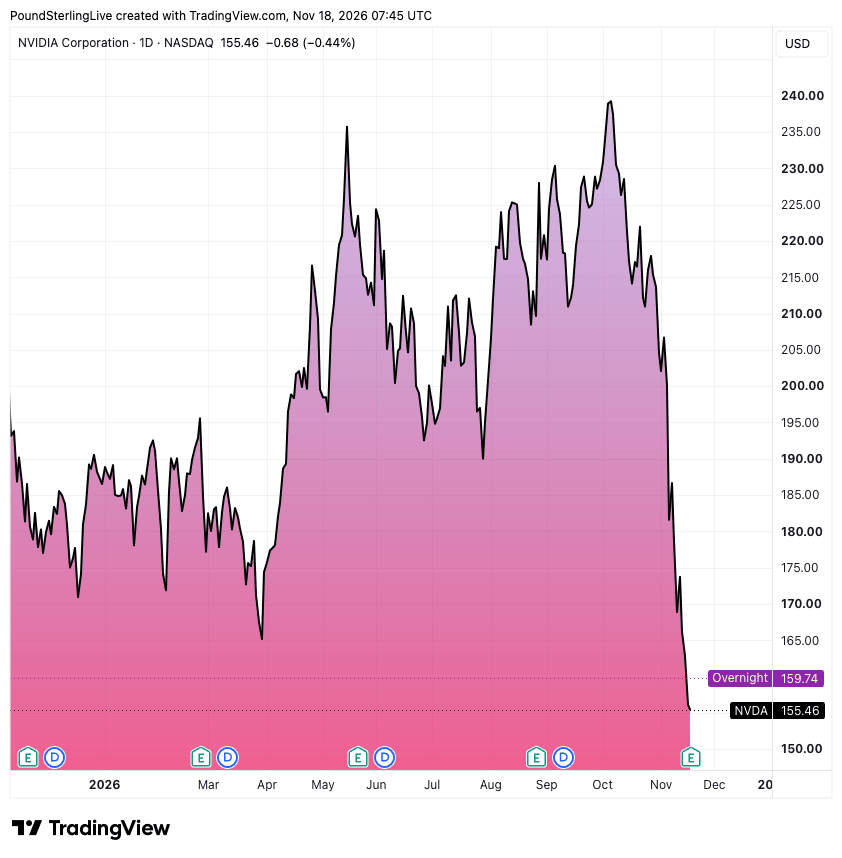
Above: Despite strong results, the shareprice is well off the recent highs.
Colette Kress leads Nvidia as interim chief executive and chief financial officer while an independent board committee investigation continues and the search for a new chief executive goes on.
"Still lots of unknowns for the stock that create the overhangs that investors are worried about. But the earnings show it's still in very good shape," Wilson adds.
Nvidia's forecast "appears to be easing some of the concerns surrounding the AI sector for the time being," says SEB, the Swedish bank.
The company's results feed into the dollar via two channels:
1) Outright demand for USDs as foreign investors buy into the stock
2) A bullish reappraisal of U.S. Fed policy expectations
Money markets price nearly 80 basis points of further Fed hikes by September 2027, almost 40 basis points more than two weeks ago. A hot stock market and AI investment cycle add to the view that the economy risks overheating and inflation fails to fall back to the Fed's 2.0% target without action on interest rates.
For the pound to recover against the dollar, U.S. data and Fed officials must cool bets on back-to-back hikes in December and January.