
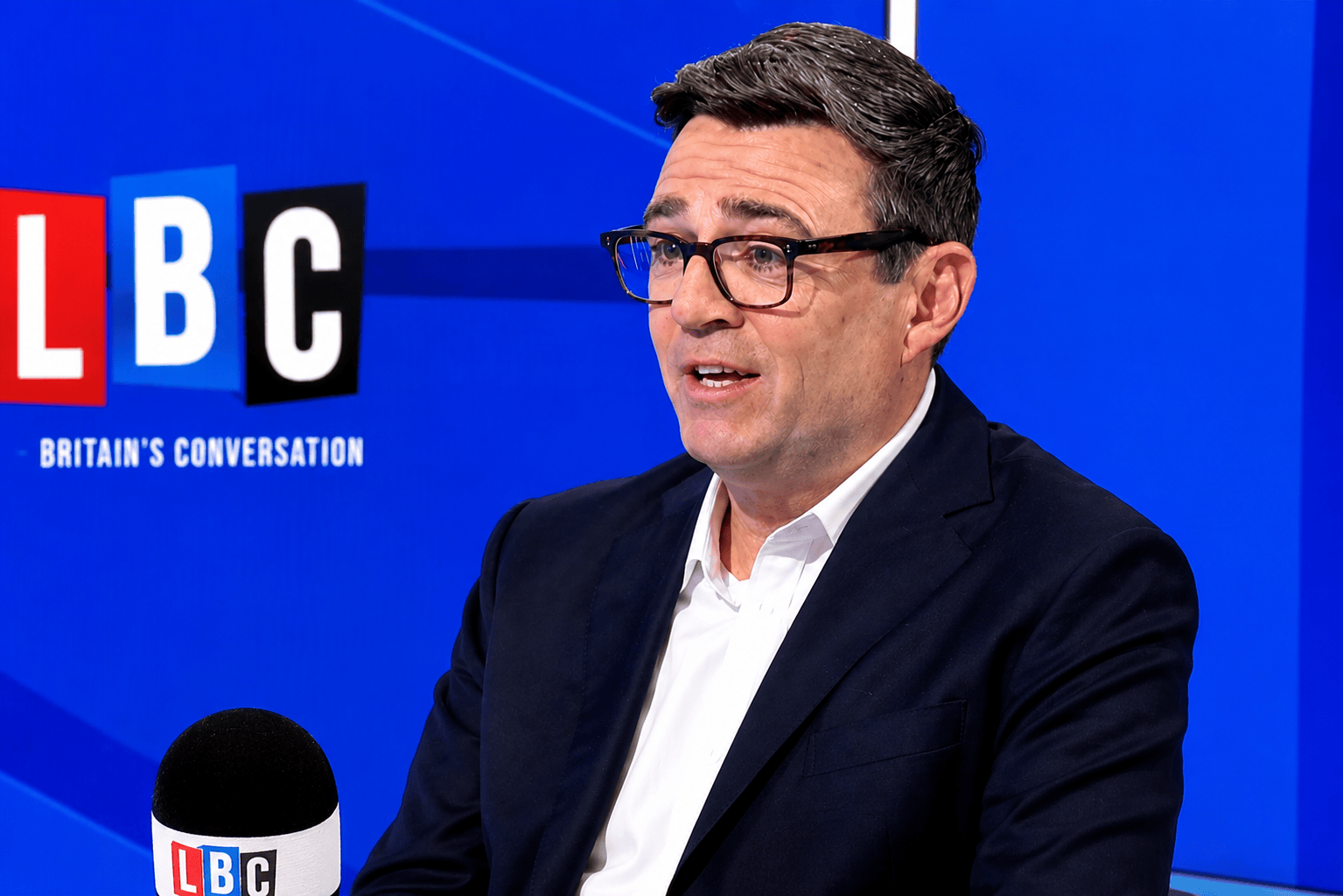
Prime Minister Andy Burnham meets EU leaders at the UK-EU summit in Brussels on Friday 20 November. Image © Adobe Images
The pound stands to gain from closer UK-EU ties over the long run, although Deutsche Bank warns the reset could cost the UK a wider current account deficit in the meantime.
Closer ties with the European Union should be good for the pound in the long run, although the reset could come with an upfront cost, says a new FX analysis from Deutsche Bank.
Shreyas Gopal, Strategist at Deutsche Bank, starts with Friday's UK-EU summit in Brussels, which has taken on extra weight since Prime Minister Andy Burnham signalled his openness to materially closer ties with the EU and is "widely expected to see deals announced in areas such as agrifood, youth mobility, and emissions trading."
Those deals carry only a marginal near-term boost to GDP, but "in the longer-term, however, they could mark the start of the UK improving its supply-side relationship with the EU," he says.
Gopal then walks through the trade-offs of Burnham's reset, picking three that matter for sterling because they touch the UK's external balance.
Goods. The UK could follow the EU in placing tariffs on Chinese electric vehicles, possibly in exchange for a place in the Made in Europe scheme. Imports of Chinese cars have surged, but the UK builds few such vehicles itself, so tariffs are "more likely to lead to import rotation rather than a substitution for domestically-produced vehicles and an improvement in the trade balance," says Gopal.
Services. The UK government is reported to be hesitant to align with EU rules on AI as a condition of closer ties. A high share of the UK workforce sits in AI-affected jobs and the country relies heavily on selling AI-affected services abroad, which means "the tails around AI are wider for the UK and the pound than for many other developed countries," he adds.
The current account. The UK's secondary income deficit has narrowed by three-quarters of a percent of GDP from its peak as Brexit withdrawal payments tapered, helping shrink the current account deficit to under 2% of GDP. A materially closer relationship would bring an annual cost of market access, which Gopal says "would likely be more than offset from a sterling perspective by fresh investment flows and the overall long-term boost to growth."
"Nevertheless, it may require an initial downpayment, in the form of a rewidening of the UK's current account," he adds.
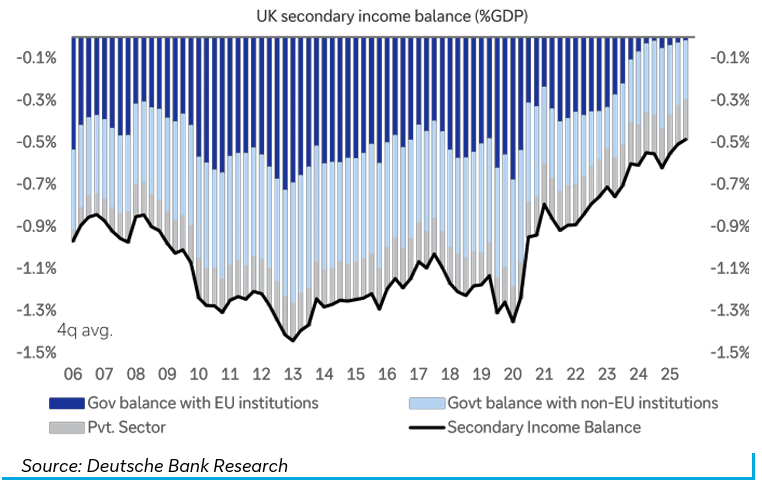
"Tapering of withdrawal agreement payments has seen secondary income deficit narrow materially in recent years." - Deutsche Bank.
None of this is likely to move the pound in the near term, where Deutsche Bank says sterling has "broadly continued to take its cue from front-end rates."
"We find it hard to disagree with recent outperformance, with the more hawkish-than-expected BoE stance backed up by very firm growth data," says Gopal, whose bank has closed out its remaining bets against the pound versus the Swiss franc, yen and dollar.
The pound-to-euro exchange rate rallied 3.5% from late September to a peak of 1.2016 on 30 October and has held close to that level since, trading at 1.1983, as UK bond yields at three-year highs underpin the pound.
Pound Sterling Live continues to hold a constructive medium-term view on the pound's prospects; the economy is outperforming, the Bank of England is still raising rates as UK inflation proves sticky and Burnham's push for closer EU ties lowers the risk premium on UK assets.
Deutsche Bank's economists expect this week's UK jobs and inflation figures to come in broadly in line with Bank of England projections, which leaves sterling well supported unless the data undershoot by enough to clear what Gopal calls "a high bar for a materially dovish repricing."
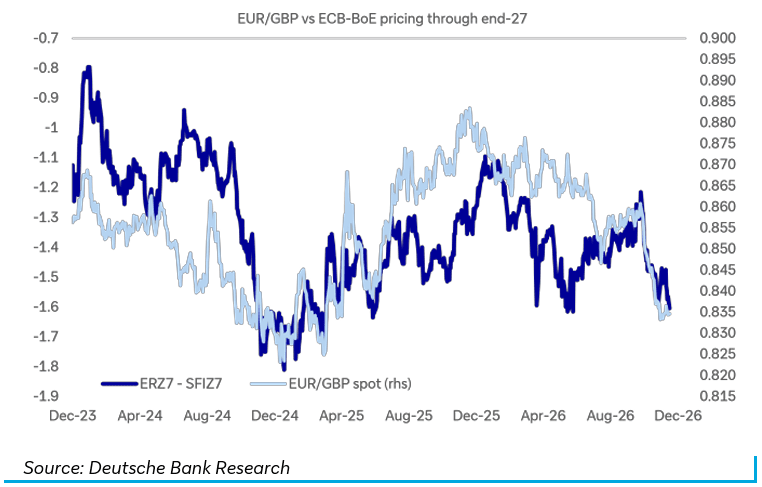
"In the short-term, GBP benefited from hawkish repricing of BoE" - Deutsche Bank.