
Image © Reserve Bank of New Zealand
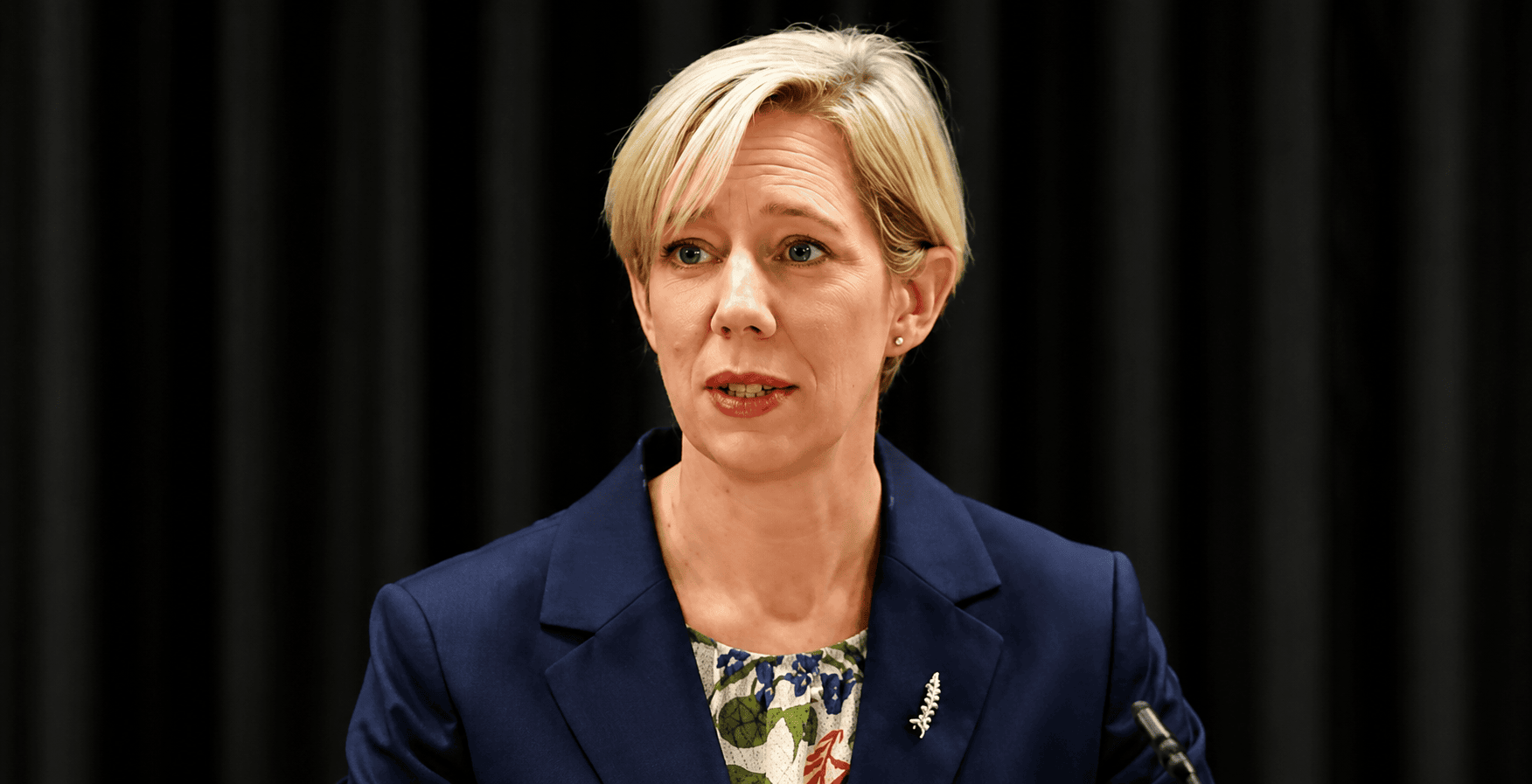
Governor Anna Breman puts the chances of a December rate hike as high, although rising unemployment has cut market conviction and left the kiwi at multi-year lows against the pound.
A New Zealand dollar recovery depends on the Reserve Bank of New Zealand (RBNZ) raising interest rates in December, a move Governor Anna Breman says is likely.
A December hike would lift the return on New Zealand dollar assets and restore the support the kiwi lost when the RBNZ unexpectedly held rates at 2.75% on 28 October.
Breman told the New Zealand Herald that the chances of a December hike were "high" and that all members of the Monetary Policy Committee agreed further increases in the Official Cash Rate were likely.
Breman's remarks came before Tuesday's labour market figures, which showed unemployment rising to 5.7% in the third quarter, its highest since September 2015, against expectations of 5.5%.
A weaker jobs market eases the pressure on wages, and ANZ, the Australian-headquartered bank, says subdued wage growth "is consistent with inflation returning to 2% over time."
"We continue to forecast 25bp hikes at each of the next three RBNZ meetings, but are not surprised that the market has reacted to the data by reducing the odds it is placing on a December hike from 80% to around 50% at the time of writing," says ANZ.
The NZD moved in response: the pound to New Zealand dollar rate jumped above 2.40 on Wednesday, its highest since 2015 and above last week's post-RBNZ peak at 2.3833.
NZD/USD is at 0.5633.
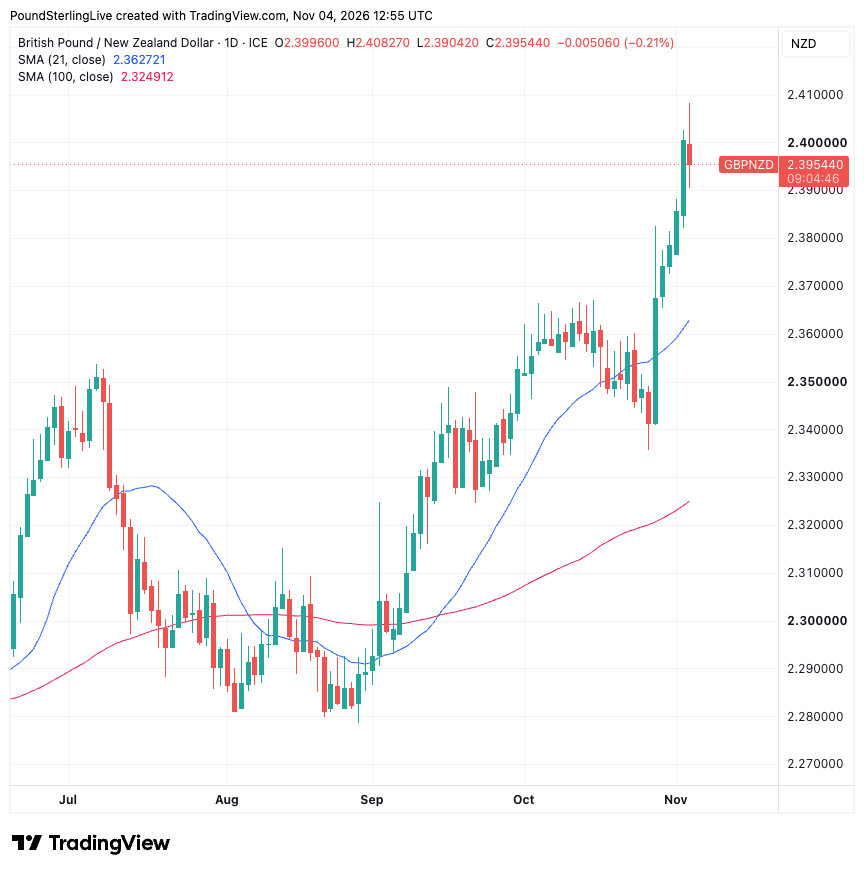
Above: GBP/NZD daily chart.
The jobs data follows the October MPC decision to hold interest rates unchanged, a decision that prompted an aggressive sell-off in the NZ dollar.
"The outlook for the exchange rate is undermined by this data," says Kelly Eckhold, Chief Economist at Westpac.
"A December hike remains more likely than not, but there will be a clear debate to be had between the MPC hawks and doves," he adds.
ASB, the New Zealand bank, says it is nervous about the outlook for medium-term inflation and wary that a gradual approach to normalisation may mean more tightening is needed later.
ASB pencils in 25 basis point hikes to a 3.5% peak by March 2027, although it says the forward path for the OCR is highly uncertain.
Analysts Say Much of the Bad News Is in the Price
Investors have already priced that uncertainty, selling the kiwi towards its 2026 lows against the dollar as they cut the odds of a December hike.
"The NZD may remain on the backfoot near-term, however a lot of negatives already look to be factored in, in our view. We believe the NZD is undervalued given it is tracking ~4 cents below our 'fair value' estimate," says Corpay, the payments firm.
MUFG, the Japanese investment bank, expects a December hike and one more in the first quarter of 2027.
MUFG forecasts NZD/USD at 0.59 by the third quarter of 2027, around 2.7 cents above spot.
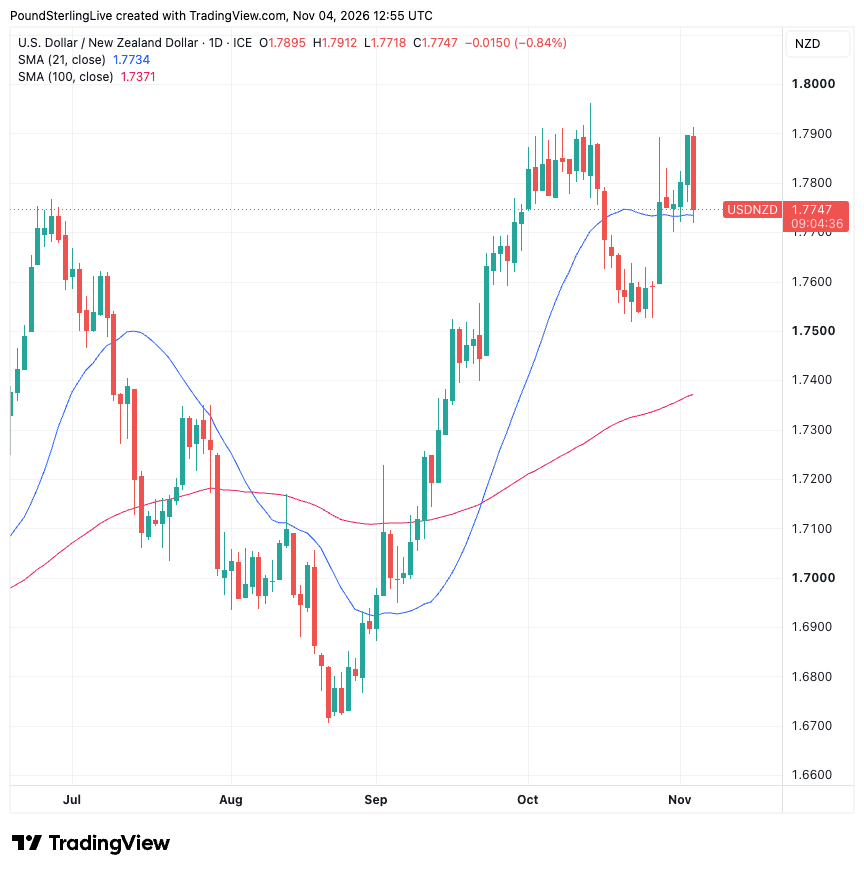
Above: USD/NZD daily chart.
Against the pound, a kiwi recovery also depends on the Bank of England.
Investment bank analysts expect the Bank to raise Bank Rate by 25 basis points to 4.0% on Thursday, in line with market pricing.
"The BoE is unlikely to meet current market pricing resulting in pound underperformance, albeit more versus non-dollar currencies," says MUFG.