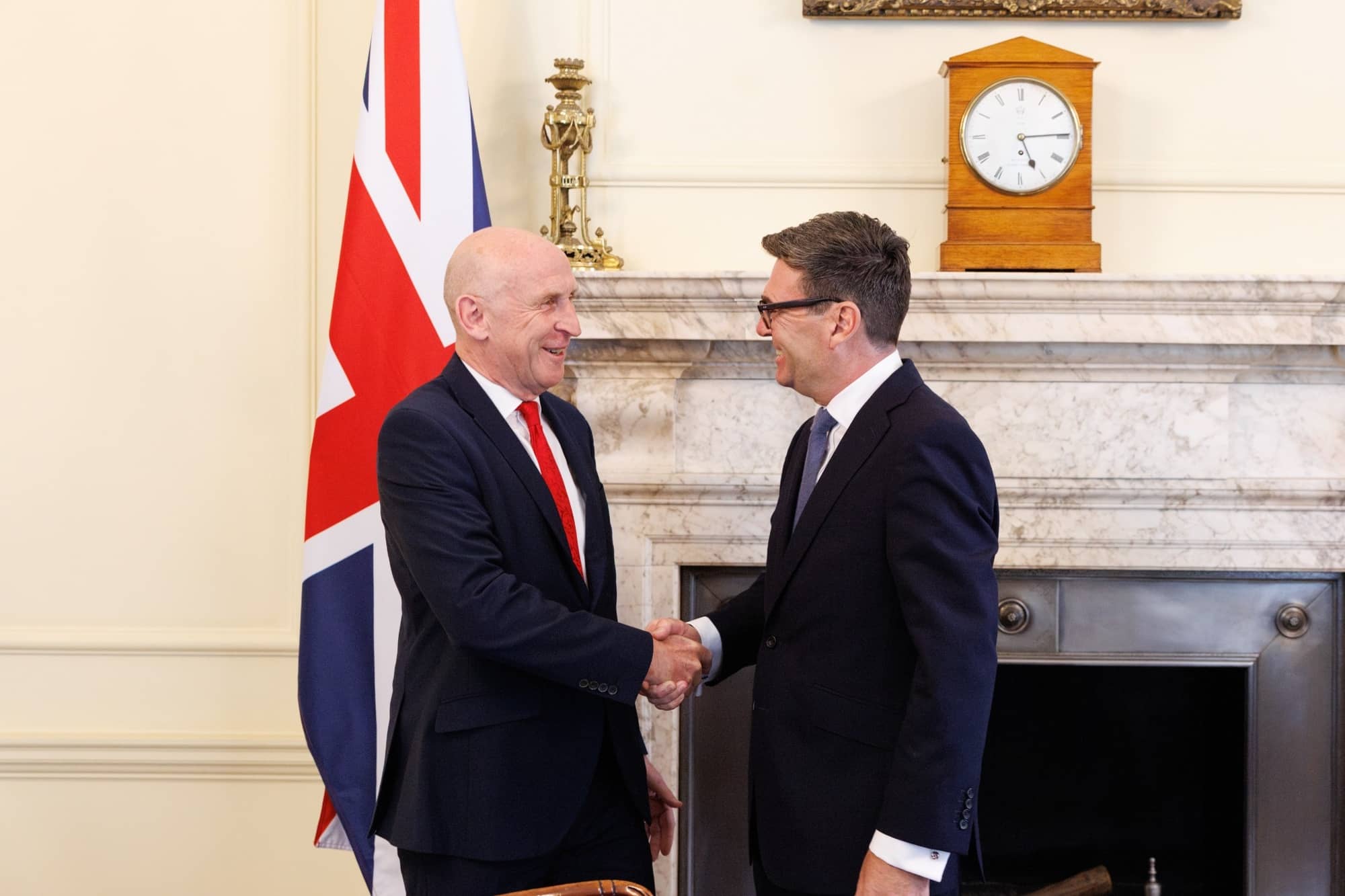
John Healey is appointed Chancellor. Picture by Simon Dawson / No 10 Downing Street.
Pound sterling is the biggest loser in G10 on the new Prime Minister's first day in office.
The British pound has turned lower against its major peers as markets digest the fiscal realities an ambitious Andy Burnham faces.
The new Prime Minister made a day-one decision to remove VAT from electricity bills, saying it would be funded by scrapping the digital ID programme.
However, newly unemployed Treasury minister Darren Jones was quick to point out that his ex-department hadn't yet found the funding for the ID programme, meaning Burnham has effectively announced an unfunded policy decision.
The numbers involved in the electricity VAT cut are small, but the message is massive: Burnham doesn't have much of a fiscal allowance to deliver, amongst others:
~ An uplift in the personal allowance (hinted at on Monday)
~ Fully funding the defence spending commitments made in the defence spending review (which the new Chancellor John Healey will be obliged to do courtesy of his previous role as Defence Secretary).
~ Taking defence spending to the NATO mandated 3.5%
~ Massive expansion of social housing (a long-running Burnham commitment)
~ Significant devolution (the cornerstone of Burnham's 'Manchesterism')
The problem for the pound and gilts is that these commitments need to be funded, either through additional borrowing or taxation. Neither is attractive for the economy and Britain's fiscus.
"Taking Defence spending to 3.5% of GDP would cost £24bn/year, a Personal Allowance increase of 10% would cost £11bn/year. To be fully funded would require Osborne-era welfare reforms, AND flat rate pension tax relief, AND replacing the triple lock with CPI indexation in order to not eat into headroom/ bust the existing fiscal rules. This is why most investors are assuming these changes won't happen," says Simon French at Panmure Liberum.
The pound-to-euro rate slips to 1.1748 by the time of update, and the pound-to-dollar goes down to 1.3418.
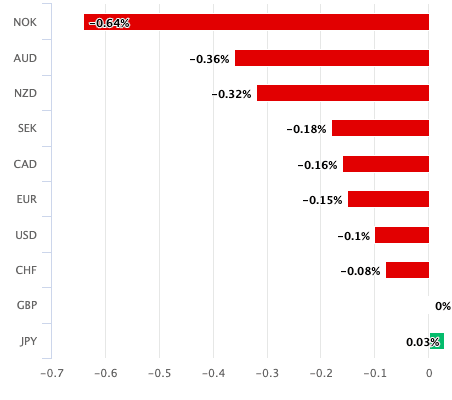
Above: GBP performance on Tuesday.
The Labour Party in 2025 showed a staunch unwillingness to contemplate cuts to welfare and other elements of governmental spending.
Claus Vistesen, economist at Pantheon Macroeconomics, warns that "every single budget since Labour took over has been a nail biting event with everyone speculating what taxes will rise. Burnham will continue this front loading all the gifts and then bringing down the hammer in another tax rising autumn budget."
For the pound, that's a headwind.
Burnham's 'Flexibility' Call Spooks Traders
On Monday Burnham indicated he would be "flexible" with the fiscal rules that demand any additional borrowing is constrained.
The pound and bonds fell in tandem in response to the comments that hark back to Burnham's statement of 2025 that the government should not be "in hock" to the bond markets.
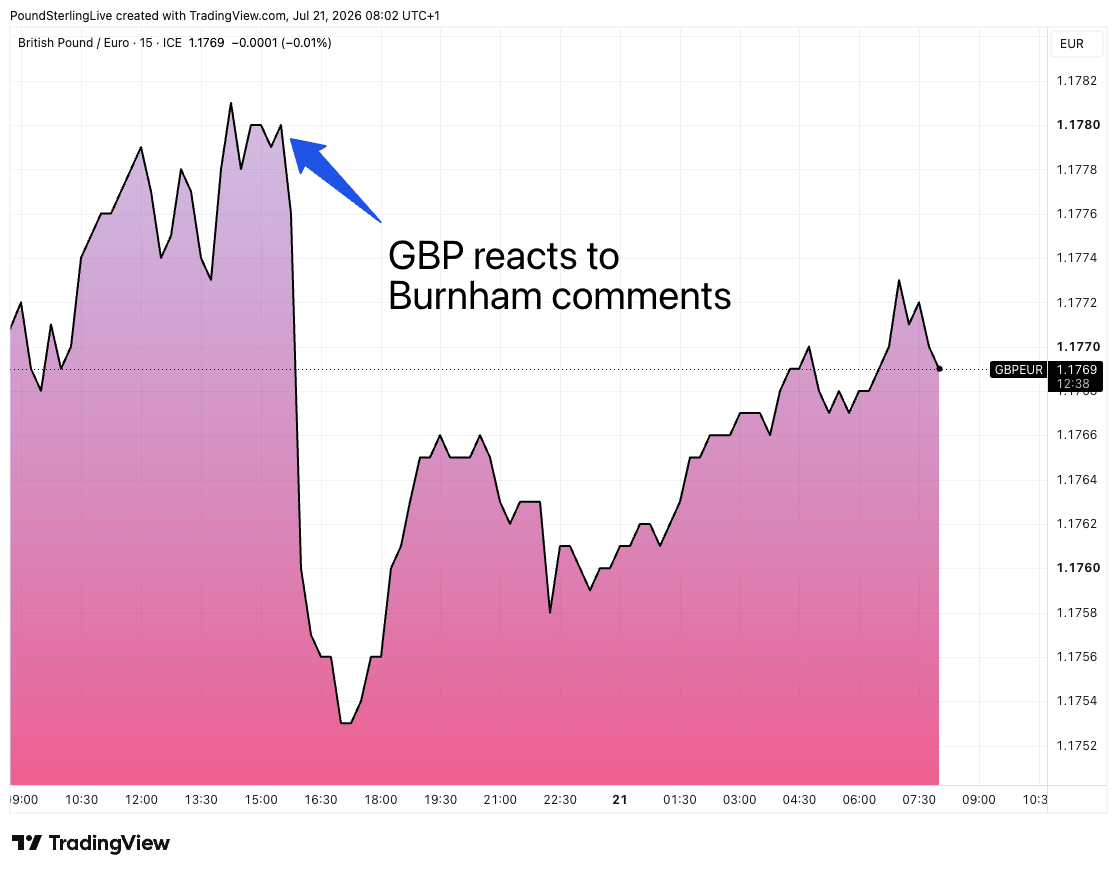
Analysts at Lloyds Bank say on Tuesday it is clear Burnham is intent on exploring the extent to which he is "in hock to the bond market" early on in his tenure.
"At least four developments signal a more expansive fiscal strategy which will be of relevance to the gilt market," says the analysis, citing:
1) Healey's appointment. He wants more money for defence, arguing when he resigned last month that defence spending must get to 3% of GDP by 2030.
2) On Tuesday, Burnham removed VAT from energy bills, saying it will be funded by ditching the digital ID scheme. "Although the government’s press release says this measure is funded by scrapping the Digital ID Programme, that itself was having to be funded by as yet unidentified departmental savings elsewhere, which some would describe as essentially unfunded."
3) Burnham said Tuesday he was considering raising the personal tax allowance, reforming social care and setting out a 10-year plan but without any detail on finance for these aspirations.
4) Burnham's stated desire to find "flexibility" in the fiscal rules.
Labour Market Data: OK is Good Enough for the Pound
Tuesday's main calendar event for sterling was the release of employment and wage data, which underlined the troubles facing Burnham's administration.
"Today's data points to a stagnant and weak labour market, with the number of payrolled employees down 0.1% and job vacancies down 0.9% on the quarter," says Alex Hall-Chen, Principal Policy Advisor for Employment at the Institute of Directors.
The numbers point to a labour market that is prone to building slack, which would typically invite a Bank of England interest rate cut, were it not for the elevated levels of inflation.
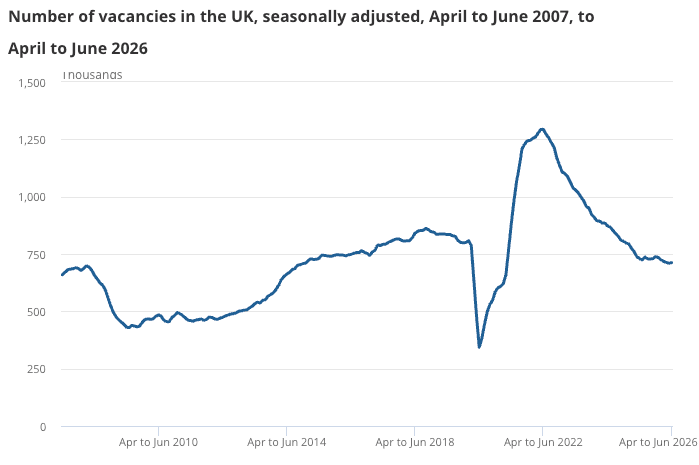
The unemployment rate stayed at 4.9% in May and average earnings increases slid to 4.3% from 4.4%, undershooting consensus expectations for a rise to 4.5%.
"Today’s labour market data highlighted two things: one, a still fragile jobs market; and two, some tentative signs of stabilisation," says Sanjay Raja, Chief UK Economist at Deutsche Bank.
He explains the fragility: the jobless rate stayed is elevated at 4.9% and HMRC payroll data dipped again with the economy shedding 4k jobs.
And, the signs of stabilisation: the vacancy data also showed an increase in job advertisements for the first time since December. The number of redundancies dropped to 108k in the three months to May, its lowest reading since July last year.
"Newly minted PM Andy Burnham’s biggest task now is in building economic confidence for businesses. If he can unleash Britain’s animal spirits, we could not only see a strong jobs recovery but an economy firing on all cylinders," says Raja.
For the pound, the data are good enough to help keep it afloat above the previous day's lows.
Borrowing Numbers Also Offer Encouragement
The ONS said public sector borrowing came in at £16.0BN in June, slightly below the OBR's forecast of £16.3BN and almost £8bn lower than a year ago.
Borrowing in the first three months now stands at £57.6BN, still above the OBR's forecast of £54.9BN, but June suggests the deterioration in the public finances may not be as rapid as the first two months of 2026-27 implied.
The undershoot against expectations will be welcomed by the market on the day, but the outlook remains challenging.
"One better-than-expected month does not rewrite the fiscal story. Monthly borrowing figures are notoriously volatile, and the government will need several more months of favourable data before it can be confident that it is back on track," says Martin Beck, Chief Economist at WPI Strategy.
Beck explains the bigger concern lies ahead rather than behind: "A renewal of the Iran conflict has pushed up oil prices and contributed to higher gilt yields. Those higher borrowing costs will not hit the public finances overnight, but they will feed steadily into a larger debt interest bill as existing debt is refinanced, leaving less money available for public services and other priorities."

The Bank Consensus, Without the Terminal
The median, mean, highest and lowest from the October survey update, plus named point forecasts out to 2027.
Free information pack, issued by World Wide Currencies.