
File image of Clare Lombardelli. Image © Pound Sterling Live.
A December Bank of England rate rise in play says a member of the Monetary Policy Committee.
Bank of England Deputy Governor Clare Lombardelli says there is likely to be a case for a further rise in interest rates in the near term, in a speech at the Bank of England Watchers Conference on 10 November.
Her judgement is that the risks to inflation remain to the upside, as the labour market will do little to cool wage growth, keeping a December rate rise in play.
"In the absence of evidence of weaker inflation pressures, I continue to think there is likely to be a case for a further increase in rates in the near term," says Lombardelli, adding "the balance of risks to inflation remains to the upside."
She voted with the majority to raise Bank Rate to 4.00% on 5 November.
Money markets priced in around 13 basis points of tightening at the December meeting before she spoke, rising to around 17 basis points by the time of writing midweek.
Ten-year gilt yields rose from around 5.10% to above 5.20% over the session, with "Lombardelli's hawkish comments weakening the front-end anchor before stronger US CPI pushed yields higher across the curve," says Mizuho, the Japanese investment bank.
A Bigger Fed Hike Adds to the Pressure on the Bank of England
However, it was U.S. inflation data that prompted the market to raise expectations for December.
Gilt yields rose after U.S. data showed consumer prices rising 0.4% in October against a consensus of 0.3%, with core prices up 0.3% for a third consecutive month above forecast, the Bureau of Labor Statistics reports.
Fed Governor Christopher Waller said in a speech before the release that core inflation around 0.3% could warrant more than a quarter-point rise, "hiking only 25 basis points would put our credibility at risk, a risk I am not eager to take."
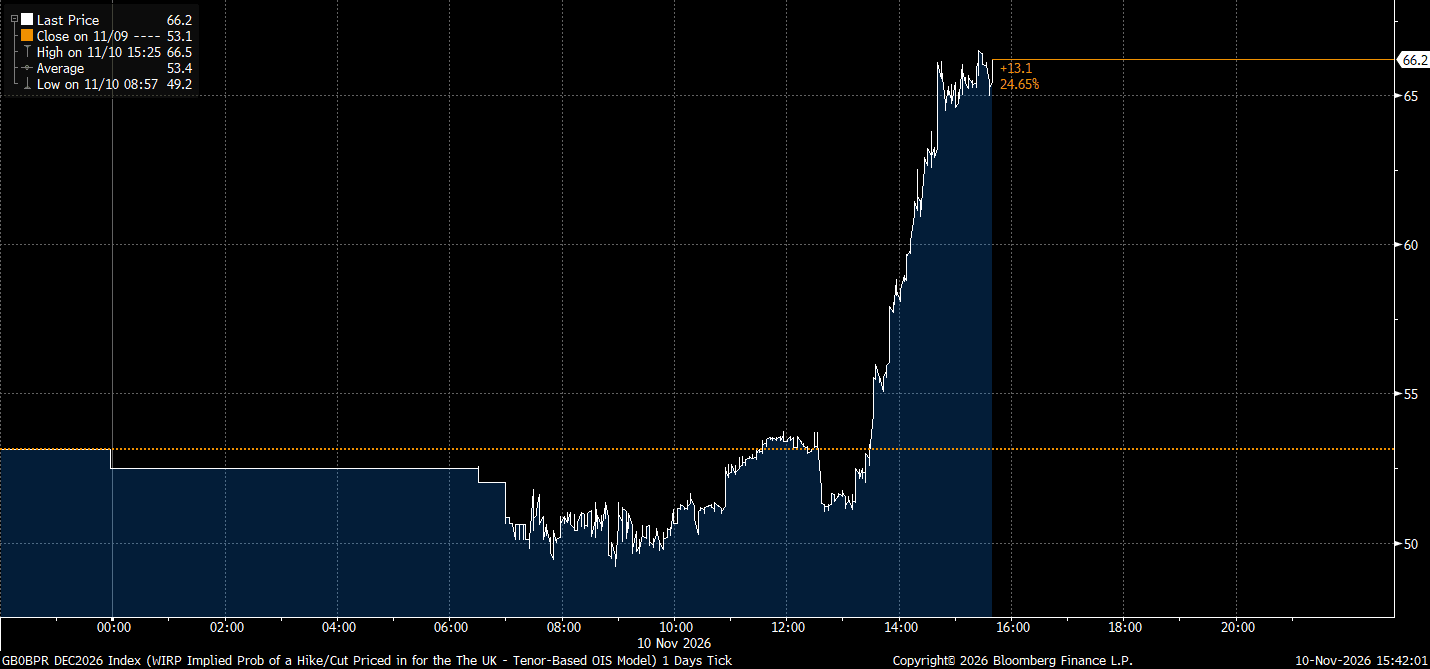
"BoE rate hike bets leap in response to US CPI upside surprise." - Kallum Pickering, Chief Economist and Deputy Head of Research at Peel Hunt. Image courtesy of @KallumPickering.
Money markets now treat a December Fed hike as a near certainty and attach around a 13% chance to a half-point move, as Pound Sterling Live reported on Tuesday.
Higher US yields carry into UK borrowing costs, and the pound fell 0.9% against the dollar on the day.
Bank of England Sees Weak Hiring Doing Less to Cool Wages
Lombardelli's case for further tightening also draws on a labour market she describes as having slipped into a lower gear.
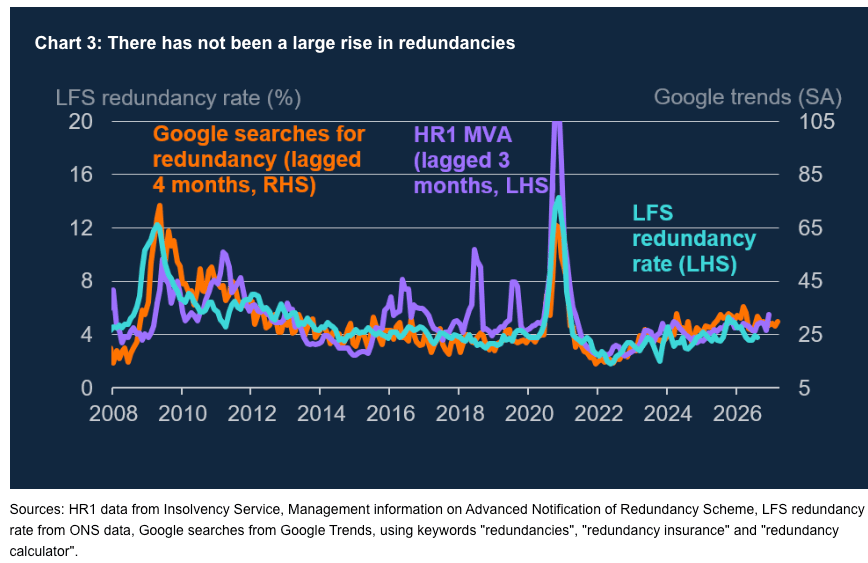
"The labour market is cooling mainly through weaker hiring, rather than increased firing," says Lombardelli.
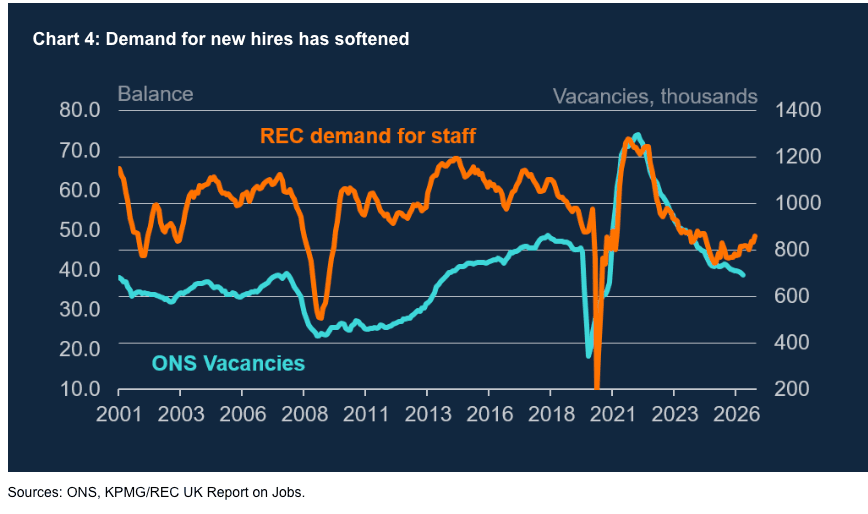
Redundancies remain at roughly their pre-pandemic level, while vacancies sit around 14% below it, the Bank's figures show.
Job-to-job moves run at a little above 2% of employment a quarter, against more than 3% thirty years ago, and fewer of those moves now cross industries or skill levels.
Fewer moves leave jobseekers poorly matched to the vacancies on offer, and Lombardelli says "a given rise in unemployment may exert less downward pressure on wages."
"Unemployment could remain higher for longer without producing the easing in wage pressure that we would ordinarily expect," she adds.
Lombardelli puts underlying wage growth at the upper end of the range consistent with the 2% inflation target, with forward-looking indicators pointing to continued strength into next year.
Young people aged 16 to 24 account for more than half the rise in unemployment since mid-2022, the Bank's analysis of ONS data shows.
Analysts at Lloyds say the economy's 'speed limit' growth rate could be constrained as a result, "weaker labour demand wouldn't necessarily imply the same scope for looser monetary policy that it would have done in previous cycles," says Lloyds.
Lombardelli also ties the hiring slowdown to artificial intelligence, the pattern Pound Sterling Live has described as jobless growth.
"AI-related activity has accounted for around 0.5 percentage points of GVA growth since the beginning of 2026," says Lombardelli, and business leaders surveyed by the Bank expect AI's effect to be split broadly equally between increasing output and reducing employment.
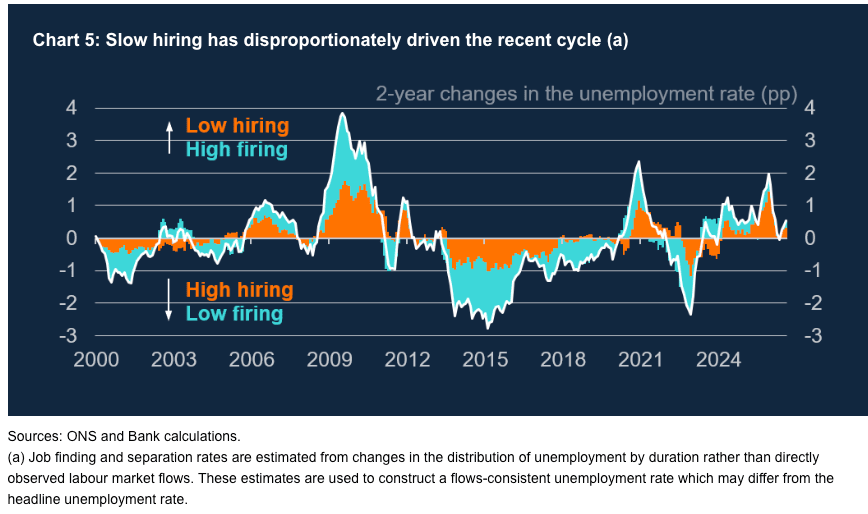
UK private-sector productivity growth stands at around 2.5% while employment lags output, Morgan Stanley finds, as Pound Sterling Live reported this week.
Pound Sterling Live holds that rate cuts cannot fix this kind of unemployment, because businesses hold ample cash and are not waiting on cheaper credit to hire.
What the Data Must Show for a December Rate Rise
Those labour market arguments support further tightening, but Lombardelli makes the timing conditional on how data on pricing, activity and slack come together alongside energy prices.
However, her view that uncertainty is a reason to proceed gradually leads Lloyds to a later date, "her vote looks more likely to be for a hike in February rather than at the next meeting in December," says Lloyds.
Mizuho expects the Bank "will ultimately deliver less hikes than currently priced," with around 80 basis points of rises priced into the second half of 2027.
Lombardelli's own downside scenario has households and firms running out of short-term means to absorb higher costs, after which demand weakens and inflationary pressure eases.
A material upside surprise in Thursday's third-quarter GDP figures could revive expectations of a December rise, says George Vessey at Convera.
For the Bank of England to raise rates in December, UK growth must beat the 0.7% consensus and wage and price data must show no sign of the weaker inflation pressure Lombardelli is watching for.