

Image © Adobe Images
NZ Dollar under pressure despite odds of RBNZ hike increasing.
The New Zealand dollar is the day's G10 underperformer following domestic inflation and a dour risk-off market tone.
Core inflation in New Zealand climbed in the third quarter, adding to pressure on the Reserve Bank of New Zealand (RBNZ) to raise interest rates next week, but with hikes already priced into the currency the data offered the kiwi little fresh support.
Consumer prices rose 0.7% in the September quarter and 3.7% year-on-year, below the RBNZ's 3.9% forecast, while core measures mostly firmed to above 3%, the top of the central bank's 1% to 3% target band.
The moves: the New Zealand dollar to U.S. dollar rate is at 0.5689, and the kiwi is lower against every G10 peer, falling furthest against the safe-haven yen and Swiss franc.
"NZD/USD eased towards 0.5680 in the Asia session because of the softer than expected Q3 2026 New Zealand CPI and weaker risk sentiment," says Carol Kong, a strategist at Commonwealth Bank of Australia.
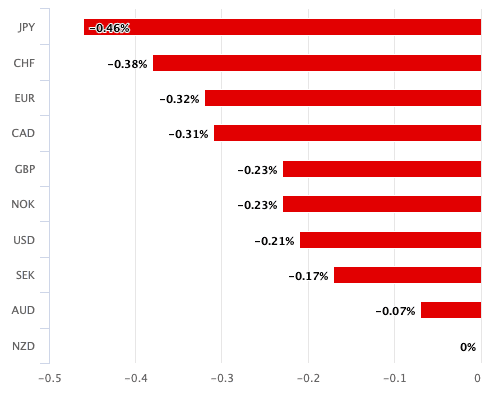
Above: The New Zealand dollar's performance against G10 currencies on Thursday.
Turning to the central bank, Westpac now expects a 25 basis point hike next week, having previously forecast a pause until December.
"Core inflation measures are now close to or above 3%, which will add fuel to arguments from the MPC hawks," says Satish Ranchhod, Senior Economist at Westpac.
"All in all, we would characterise the Q3 CPI as "net hawkish", with weaker-than-expected non-tradables more than offset by accelerating core measures," says Miles Workman, economist at ANZ, which expects the Official Cash Rate to rise to 3.00%.
OCBC also judges the inflation figures enough for the RBNZ to hike.
ASB now expects annual inflation to end the year around 4.7% and says the risks are meaningfully skewed to an OCR above 3.25% in 2027.
Money markets price around four hikes by the middle of 2027, leaving the kiwi with little to gain from the RBNZ delivering what is already expected.
Risk-off Mood Breaks the Kiwi's Link to the Dollar
Mixed earnings from the largest U.S. technology companies have revived doubts over the AI trade, sending Asian stocks lower, with Hong Kong's Hang Seng down 2.7%.
Brent crude rose towards $110 a barrel after a drone strike on Saudi Aramco's Shaybah field, a cost New Zealand bears directly as an importer of all its refined fuel.
The U.S. dollar is lower, yet its losses are concentrated against the yen and franc, and the kiwi is down 0.21% against it, a reversal of last week, when dollar weakness lifted the kiwi to the top of the G10 table.
The kiwi's sensitivity to the dollar has given way to its sensitivity to risk appetite, and with oil climbing and RBNZ hikes priced, we find it hard to see the New Zealand dollar righting itself while sentiment keeps deteriorating.
GBP/NZD Uptrend Intact
The pound to New Zealand dollar rate is at 2.3554, holding above its 21-day moving average at 2.3541 and the July high at 2.3544, which now acts as support.
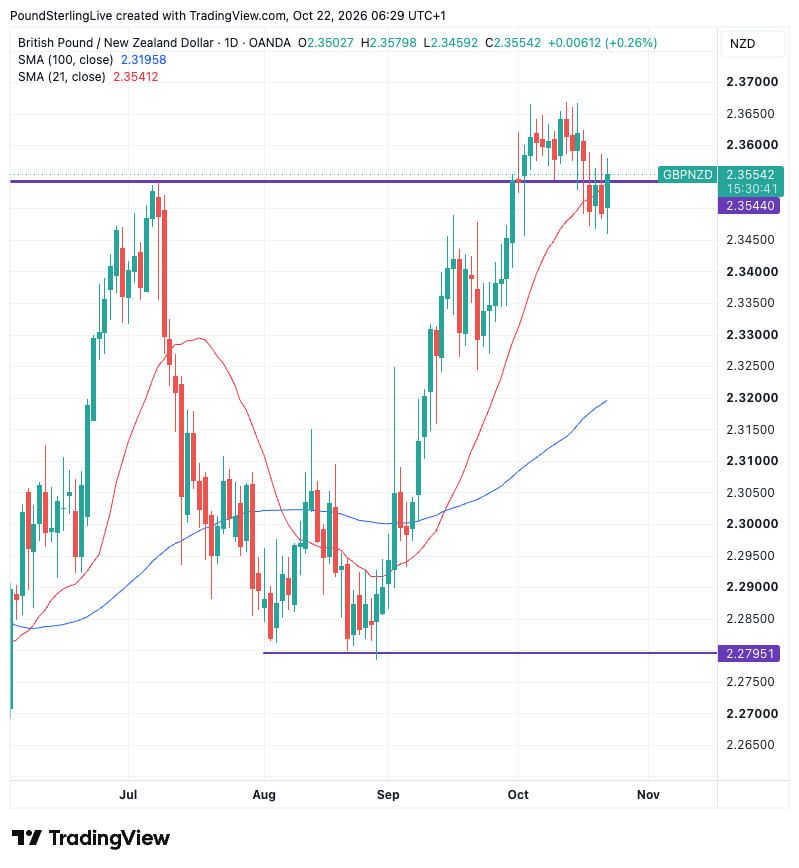
Above: GBP/NZD daily chart with the 21-day and 100-day moving averages.
Sterling has its own rate support after UK inflation rose to 3.5% in September.
"The data now justifies an insurance rate hike to 4.00% on 5 November," says a note from Julius Baer, the Swiss private bank.
GBP/NZD's hold of the 21-day average keeps the October highs near 2.3670 in contention, with a break above them opening the way to fresh multi-year highs.