The pound could hold its gains as AI money reaches the UK through business investment and the gilt market, fuelling yield growth and underpinning economic activity.
New data from Apollo Global Management shows hyperscalers have raised £13bn in sterling bonds this year, 10% of sterling investment-grade issuance against nothing in 2025.
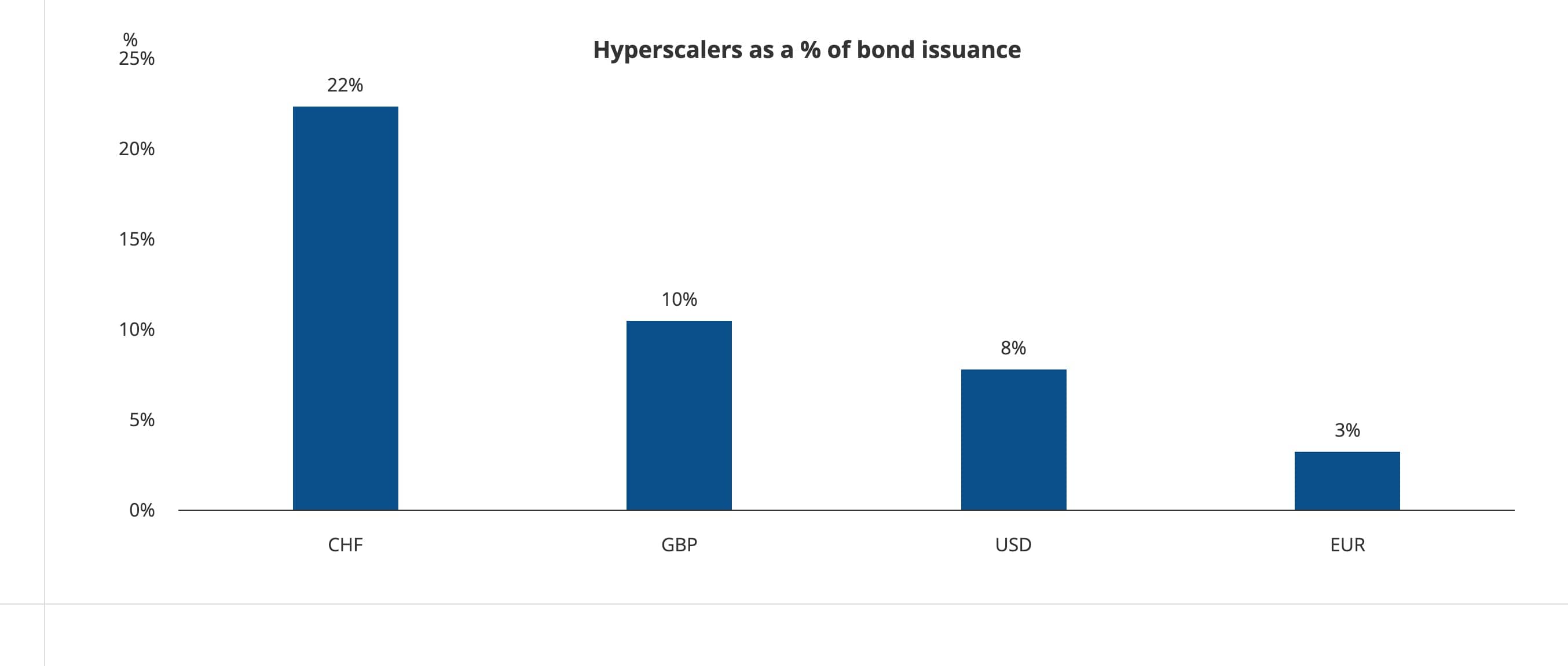
Above: Hyperscalers as a share of bond issuance by currency, 2026 year to date against 2025. Image: Pound Sterling Live, original from Apollo Academy.
The data is evidence that the US investment boom is dispersing into other economies, reaching Britain through the bond market dynamics and the increased investment by domestic businesses in the new technology.
Since July our House View has sat outside consensus on the argument that economists were underestimating the UK economic cycle and, as a result, forecasting the pound too low.
The AI dispersion theme is the explanation for that miss, and it runs through three channels.
- Significant capital to fund the AI buildout is being sourced in the UK, adding supply to the domestic bond market and pressuring yields higher.
- The buildout happening in the US has knock-on effects on US partners, driving demand for UK service providers.
- And business investment data shows UK companies are investing heavily in the new technology.
British firms continue to demonstrate a willingness to invest heavily in new capital, with business investment leaping by 1.7% quarter-to-quarter in Q2, according to official data, with evidence that this is focused on AI rollout.
The annual business investment growth figure was revised with it, growth restated at 5.2% against 0.8% previously, a change that drove much of the second-quarter GDP upgrade, according to Investec.
The £13bn in sterling issuance is part of $48bn raised in European currencies this year, more than triple the 2025 total, split across €27bn, £13bn and CHF7.5bn.
Sterling's 10% share is second only to the Swiss franc at 22%, and sits above the 8% hyperscalers account for in their home dollar market.
"The scale of hyperscaler financing, which is forecast to rise a further 25% in 2027, will have an even bigger impact on European bond markets," says Huw van Steenis, writing in Apollo's Daily Spark.
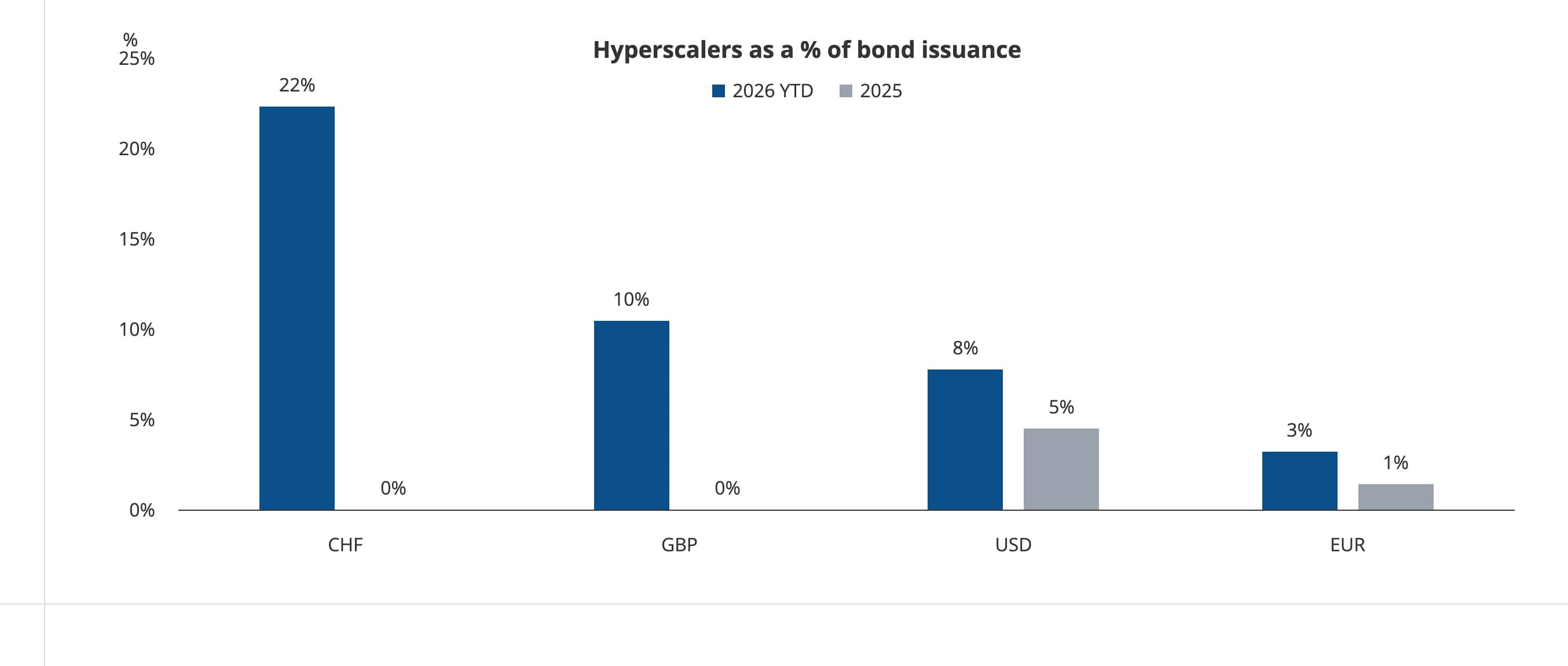
Image: Pound Sterling Live, original from Apollo Academy.
GBP: The Competition Is at the Long End
The supply is concentrated where it matters most for a government funding a deficit.
Hyperscalers account for 7% of euro issuance at maturities of ten years and over, against 3% across all maturities, and Apollo notes this is adding depth at the long end where supply outside sovereign issuance has been thin.
The UK has been moving the other way, shortening the duration of its own bond issuance.
Long-dated sterling and euro paper is bought by a narrow pool of pension funds and insurers with matching liabilities, and that pool now has an alternative it lacked two years ago.

Daniella Arcadipane, Senior Currency Specialist at Indigo
Moving a life-changing sum abroad? You won’t be doing it alone.
One specialist explains every step in plain English and stays with it until the money lands. FCA authorised, FRN 594433.
Talk to a specialistApollo's point is that hyperscaler issuance is adding borrowers rated AA- or higher to European credit indices that have traditionally carried more A to BBB exposure.
An insurer that previously had to buy gilts for long-dated high-grade exposure can now buy a better-rated corporate with a spread pickup over it.
Apollo is explicit that the displacement has not yet shown up, with non-hyperscaler investment grade issuance little changed year-on-year and corporate spreads tight.
GBP/EUR: High Yields Are Currently a Currency Positive
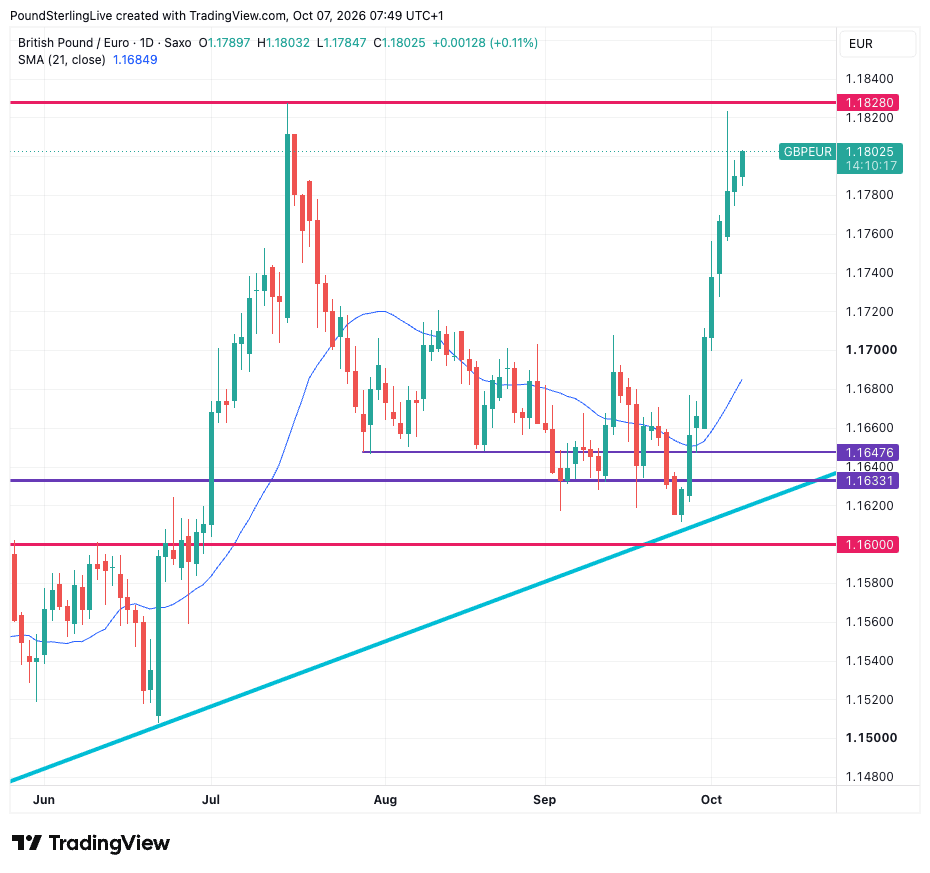
The ten-year gilt yield closed Wednesday at 5.42% after a 5 basis point rise, and sterling has been the beneficiary.
The pound-to-euro rate reached 1.1838 on Wednesday, the best rate for euro buyers since June 2025, and holds at 1.1795 on Thursday.
Elevated gilt yields raise the government's borrowing costs and support the currency at the same time, because the rate differential is what foreign buyers are paid to hold sterling assets.
France is the demonstration of where that relationship breaks: yields rise far enough that the market questions solvency rather than rewards return, and the currency falls with the bonds.
The UK has not crossed that line, and the investment channel is the reason the two cases differ.
With Borrowing Costs Rising, The Budget Is the Next Test
Wednesday's move in gilts followed reports that the Milburn welfare review will be delayed until after the Budget, and that the government is drawing up around £1bn of support for poorer households with energy bills.
Chancellor John Healey also needs to find an extra £4.7bn for defence while rebuilding his fiscal buffer, with Andy Burnham delaying the decision on when that spending rises.
"Delays to known spending commitments will only make forecasts and Budget assumptions less than credible," says Neil Wilson, UK Investor Strategist at Saxo Markets.
Gilts have nonetheless traded calmly against continental Europe and the US over the past fortnight, which Ebury reads as complacency.
"In some ways this is not overly surprising, given that the UK's fiscal situation, while far from pristine, is not as dire as France's, but we also think the risk is underpriced ahead of the budget later this month," says Matthew Ryan, Head of Market Strategy at Ebury.
Ryan says the risk of more damaging tax rises and higher borrowing is real and gaining traction among commentators without showing up in gilt pricing.
Bank of England speakers Andrew Bailey, Megan Greene and Clare Lombardelli appear today, after Catherine Mann said this week that inflation has become embedded in the UK.
The 28 October Budget is where the two channels meet, and a borrowing number that disappoints a gilt market already taking competing high-grade supply is the event that turns the yield story against the pound.